
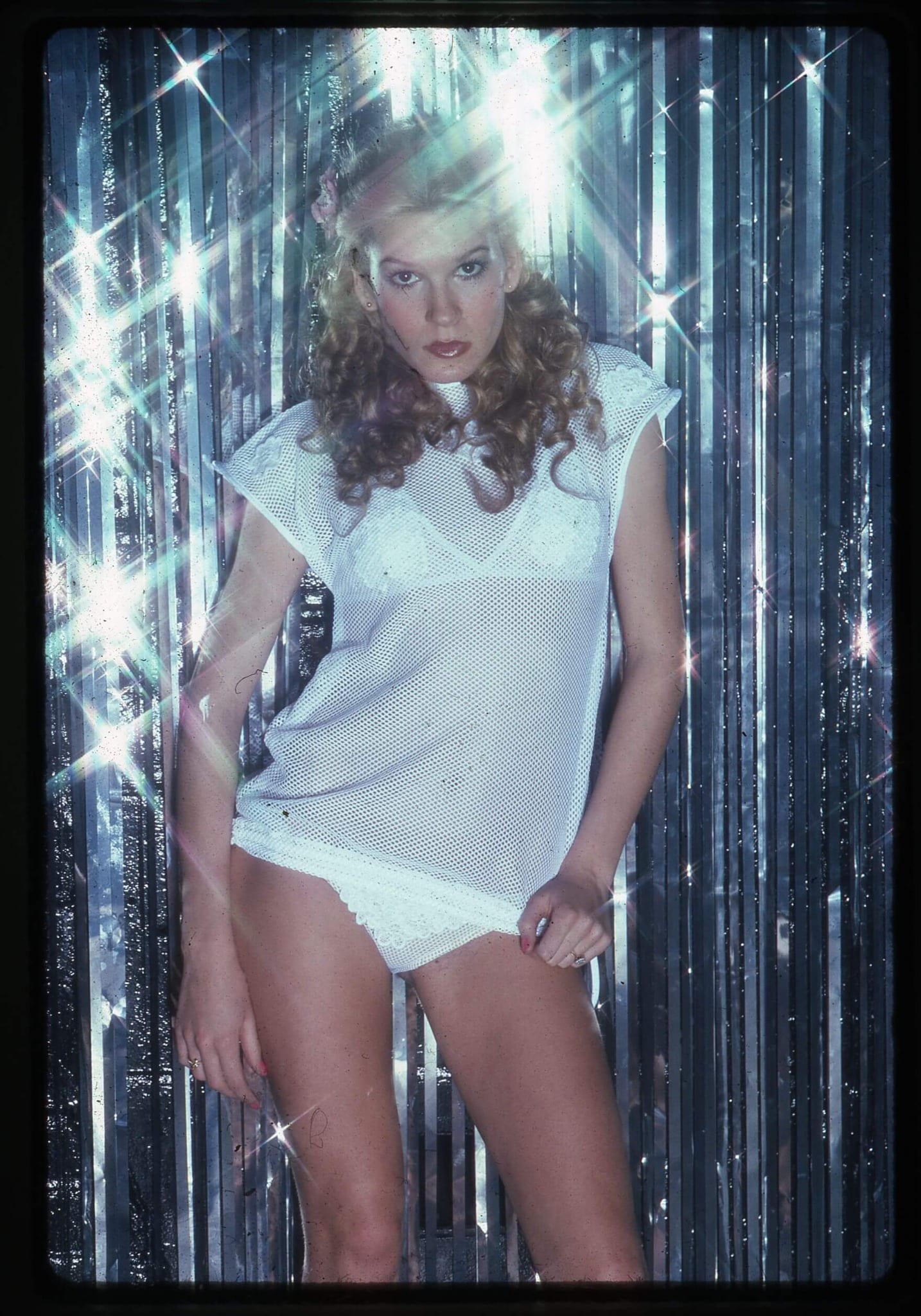
Ten frames to a roll, each about four and a half times the area of 35mm and shaped like a sheet of 8 x 10 paper. The 6x7 frame was built for people who made pictures to be printed.
A 6x7 frame is a piece of 120 roll film with an image about 56 millimetres by 70. That is roughly four and a half times the area of a 35mm frame, and its sides are in the ratio 1 to 1.25, the same as a sheet of 8 x 10 inch photographic paper. Its supporters called it "the ideal format" for that reason: almost nothing had to be cropped to fill the print. For photographers whose pictures were made to be reproduced, it was a practical choice, and it is why so many professional archives from the 1970s onwards are filled with frames of exactly this shape.
How big is a 6x7 frame, and how many fit on a roll?
120 film, introduced by Kodak in 1901 for the No. 2 Brownie, is a little over six centimetres wide. Different cameras expose different lengths of it, which gives a family of formats on one film stock.
| Nominal format | Approximate image | Aspect ratio | Frames per 120 roll |
|---|---|---|---|
| 6x4.5 | 56 x 41.5 mm | 1:1.35 | 15 or 16 |
| 6x6 | 56 x 56 mm | 1:1 | 12 |
| 6x7 | 56 x 70 mm | 1:1.25 | 10 |
| 6x9 | 56 x 84 mm | 1:1.5 | 8 |
The names are nominal, and actual image areas differ by a millimetre or so between cameras. The 220 size, introduced in 1965, is the same width without backing paper and twice the length, giving twenty 6x7 frames. The whole family, and how it relates to 35mm and sheet film, is described in film formats explained.
Ten frames is not many. A photographer working in 6x7 changes film often and thinks before each exposure, and the format rewards that by giving each frame a large piece of film.
Why was 6x7 called "the ideal format"?
The claim rests on arithmetic. Photographic paper, and sheet film before it, was sold in sizes such as 8 x 10 inches, a ratio of 1 to 1.25. A 35mm frame is 1 to 1.5, so printing all of it on 8 x 10 paper leaves blank margins, and filling the paper means cutting off the ends of the picture. A square 6x6 frame has the opposite problem. The 6x7 frame enlarges almost exactly to 8 x 10, and the phrase "ideal format" was its advocates' way of saying so.
The shape suited upright subjects too: a standing figure, a bottle, a portrait. Composed in the viewfinder, the picture could be used more or less as shot.
How does 6x7 compare with 35mm and 6x6?
Area is the first difference. A 35mm frame covers 864 square millimetres; a 6x7 frame about 3,920. For any given size on the page the larger film is magnified less than half as much along each side, so grain is finer in the reproduction and small detail, such as the facets of a stone or the weave of a fabric, holds together.
Against 6x6 the gain is more subtle. The two formats share a width, so a square frame cropped to a rectangle throws away film that the 6x7 frame uses. The cost is two fewer frames per roll, and larger, heavier cameras.
The differences matter again at the scanner. At the same sampling resolution, a 6x7 frame yields about four and a half times as many pixels as a 35mm one.
Which cameras made the 6x7 format common?
Two Japanese designs, launched a year apart, did much to establish it, and their public histories are well documented. The Asahi Pentax 6x7 was released in 1969, shaped like an enlarged 35mm single-lens reflex, and was renamed the Pentax 67 in 1990. The Mamiya RB67 Professional followed in 1970. Its initials stand for "rotating back": the film back turns between upright and landscape without the camera being tipped on its side. It was designed primarily for studio use, and it accepted interchangeable backs, including Polaroid backs for instant test shots before the film exposure.
These are examples from the general history of the format. The inventory of the Robert Harper Photograph Library records film formats, not cameras, and nothing here should be read as a statement about the equipment used for any picture in the archive. On instant-film testing in general, see Polaroids in the studio: proofing before digital.
What does a 6x7 frame mean for scanning?
Large frames make large files. The US federal guidelines for cultural heritage digitisation (FADGI, third edition, May 2023) set about 3,000 pixels per inch as their three-star level and about 4,000 as four stars for film from 35mm up to 4 x 5 inches, at 16 bits per channel.
| Sampling | 6x7 pixel dimensions | Megapixels | 16-bit RGB TIFF, uncompressed |
|---|---|---|---|
| 2,000 ppi | 4,409 x 5,512 | 24 | about 146 MB |
| 3,000 ppi | 6,614 x 8,268 | 55 | about 328 MB |
| 4,000 ppi | 8,819 x 11,024 | 97 | about 583 MB |
The film scan resolution calculator gives the same figures for other formats and works backwards from a print size. Multiply by thousands of frames and storage becomes a planning question of its own, which the digitisation storage calculator is designed to answer.
The size of the frame also shapes the choice of equipment. Many dedicated film scanners take only 35mm. A digital camera with a 3:2 sensor wastes some of its width on a 5:4 frame, and has to resolve the 56 mm short side with its own short side: a sensor 4,000 pixels high records about 1,800 ppi in a single exposure. Higher figures need more pixels, pixel-shift capture or stitched tiles, as explained in camera scanning film: a practical set-up guide. The detailed choices of resolution, bit depth and file format are covered in scanning medium-format transparencies.
Roll film this size also sags. Keeping it flat in a holder, without Newton's rings from contact with plain glass, is one of the main practical problems of 6x7 capture.
The 6x7 archive of Robert Harper
The 2025 inventory of the Robert Harper Photograph Library names 6 x 7 colour transparency film as the principal analogue format in an archive of 52,684 unique analogue photographs, or 134,340 analogue frames when duplicates and variants are counted. Those counts come from the inventory and have not yet been independently reconciled. One folder of 842 transparencies has been scanned; more than half of the archive is still on film and has yet to be scanned.
The analogue collections describe the material, and the archive inventory lists all 503 folders. Imaging specialists with medium-format capture experience are invited to get in touch through the digitisation partners page.
Frequently asked questions
What size is a 6x7 negative or transparency?
The name is nominal. On 120 roll film, which is about 61 mm wide, the image area of a 6x7 frame is roughly 56 x 70 mm. Exact dimensions vary slightly between cameras and film backs, so measure a sample before fixing crop sizes for scanning. A standard roll of 120 film yields ten 6x7 frames.
Why is 6x7 called the ideal format?
Because of its shape. A 56 x 70 mm frame has an aspect ratio of 1:1.25, the same as 8 x 10 inch photographic paper, so it enlarges to that sheet with almost nothing cropped. A 35mm frame, at 1:1.5, loses part of the image on the same paper, and a square 6x6 frame usually has to be cropped to fit a rectangular print or page.
How much bigger is 6x7 than 35mm?
A 35mm frame is 24 x 36 mm, or 864 square millimetres. A 6x7 frame is about 56 x 70 mm, or 3,920 square millimetres, which is roughly 4.5 times the area. For the same size of reproduction the larger frame is enlarged less, so grain is less visible and fine detail survives better.
What resolution should 6x7 film be scanned at?
FADGI's guidelines rate about 3,000 ppi as three stars and about 4,000 ppi as four stars for film up to 4 x 5 inches. For 6x7 that means roughly 6,614 x 8,268 pixels (55 megapixels) or 8,819 x 11,024 pixels (97 megapixels). The lower figure already prints at about 22 x 28 inches at 300 ppi.
Can a digital camera capture a 6x7 frame in one shot?
Yes, at reduced sampling. A 3:2 sensor has to fit the 56 mm short side of the film across its own short side, so a sensor 4,000 pixels high records about 1,800 ppi. Reaching 3,000 or 4,000 ppi takes a higher-resolution sensor, pixel-shift capture, or several overlapping exposures stitched together.
Sources
- Wikipedia: 120 film
- Wikipedia: Pentax 6x7
- Wikipedia: Mamiya RB67
- FADGI: Technical Guidelines for Digitizing Cultural Heritage Materials, third edition (May 2023)
Published by Archive.London. Corrections are welcome under our editorial policy.