
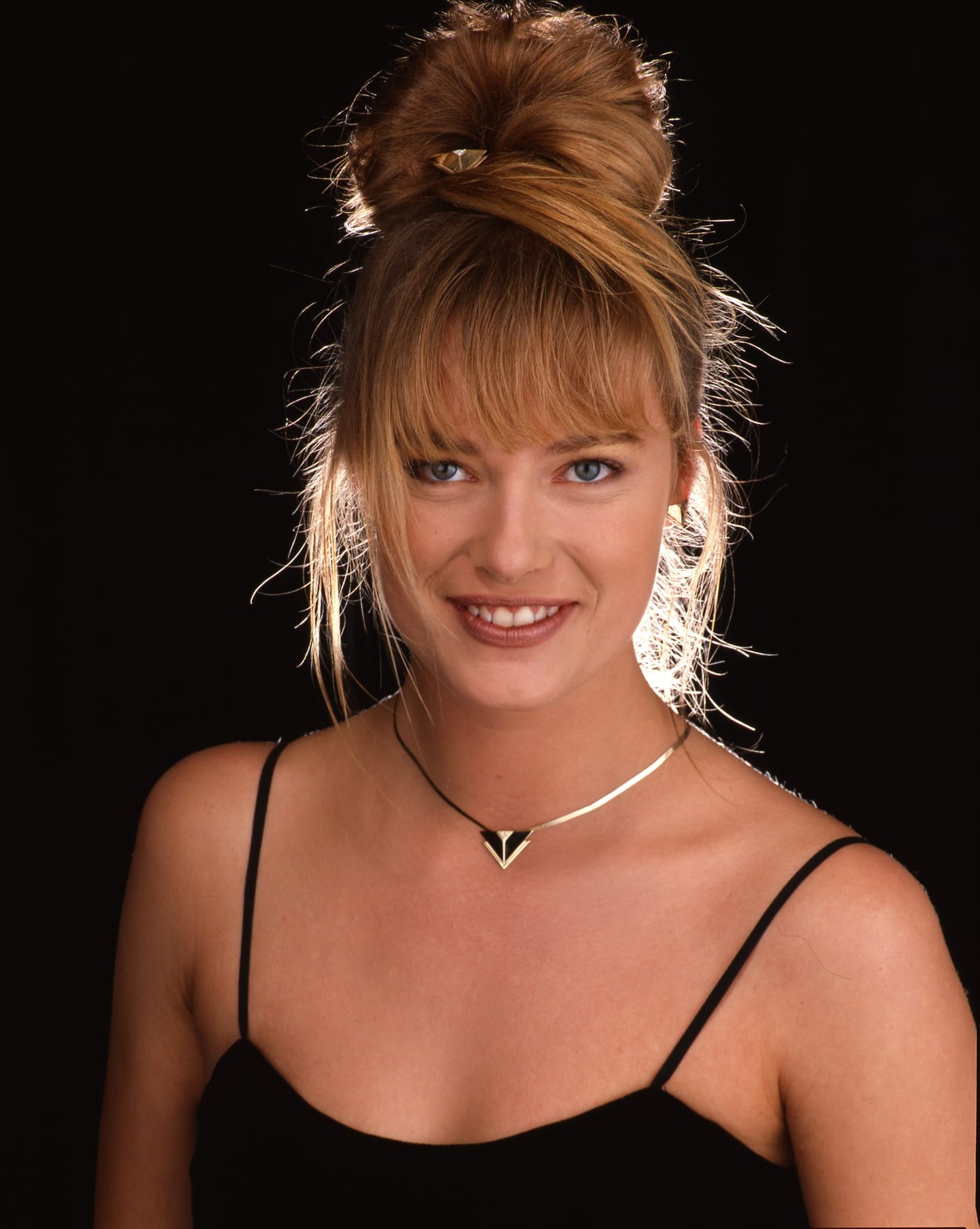
Before a screen on the back of the camera, there was a print that developed in about a minute. Studio photographers used it to see what the film was going to see.
For several decades, the last thing a studio photographer did before shooting was to make a picture that would never be published. An instant print, pulled from the back of the camera and peeled apart after about a minute, showed whether the lighting worked, whether the exposure was right, and whether the art director was happy. Only then was real film exposed.
The Robert Harper Photograph Library holds 4,005 unique colour Polaroid prints, according to its inventory. This article explains the general practice of instant proofing, why it existed and what the surviving prints can tell us. It describes the craft as it was commonly practised; it does not attribute particular equipment or film types to Robert Harper, which the inventory does not record.
Why was a proof needed at all?
Because the photographer was working blind. Film gives no feedback until it has been developed, and for most of the period the film in question was colour transparency, which has very little tolerance for exposure error and no printing stage at which to correct one. Our article on why studios shot medium-format transparencies explains that constraint.
Studio flash made the problem sharper. A burst of flash lasts a fraction of a second. The modelling lamps give an approximation, but the actual balance between a key light, a fill, a background light and a reflector is only visible in a photograph. A flash meter gives numbers. An instant print gives the picture.
How did instant film reach the professional studio?
Edwin Land demonstrated his one-step process in 1947, and Polaroid's first instant roll film followed in 1948. The products that mattered to professionals came later:
| Year | Development | Why it mattered in the studio |
|---|---|---|
| 1958 | Instant sheet film for 4×5 inch holders | View-camera users could proof on the camera they were shooting with |
| 1963 | Pack film | Flat packs of peel-apart film suited compact backs for medium-format cameras |
| 1972 | Integral film with the SX-70 system | Self-developing prints with nothing to peel; mainly a consumer and artists' format |
| 1973 | 8×10 inch instant film | Proofs at full size for the largest studio cameras |
| February 2008 | Polaroid announces the end of instant film production | Professional proofing had already moved to digital |
| Spring 2016 | Fujifilm discontinues FP-100C | The last widely used colour pack film ends |
Peel-apart film is the type most associated with proofing. Pulling the tab drew the exposed film between rollers, spreading processing reagent between negative and print. After a timed wait, the two were peeled apart.
How was a Polaroid proof made?
The essential point is that the proof was made through the same lens, at the same position, under the same lights as the final picture.
- Set up the shot. Subject, lighting, camera position and focus are arranged as for the final exposure.
- Fit the instant back. On a medium-format system camera, the roll-film back is removed and an instant-film back attached. On a view camera, an instant sheet holder slides in where the film holder goes.
- Expose. Aperture and flash power are set, allowing for any difference in speed between the instant film and the final film.
- Pull and wait. The development time depends on the film type and the temperature of the room. Cold studios meant longer waits.
- Peel and assess. Exposure, lighting ratio, shadows, reflections, composition, focus placement, stray objects at the edge of frame.
- Adjust and repeat. Move a light, add a card, change the aperture. Shoot another.
- Refit the film back and shoot. Often with a bracket of exposures either side.
On a demanding still life, this loop might run many times. Each print cost money and a minute or more, which imposed a useful discipline: change one thing, then look.
What did photographers look for in the print?
- Exposure and contrast. Were the highlights holding? Were the shadows empty?
- Lighting balance. The relationship between lights, which no meter reading fully conveys.
- Reflections. In glass, metal and lacquer, the camera sees things the eye edits out. A print showed the tripod reflected in a bottle or the edge of a softbox in a watch crystal.
- Composition for the page. The print could be held against the layout to check that there was room for a headline and that nothing important fell in the gutter between two pages.
- Mechanical confirmation. That the flash had fired in synchronisation with the shutter and nothing in the chain had failed.
- Approval. A physical print that client, stylist and photographer could all look at and agree on.
The proof was not a perfect predictor. Instant materials had their own colour and contrast, and their sensitivity seldom matched the final film exactly. Photographers knew from experience how the print related to their preferred emulsion and translated accordingly. Critical colour was judged on the transparency itself.
Why do so many survive?
Proofs were consumables, and many were binned at the end of a shoot. But they were also handy records. A print taped to a job sheet or kept with the transparencies showed how a set had been lit, useful if a client wanted the same look again, and showed the client what had been agreed. Stylists and art directors kept them as references. Photographers kept them because, quite often, they liked them.
That is the other half of the story. Instant prints have qualities of their own: a particular palette, a border, the occasional flaw at the edge where the chemistry spread unevenly. What began as a technical check came to be valued as an object.
What does the Polaroid collection at Archive.London contain?
The Polaroid collection records 4,005 unique colour Polaroid prints by Robert Harper. The catalogue describes the subjects as fashion, furniture, jewellery, watches, cosmetics, food, drink, perfume, still life and people, which mirrors the range of an approximately thirty-five-year career that included more than fifteen years of regular work for Elle and The Telegraph Magazine and commercial clients such as De Beers, Harrods and Heinz.
What is recorded is the number and the broad subject matter. What awaits cataloguing is the detail: which prints relate to which shoots, which correspond to transparencies elsewhere in the analogue holdings, and what any handwritten notes say. The count comes from the archive's inventory and has not yet been independently reconciled. The archive describes the prints as close to the photographer's working process, and it is fair to say that a collection of this size, taken together with the finished transparencies, offers a chance to study how studio pictures were built, step by step. The matching has not yet been done.
Each print is a physical original with no negative behind it. Small differences in colour, handling and age are part of the object, and any reproduction programme has to start from conservation. For scanning, the free film scan resolution calculator includes a Polaroid setting for working out pixel dimensions and file sizes.
What replaced the Polaroid?
The screen. Digital backs for medium-format cameras, and then tethered shooting to a monitor, gave an immediate, full-quality preview of the actual capture. The proof and the final picture became the same thing. Polaroid's announcement in February 2008 that it would stop making instant film came after studios had largely stopped needing it.
Something was given up in the exchange. A sequence of instant prints is a tangible record of decisions, in order, that a folder of deleted digital previews is not. In that respect a box of studio Polaroids resembles a set of contact sheets, and our guide on how to read a contact sheet applies much of the same thinking. The lighting problems the proofs were solving are described in jewellery photography on film.
Seeing the proofs
More than half of the Robert Harper Photograph Library is still on film and has yet to be scanned, and only a small selection has been published online by Archive.London, and the Polaroids are part of that largely unscanned material. Curators, publishers and researchers with an interest in studio process, and conservators with experience of instant prints, are invited to enquire through professional access.
Frequently asked questions
Why did photographers use Polaroids before digital?
To check a set-up before exposing film that could not be seen until it came back from the laboratory. An instant print showed whether the lighting, exposure, composition and reflections were right, whether the flash had synchronised, and whether the client approved. With transparency film, which tolerates very little exposure error, that check was a routine part of studio work.
What is a Polaroid back?
It is a film holder that takes instant film and fits a professional camera in place of the normal film back or sheet-film holder. Medium-format system cameras and large-format view cameras could accept one. The photographer exposed an instant print through the taking lens, judged it, then refitted the ordinary back and shot the final film.
How accurate was a Polaroid proof?
Good enough to decide, not identical. Instant materials had their own speed, contrast and colour, which differed from the transparency film used for the final picture. Photographers learned by experience how a given instant film related to a given emulsion and made a mental correction. The proof confirmed lighting balance and composition more reliably than exact colour.
Can you still buy Polaroid proofing film?
Not the professional peel-apart types. Polaroid announced in February 2008 that it would stop making instant film, and Fujifilm, which made compatible pack film, discontinued its last colour type, FP-100C, in spring 2016. Integral instant film is still manufactured for consumer cameras, but studio proofing moved to digital capture and tethered screens long ago.
Are studio Polaroids valuable as archive material?
They are valuable as evidence. A studio Polaroid records a stage in making a picture: the first lighting, an abandoned arrangement, sometimes a note. Each is a unique print with no negative, so it cannot be reissued from an original in the way a negative can be reprinted. That makes careful handling and digitisation important. No statement about monetary value is made here.
Sources
- Wikipedia, Instant film (dates of sheet, pack, integral and 8×10 film; 2008 and 2016 discontinuations; peel-apart timing)
- Wikipedia, Reversal film (exposure latitude of transparency film)
- Archive.London, Polaroids collection
Published by Archive.London. Corrections are welcome under our editorial policy.