
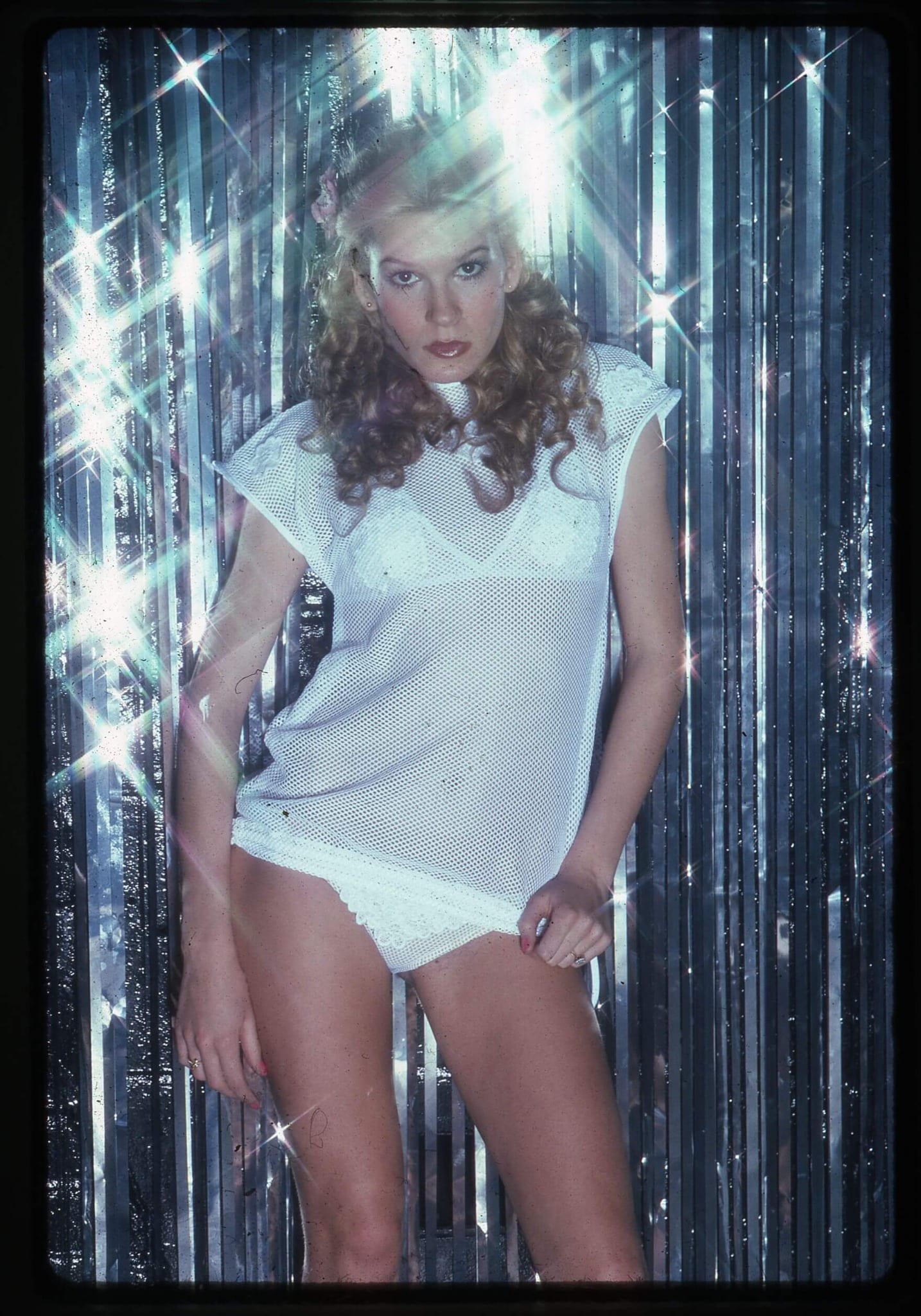
A first camera at seven, a first sale at fourteen, two years assisting three of the most exacting photographers in London, then thirty-five years of work. Most of it is still on film.
Robert Harper had his first camera at seven and sold his first photograph at fourteen. The picture was of The Who in concert. Between that sale and the 95,487 photographs now recorded in his archive lie a move from Scotland to London, an apprenticeship, two years assisting David Bailey, Helmut Newton and Lester Bookbinder at the Condé Nast studios, and a working life of approximately thirty-five years.
That is the outline, and it is nearly everything the record states about the man himself. This article sets out what is established, adds the public history that surrounds each stage, and is plain about what has not yet been documented. The fuller account sits on the Robert Harper biography page.
Who is Robert Harper, photographer?
The short answer is a London studio and editorial photographer of Scottish birth, whose work ran from the 1960s and 1970s into the digital era. He was a regular contributor to Elle and The Telegraph Magazine for more than fifteen years. His work also appeared in Vogue, Tatler, Cosmopolitan, Esquire, The Face, Wallpaper and Harpers & Queen. Commercial clients included De Beers, Harrods, Selfridges, Boots, Heinz, Diageo, the BBC, CBS Records and Montblanc.
Those are past-tense facts about a career. They are not endorsements, and none of the magazines or companies has any connection with the archive today.
What makes the career unusual to look at now is that so much of it is held together. The Robert Harper Photograph Library is a single photographer's archive held by a single owner, 825 Ventures Ltd, rather than a selection of best frames filed with an agency.
Glasgow and Islay: the two places he grew up
The record says Harper was born in Scotland and grew up in Glasgow and on the island of Islay. It says no more than that, so the places have to speak for themselves.
They could hardly be less alike. Glasgow is Scotland's largest city. Islay is the southernmost island of the Inner Hebrides, the fifth-largest of the Scottish islands at about 620 square kilometres, with a population today of a little over 3,000. Its capital is Bowmore and its main port is Port Ellen. The Northern Irish coast lies roughly 40 kilometres to the south, the ferry from Kennacraig on the mainland takes about two hours, and winter brings barnacle geese in numbers that have reached 35,000. The island is best known abroad for whisky: it has around ten working distilleries.
A city and an island, then, and the archive holds both kinds of picture. Its Scotland holdings include a dedicated section of 481 colour photographs of landscapes, seascapes, sunsets and churches. Which of them, if any, show Islay or Glasgow is a question the catalogue does not yet answer. Exact locations await slide-by-slide cataloguing.
First camera at seven, first sale at fourteen
Two ages are recorded, and they are the earliest fixed points in the story. A camera at seven. A sale at fourteen.
The second matters more than the first. Plenty of children are given cameras. Selling a photograph means that someone else judged a picture worth paying for, and the subject, a band on stage, is among the hardest things to photograph well. The archive's record does not say who bought the picture, or where or when the concert took place, and we do not guess. Our piece on the first photograph sold sets out the known facts and the public history around them.
What were the Condé Nast studios?
Harper moved to London to study photography, served an apprenticeship, and then spent two years at the Condé Nast studios assisting David Bailey, Helmut Newton and Lester Bookbinder.
The public history of those studios is well documented. Condé Nast's London magazines were based at Vogue House on Hanover Square, a building completed in 1958. The gallery biography of the photographer John Swannell, who was himself an assistant there in the 1960s, places the studios on the fifth floor, says they were known as Vogue Studios, and describes a warren of rooms in which Richard Avedon, Helmut Newton, David Bailey or Norman Parkinson might all be working on the same day. Swannell's duties, by the same account, were the basic ones: setting up backdrops and arranging lights.
That is what "assisting" means, and it is why the word is used precisely here. An assistant loads film, builds sets, moves lights, keeps notes and watches. It is a training in how pictures are made to a deadline for a printed page. Harper's record does not say which years he was there or which sittings he worked on. Our article on assisting Bailey, Newton and Bookbinder looks at the three photographers and what each was publicly known for.
The career in outline
| Stage | What the record states | What is not recorded |
|---|---|---|
| Childhood | Born in Scotland; grew up in Glasgow and on Islay; first camera at seven | Dates, schools, addresses |
| First sale | A photograph of The Who in concert, sold at fourteen | Year, venue, buyer |
| Training | Moved to London to study photography; apprenticeship | Institution, employer, dates |
| Condé Nast studios | Two years assisting David Bailey, Helmut Newton and Lester Bookbinder | Which years, which sittings |
| Education | A degree in photography, taken in London | College name and dates |
| Independence | Freelance assistant to Terence Donovan, Tony McGee, Alan Randall and Alex Chatelain, then his own London studio | Studio address and dates |
| Editorial | Regular contributor to Elle and The Telegraph Magazine for more than fifteen years | Issue-by-issue list |
| Later career | High-end marine photography: sailing and superyachts | Vessel names, dates |
The right-hand column is the honest part. Each blank is something that the photographs themselves, the surviving magazine pages and the notes filed with the film may eventually fill in.
What the archive holds, by numbers
The inventory records 95,487 unique photographs: 52,684 analogue and 42,803 digital. Counting duplicates and variants, the total is 177,143 frames. These figures come from the archive's own inventory and have not yet been independently reconciled.
The analogue side is mostly medium-format colour transparencies, with black-and-white negatives, contact sheets, larger-format film, 35mm slides and more than 4,000 individual Polaroid prints. The online catalogue describes 330 collections across 24 principal categories, from fashion, jewellery and fragrance to food, toys, sport and corporate technology. The fashion clothing inventory alone records 6,729 unique shots across 23,115 frames, and the fashion collection is among the deepest parts of the library.
The subjects range more widely than a fashion career might suggest. The inventory notes De Beers diamonds and the Millennium Star, New Bond Street in 1976, motor racing at Brands Hatch, early mobile telephones, microchip development, credit cards and Walkmans. The music subjects include The Who, David Bowie, Eric Clapton and Paul McCartney and Wings; portrait subjects include Robert De Niro, Sir Bobby Charlton and Ken Russell. These are catalogued subjects, not claims of commission or clearance. Collections may overlap, so category counts should not be added together.
Why most of it is not yet online, and how to follow it
More than half of the archive is film in boxes. The analogue material largely awaits scanning and keyword cataloguing, which means more than half of the archive is still on film and has yet to be scanned, and only a small selection has been published online by Archive.London. Much of the work did run in magazines at the time. What has not happened is the step that makes a photograph findable now.
That is the reason the archive is worth watching. Every box scanned turns an inventory line into pictures with dates, places and names attached, and some of the blanks in the table above will close. Later in the career the work moved from the studio to open water, a shift described in from the studio to the sea.
The photography archive index is the place to search what has been described so far. Journalists, curators, publishers and researchers who want to go further than the online catalogue can ask about the material directly through professional access.
Frequently asked questions
Who is Robert Harper the photographer?
Robert Harper is a Scottish-born photographer whose career ran for approximately thirty-five years, chiefly in London. He was a regular contributor to Elle and The Telegraph Magazine for more than fifteen years, and his work also appeared in Vogue, Tatler, Cosmopolitan, Esquire, The Face, Wallpaper and Harpers & Queen. His archive is presented at Archive.London as the Robert Harper Photograph Library.
Where did Robert Harper grow up?
He was born in Scotland and grew up in Glasgow and on Islay, the southernmost island of the Inner Hebrides. The archive's record gives no dates or addresses for those years. It records only that he had his first camera at seven and sold his first photograph, an image of The Who in concert, at fourteen.
Did Robert Harper work with David Bailey and Helmut Newton?
The archive records that Harper spent two years at the Condé Nast studios assisting David Bailey, Helmut Newton and Lester Bookbinder. Assisting is a specific studio role: preparing sets, lights, cameras and film for the photographer. The record does not give the years, and nothing here implies endorsement of the archive by those photographers or their estates.
How many photographs are in the Robert Harper archive?
The inventory records 95,487 unique photographs, made up of 52,684 analogue and 42,803 digital images, or 177,143 frames including duplicates and variants. The online catalogue describes 330 collections in 24 principal categories. The figures come from the archive's own inventory and have not yet been independently reconciled; collections may overlap.
Who owns the Robert Harper Photograph Library?
The archive is owned by 825 Ventures Ltd, London, the owner and rights holder, and is presented publicly through Archive.London. Enquiries about research, licensing, digitisation and publishing go to one counterparty. Licensing is available by negotiation, subject to rights review of the individual images concerned.
Sources
- Islay (Wikipedia)
- John Swannell biography, Chris Beetles Gallery (on Vogue Studios)
- Vogue House (Wikipedia)
Published by Archive.London. Corrections are welcome under our editorial policy.