
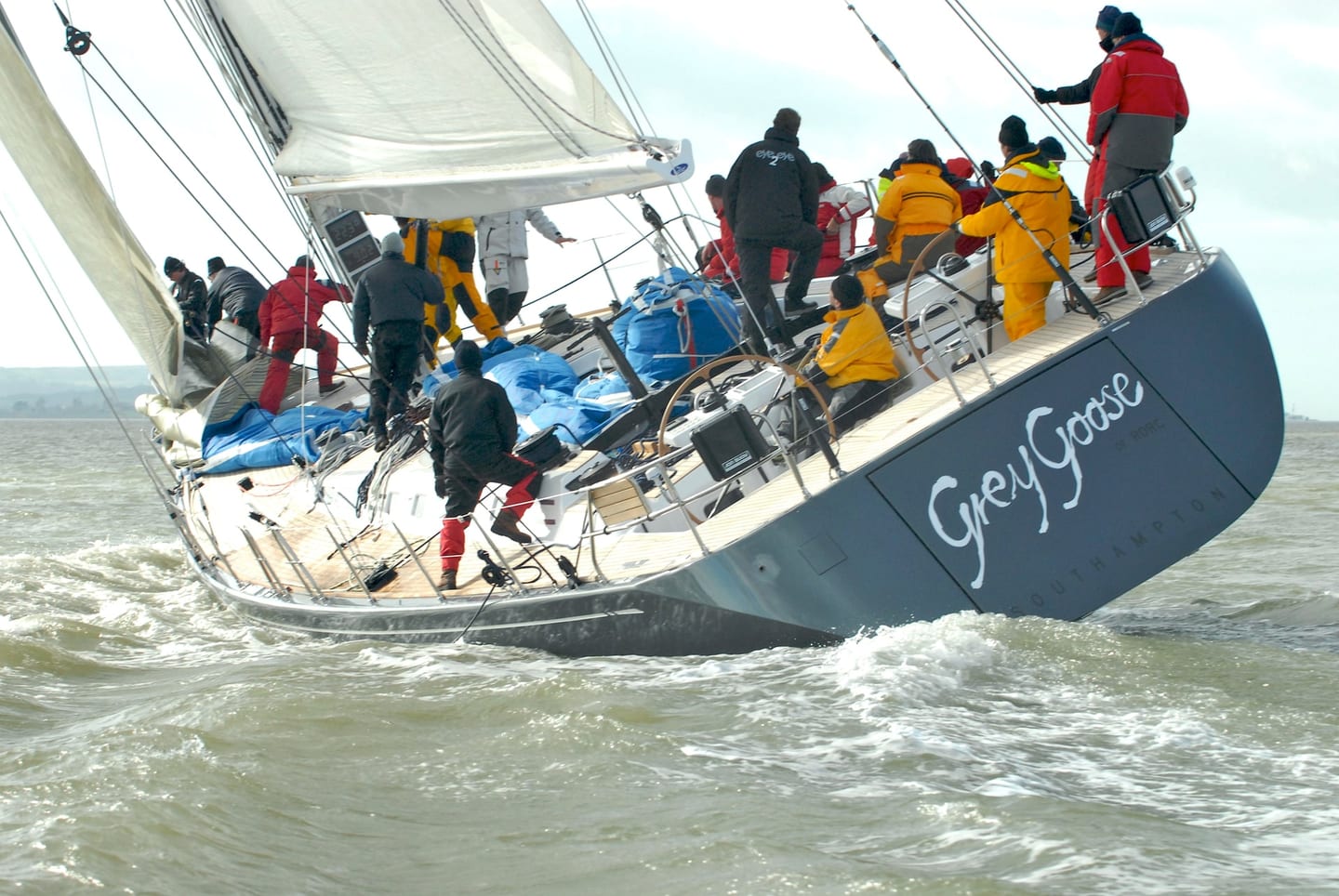
After decades of fashion, jewellery and still life, Robert Harper turned to high-end marine photography. The work sits inside a digital collection of 42,803 images that has not yet been sorted by subject.
The later part of Robert Harper's career turned to the sea. Within approximately thirty-five years of professional photography, much of it in fashion, beauty, jewellery and still life for magazines and commercial clients, the record notes a later move into high-end marine photography: sailing and superyachts.
It is a real change of working conditions. A studio photographer controls every light in the room. On the water the subject moves, the platform moves and the sun does as it pleases. The marine and superyachts collection is where that later work is described, and it is also one of the least sorted parts of the archive.
What is superyacht photography?
It is a specialist trade with its own clients and conventions. Shipyards need pictures of a new build for launch publicity. Designers and naval architects need a record of their work. Brokers need a full set of images to sell a yacht, and charter companies need them to let it by the week. Magazines need features.
A full commission usually has several parts:
| Element | What it involves | Closest studio discipline |
|---|---|---|
| Running shots | The yacht under way, photographed from a chase boat or the air | Location and action photography |
| Exterior at anchor | Profile, bow and stern views in calm water and low sun | Architectural photography |
| Interiors | Saloons, cabins, galleys and bathrooms, each lit and styled | Interiors photography |
| Details | Joinery, fittings, upholstery, glass, deck hardware | Product still life |
| Life on board | Crew, guests, tenders, water toys, dining | Fashion and portraiture |
The right-hand column is the reason a studio photographer is well suited to the work. A yacht interior is a sequence of small, expensive rooms full of reflective surfaces: lacquer, chrome, mirror and glass. They present, at larger scale, the same problems as a perfume bottle or a watch.
How big is a superyacht, and how big is the trade?
There is no agreed definition. The word is generally applied to professionally crewed yachts from about 40 metres to more than 180 metres long, and some usage starts at 24 metres. The UK's Large Commercial Yacht Code draws its line at 24 metres or more at the waterline.
The fleet follows the seasons. Large yachts typically spend the summer in the Mediterranean and the winter in the Caribbean, and the French Riviera ports of Cannes, Antibes, Saint-Tropez and Monte Carlo are fixed points in the summer circuit. The industry's main shop window is the Monaco Yacht Show, launched in 1991 as a brokers' event for yachts over 20 metres and held each September in Port Hercule, with around 125 yachts on display in the water.
Photography runs through every part of this. A yacht that is for sale or for charter is, for most prospective buyers and guests, first encountered as a set of pictures.
What does the Robert Harper archive record about marine work?
The record makes four statements.
First, that marine photography, including sailing and superyachts, was the later part of Harper's career. Second, that the Côte d'Azur is among the places he worked. Third, according to the catalogue, that the marine work covers sailing, superyachts, coastlines, people and life on the water. Fourth, that all of it is held within the archive's digital collection of 42,803 unique photographs.
The catalogue then adds a sentence that deserves credit for plainness: "The present inventory does not separate a reliable marine-only total from that larger digital holding. A separate marine total is not currently available."
So there is no number to quote for the marine pictures, and we do not offer one. The record does not name any vessel, yard, owner, regatta or harbour, and no client relationship with any yacht builder or broker is recorded or implied.
Around the marine work the catalogue lists related collections with firmer counts. Watersports equipment accounts for 58 unique shots across 132 frames, and water and underwater subjects for 203 unique shots across 241 frames. These are separate inventory lines, they may overlap with other categories, and none has been independently reconciled.
From jewellery and fragrance to hulls and decks
Read the client list and the subject list together and the move to the sea looks less like a departure than a change of scale.
Harper's commercial clients included De Beers, Harrods, Selfridges and Montblanc. He was a regular contributor to Elle and The Telegraph Magazine for more than fifteen years. The catalogue's principal categories include fashion, beauty, jewellery, footwear, handbags, fragrance, watches and interiors and design. The technical demands of that work are described in our piece on photographing De Beers diamonds: reflections, exact colour and surfaces that show every flaw.
A superyacht asks for all of it at once, outdoors. Whether Harper's marine pictures show that continuity is a matter for people who look at them, not for an article to assert. The archive's catalogue makes the argument that they do; the pictures will make it better.
Islay, the Côte d'Azur and a life near water
There is a biographical echo that is easy to overstate. Harper grew up partly on Islay, the southernmost island of the Inner Hebrides, which is reached from the mainland by a ferry crossing of about two hours. His later career was in marine photography.
The record supports nothing beyond the two facts. It does not say that one led to the other, and the archive's own marine page is careful to note that the location of each photograph "remains a separate question for image research". The Scottish coast does appear elsewhere in the archive, in a dedicated group of 481 colour slides of landscapes, seascapes, sunsets and churches. The early years are covered in from Islay to the Condé Nast studios, and the landscape holdings in black-and-white landscapes, 1975.
Why the marine work is digital, and why it is uncatalogued
Most of what makes the Robert Harper archive unusual is on film: 52,684 unique analogue photographs that largely await scanning. The marine work is the opposite case. It belongs to the 42,803 digital photographs, so it needs no scanner.
What it needs is description. A digital collection that has been counted but not sorted by subject cannot be searched for a vessel, a harbour or a year. Digital files often carry their own evidence, since cameras write the date, time and sometimes the location into each file's metadata. Anyone curious about what their own files record can check with the EXIF and metadata viewer. Whether Harper's files retain that data, and how complete it is, has not been established.
Until that work is done, several things remain unknown:
- How many marine photographs there are.
- Which yachts, yards and designers appear.
- The dates and places.
- How the pictures divide between exteriors, interiors, sailing and people.
- Which, if any, were published.
For the marine trade this is the practical point. Yachts change hands, names and interiors, and are refitted or broken up. A photographer's dated record of a vessel as it was is the sort of material that builders' archives, brokers and yacht historians go looking for years later. This one has not yet been indexed, and more than half of the archive as a whole is still on film and has yet to be scanned, and only a small selection has been published online by Archive.London.
For shipyards, brokers and marine publishers
Yards, designers, brokers and marine editors who think a particular vessel or period may be represented can ask directly through the contact page, giving the yacht's name, builder and approximate dates; licensing is by negotiation with the single rights holder, subject to rights review, and the wider places and travel holdings are open to the same enquiries.
Frequently asked questions
What is superyacht photography?
Superyacht photography is the specialist trade of photographing large, professionally crewed yachts for builders, designers, brokers, charter companies and magazines. A typical commission covers exteriors under way, interiors cabin by cabin, deck and detail shots and life on board. It combines architectural, interiors, product and location photography in one job.
How many marine photographs are in the Robert Harper archive?
No reliable figure exists yet. The marine and superyacht work is held within the archive's digital collection of 42,803 unique photographs, and the inventory does not separate a marine-only total. Archive.London has chosen not to publish an estimate. A count will follow subject-level cataloguing of the digital files.
How big is a superyacht?
There is no official definition. The term is generally used for professionally crewed yachts from about 40 metres to more than 180 metres in length, and some sources include yachts from 24 metres. The UK's Large Commercial Yacht Code defines a large yacht as one of 24 metres or more at the waterline.
Where did Robert Harper photograph superyachts?
The archive's catalogue records superyachts on the Côte d'Azur, the French Riviera coast that includes Cannes, Antibes and Saint-Tropez. Sailing, coastlines, people and life on the water are also described. Individual locations, vessels and dates have not yet been catalogued image by image, so no fuller list can be given.
Can yacht builders or owners license images from the archive?
Licensing is available by negotiation with 825 Ventures Ltd, the owner and rights holder, subject to rights review. Yacht photographs can involve owners' privacy, design rights and identifiable people, so each request is assessed individually. Enquiries should name the vessel or yard if known, the approximate period and the intended use.
Sources
Published by Archive.London. Corrections are welcome under our editorial policy.