
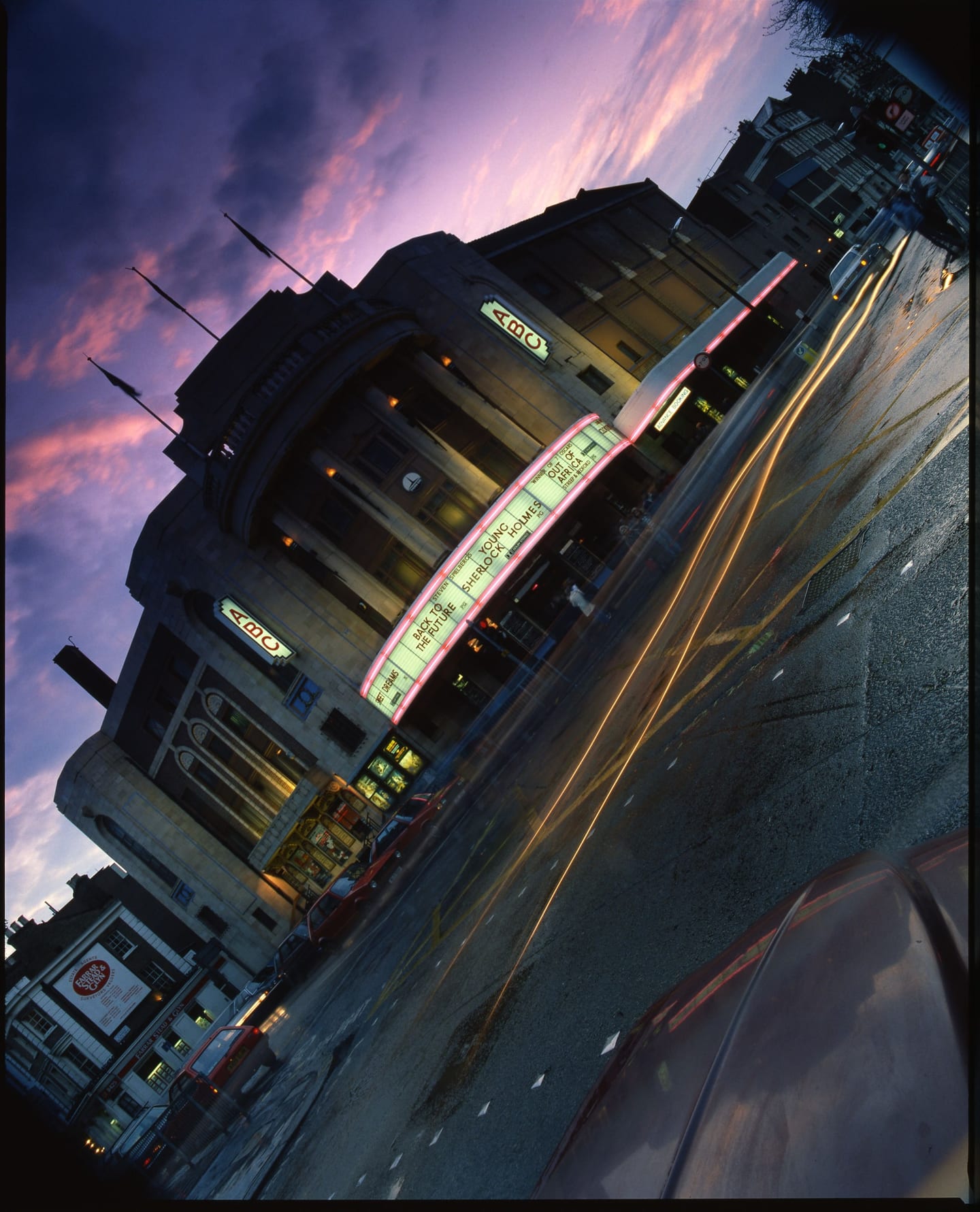
One small collection in the Robert Harper Photograph Library holds 101 street photographs. The inventory names New Bond Street in 1976, the Chelsea Arts Club in the 1970s and a fire in the 1960s.
The Robert Harper Photograph Library has a collection of 101 street photographs, and its inventory attaches three labels to them: the Chelsea Arts Club in the 1970s, New Bond Street in 1976 and a fire in the 1960s. A members' club for painters, the West End's best-known luxury shopping street and an emergency. It is a short list, but each item is a specific place in a specific decade, and that precision is what makes street photographs useful to historians.
The Chelsea Arts Club and historic London streets collection counts 101 unique shots and 101 total frames, which suggests that each frame is its own picture, with no duplicate variants.
What do the London street scenes in the archive show?
The inventory gives the three subjects above and no more. The catalogue is candid about the limit, describing them as "powerful catalogue anchors, though exact dates, addresses and event details require confirmation from the original frames and notes".
So the following are not yet recorded: how the 101 frames divide between the three subjects, which stretch of New Bond Street appears, whether the Chelsea Arts Club pictures are of the building, its garden or its members, and where and when the fire was. The catalogue's own word for the fire is "1960s", with no location beyond London.
The wider London holdings add other views. The corporate material is described as recording the rush hour on London Bridge, workplace activity and construction, and the colour landscapes include London skies alongside Scotland and New York.
New Bond Street in 1976: what was there?
The street's public history gives a sense of what a camera pointed down it in 1976 would have found.
Bond Street takes its name from Sir Thomas Bond, whose syndicate bought Clarendon House in 1686 and developed the land. Most of the building along New Bond Street, the northern section running up to Oxford Street, took place in the 1720s. By the twentieth century it was the address of London's auctioneers, jewellers and picture dealers.
Several of the institutions on the street in 1976 had been there for generations:
- Sotheby's, at numbers 34 to 35 since 1917.
- Fenwick, the department store, which had traded on the street since 1891.
- The Fine Art Society, founded in 1876 and so in its centenary year.
- Phillips, the auctioneers, founded in 1796 and long associated with number 101.
The entire street was placed in the Mayfair Conservation Area in 1969, which is one reason its upper storeys have changed less than its shopfronts. Later arrivals help to date a picture by their absence. The bronze Allies, with Churchill and Roosevelt on a bench, was not unveiled until May 1995. De Beers, one of Robert Harper's clients, did not open a shop under its own name on neighbouring Old Bond Street until 2002, a history touched on in photographing De Beers diamonds.
None of this says what is in Harper's frames. It says what a researcher might look for in them.
What was London like in 1976?
The year has a strong outline in public memory.
| Date in 1976 | Event |
|---|---|
| 21 January | First commercial Concorde flight leaves Heathrow |
| 16 March | Harold Wilson announces his resignation |
| 5 April | James Callaghan becomes Prime Minister |
| 23 June to 27 August | The heatwave; somewhere in England reaches 32°C on each of fifteen consecutive days to 7 July |
| 30 August | Riots at the Notting Hill Carnival |
| 25 October | The National Theatre opens on the South Bank |
| 15 December | Denis Healey announces a £2.3 billion IMF loan |
Inflation ended the year at 16.5 per cent, having been higher still. It was also the year British punk surfaced, a few miles and a world away from Mayfair.
A luxury street in a year of drought and financial crisis is an interesting subject. The inventory records only the year, not the month, so there is no saying yet whether the pavements in these photographs are sunlit or wet.
The Chelsea Arts Club in the 1970s
The second label points south-west, to Old Church Street. The Chelsea Arts Club was founded at the start of the 1890s at the instigation of James McNeill Whistler, as a Chelsea rival to the older Arts Club in Mayfair. It first met in rooms on the King's Road and moved in 1902 to 143 Old Church Street, a house with a large garden, where it remains.
For half a century the club was known to the public for its balls. From 1908 to 1958 it held fancy dress balls at the Royal Albert Hall to raise money for artists' charities, until the hall banned them. In 1966 the club was redecorated, a new bar opened and membership was opened to women artists. The 1970s club that the inventory names was therefore a recently changed institution.
It is a private members' club. What the photographs show, and of whom, is not recorded. No connection between the club and the archive is implied.
Why does a studio photographer's archive contain street photographs?
Robert Harper moved to London from Scotland to study photography, served an apprenticeship, spent two years at the Condé Nast studios and then set up his own studio. His career, traced in from Islay to the Condé Nast studios, was chiefly editorial and commercial: Elle and The Telegraph Magazine for more than fifteen years, and clients including Harrods and Selfridges.
The record does not explain why the street photographs were taken. They may be assignments or personal work, and the catalogue does not say which. What can be said is that they sit beside an archive full of the same city's products. Shoes, handbags, fragrance bottles, telephones and toys were photographed in the studio over the following decades. The street scenes are the outdoor counterpart: the shop windows from the other side.
How to research and date an old London street photograph
For anyone working with period street photographs, their own or an archive's, the same checks apply:
- Shopfronts and fascias. Trade directories and planning records date a named shop to within a few years.
- Vehicles. Registration suffixes and bus liveries narrow a date quickly.
- Street furniture. Lamp standards, parking meters, telephone kiosks and road markings all changed on known schedules.
- Posters and newspaper bills. A film poster or headline can give a week.
- The film itself. Edge markings, mount types and processing stamps often carry a date.
Scanned frames can be laid out for side-by-side comparison with the contact sheet maker, and embedded dates in existing scans can be read with the EXIF and metadata viewer.
What is still in the boxes, and who should ask
The street scenes are a counted but not yet fully described collection, and they sit within analogue holdings of 52,684 unique photographs that largely await scanning and cataloguing. More than half of the archive is still on film and has yet to be scanned, and only a small selection has been published online by Archive.London. The inventory describes the archive's London street scenes as running from the 1960s to the 1970s, and whether further street material lies in folders filed under other headings is not known. The counts are inventory figures and have not been checked frame by frame against the physical material.
For London historians that is the attraction. A dated street, a named club and an unidentified fire are three research questions waiting for scans. The same decade's rural counterpart is described in black-and-white landscapes, 1975.
Publishers, documentary researchers and local history groups working on Mayfair or Chelsea can find out how requests are handled on the page for picture agencies and researchers.
Frequently asked questions
Are there photographs of New Bond Street in the 1970s in the archive?
Yes. The inventory of the Robert Harper Photograph Library records New Bond Street in 1976 within a street scenes collection of 101 unique shots. The catalogue does not yet say how many of the 101 show New Bond Street, which part of the street appears or the month. Those details await confirmation from the original frames.
What did New Bond Street look like in 1976?
New Bond Street in 1976 was long established as a luxury shopping street, with auction houses, jewellers, galleries and fashion retailers. Sotheby's had been at numbers 34 to 35 since 1917 and Fenwick had traded there since 1891. The street had been part of the Mayfair Conservation Area since 1969, so much of its fabric is recognisable today.
What is the Chelsea Arts Club?
The Chelsea Arts Club is a private members' club for artists, founded at the start of the 1890s at the instigation of James McNeill Whistler. It has occupied 143 Old Church Street, Chelsea, since 1902. It ran fancy dress balls at the Royal Albert Hall from 1908 to 1958 and opened membership to women artists in 1966.
Can I use 1970s London photographs from the archive in a book or documentary?
Licensing is available by negotiation with 825 Ventures Ltd, the owner and rights holder, subject to rights review. Street photographs can include identifiable people, shopfronts and signage, so each proposed use is assessed individually. Researchers should describe the place, period, intended use and deadline when they enquire.
Sources
- Bond Street (Wikipedia)
- Chelsea Arts Club (Wikipedia)
- 1976 in the United Kingdom (Wikipedia)
- 1976 British Isles heatwave (Wikipedia)
Published by Archive.London. Corrections are welcome under our editorial policy.