
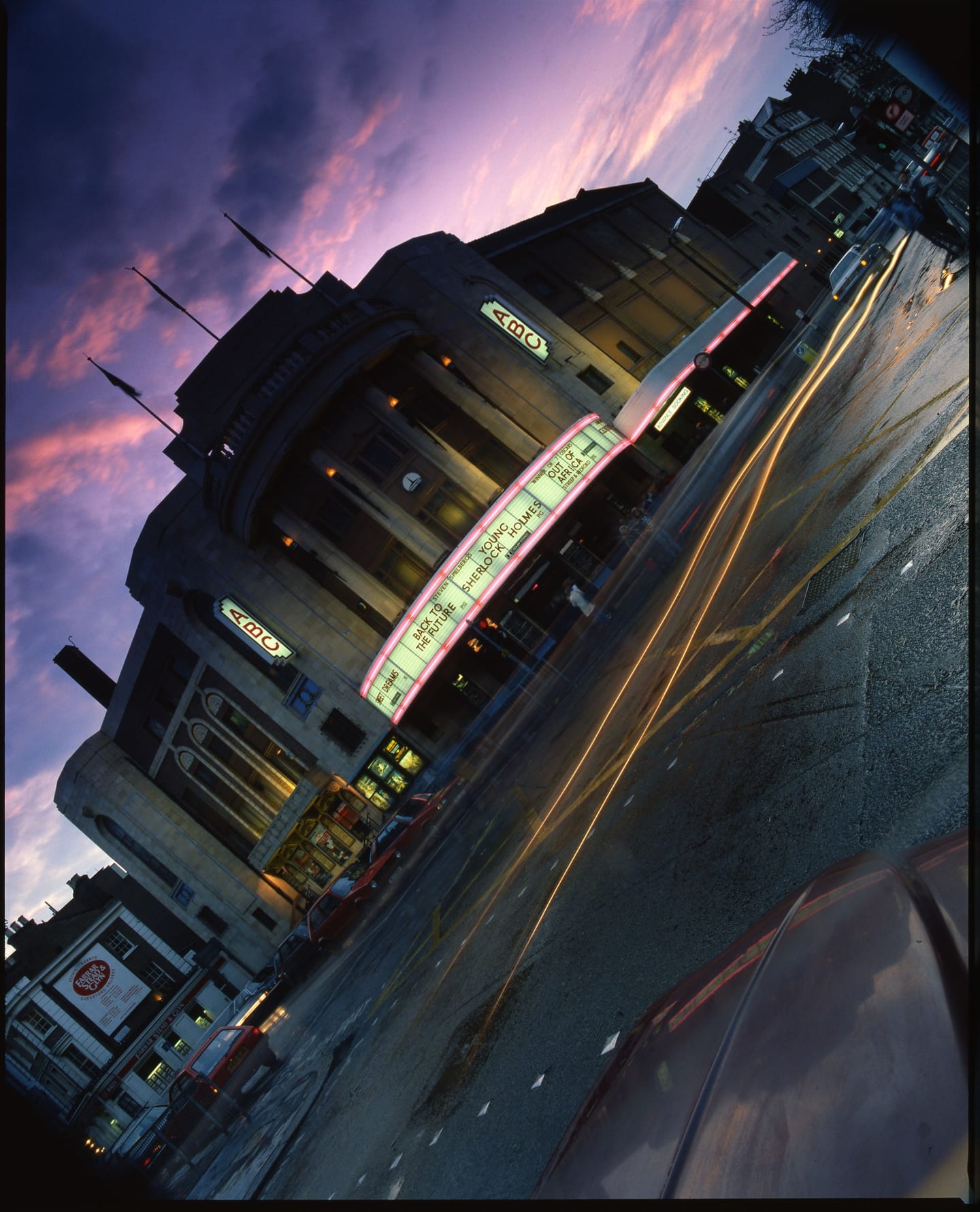
London was not simply where Robert Harper worked. It was the machinery around the work: studios and magazines, department stores and restaurants, performers, designers, crowded bridges and streets capable of changing character from one decade to the next.
Harper arrived from Scotland to study photography and entered the professional life of the capital through an apprenticeship and two years at the Condé Nast studios. He assisted David Bailey, Helmut Newton and Lester Bookbinder before establishing his own studio and a career rooted in London's editorial and commercial culture.
The city at work
The archive's London material does not form one continuous documentary survey. It appears through distinct assignments, locations and observations.
The street holdings include New Bond Street in 1976, Chelsea Arts Club during the 1970s and scenes connected with a London fire in the 1960s. Corporate material records the rush hour on London Bridge, workplace activity, construction and communications technology. Other photographs move indoors, into shops, restaurants, studios, workshops and carefully designed commercial interiors.
Together they create a layered portrait. This is London as a place of movement and display, where fashion, finance, culture and ordinary working life occupy neighbouring frames.
New Bond Street, 1976
New Bond Street carried a particular concentration of luxury, retail tradition and social performance. Harper's 1976 photographs belong to a period before the contemporary street was remade by global flagship stores and digitally controlled branding.
The value of such images lies in detail: façades, signs, vehicles, dress, pace and the unplanned relationship between people and place. An ordinary street view can become historically precise simply because the city has continued to change.
The editorial capital
London also appears indirectly through Harper's magazine work. His regular contributions to Elle and The Telegraph Magazine continued for more than fifteen years. His wider work was associated with publications including Vogue, Tatler, Cosmopolitan, Esquire, The Face, Wallpaper and Harpers & Queen.
Department stores and retailers such as Harrods and Selfridges formed part of his commercial world. Fashion, beauty, jewellery, portraiture and still life were made within the network of editors, stylists, art directors, studios and suppliers centred on the city.
Archive.London treats these studio images as part of London's visual history, even where the city itself is not visible in the finished frame.
A London archive in London
The Robert Harper Photograph Library is now presented through Archive.London. Its relationship to the city is therefore both historical and current: London shaped the photographer's career, and London remains the point from which the collection is being preserved, interpreted and made available for serious use.
Street and location material can be researched by place, subject and period. Professional enquiries are welcomed for publishing, exhibitions, documentary production, local history, design research and rights-managed licensing.
Enquire about New Bond Street in 1976 Enquire about Chelsea Arts Club in the 1970s Explore British fashion photography Enquire about London photographs