For Robert Harper, Scotland was not an exotic destination or an assignment briefly entered. It was the country of his beginning.
Born in Scotland and raised in Glasgow and on the island of Islay, Harper learned the character of its light before photography became his profession. The archive's Scottish landscapes can therefore be read through more than topography. They return to weather, distance, coast and terrain with the attention of someone for whom these things were already familiar.
Mountains, lochs and changing skies
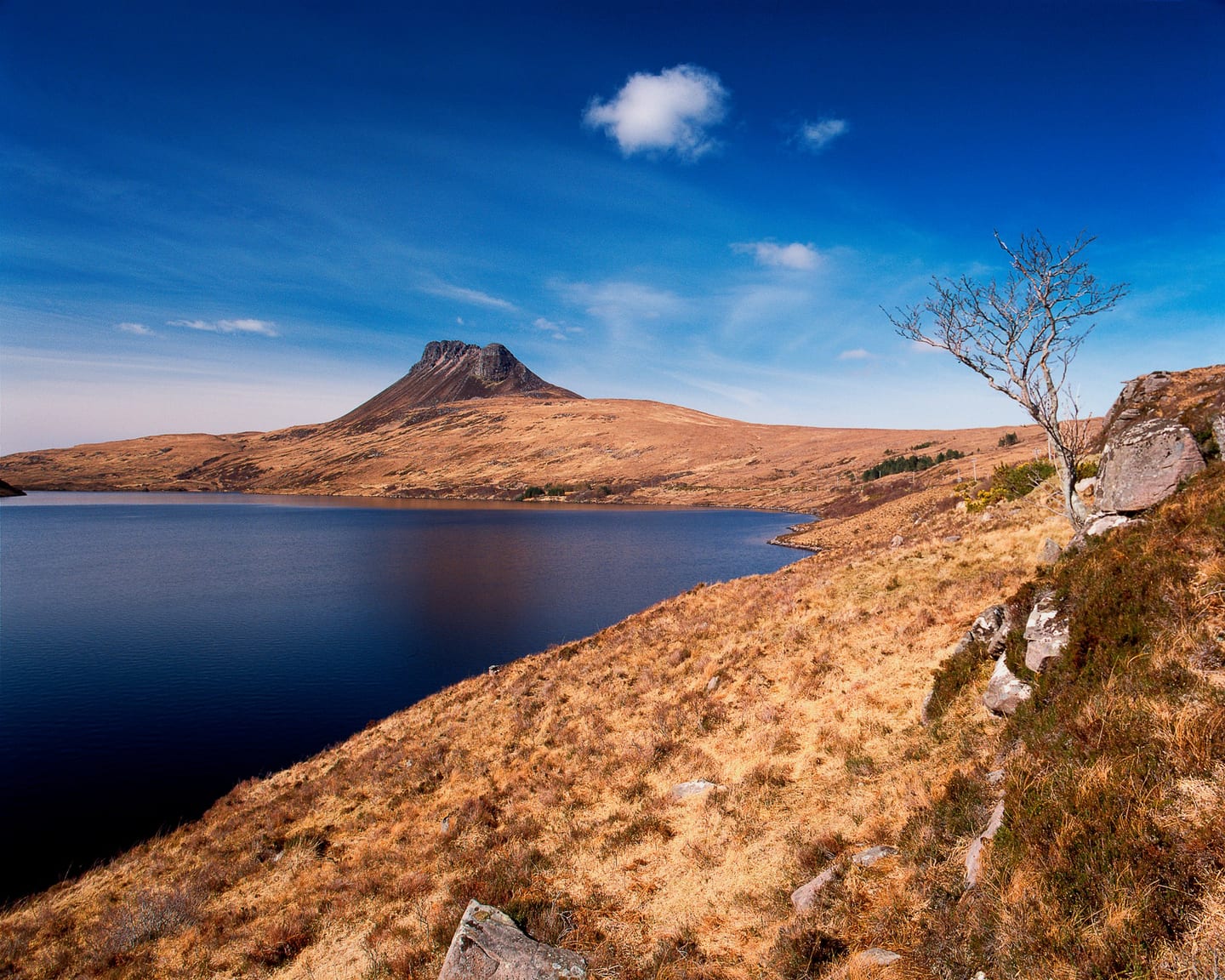
A dedicated Scotland inventory section contains 481 colour photographs of landscapes, seascapes, sunsets and churches. Scotland also appears within a broader landscape collection of 1,135 colour images, including extensive Highland mountain and loch scenery made through different seasons, weather conditions and times of day.
The categories overlap, so their numbers must not be combined without image-level cataloguing. Archive.London will preserve that distinction and will not present an inflated total.
The photographs move through broad views and quieter observations. Mountains establish scale. Lochs hold weather and reflection. Churches place human structures within the landscape. Sunset and shifting cloud allow the same place to become several different pictures.
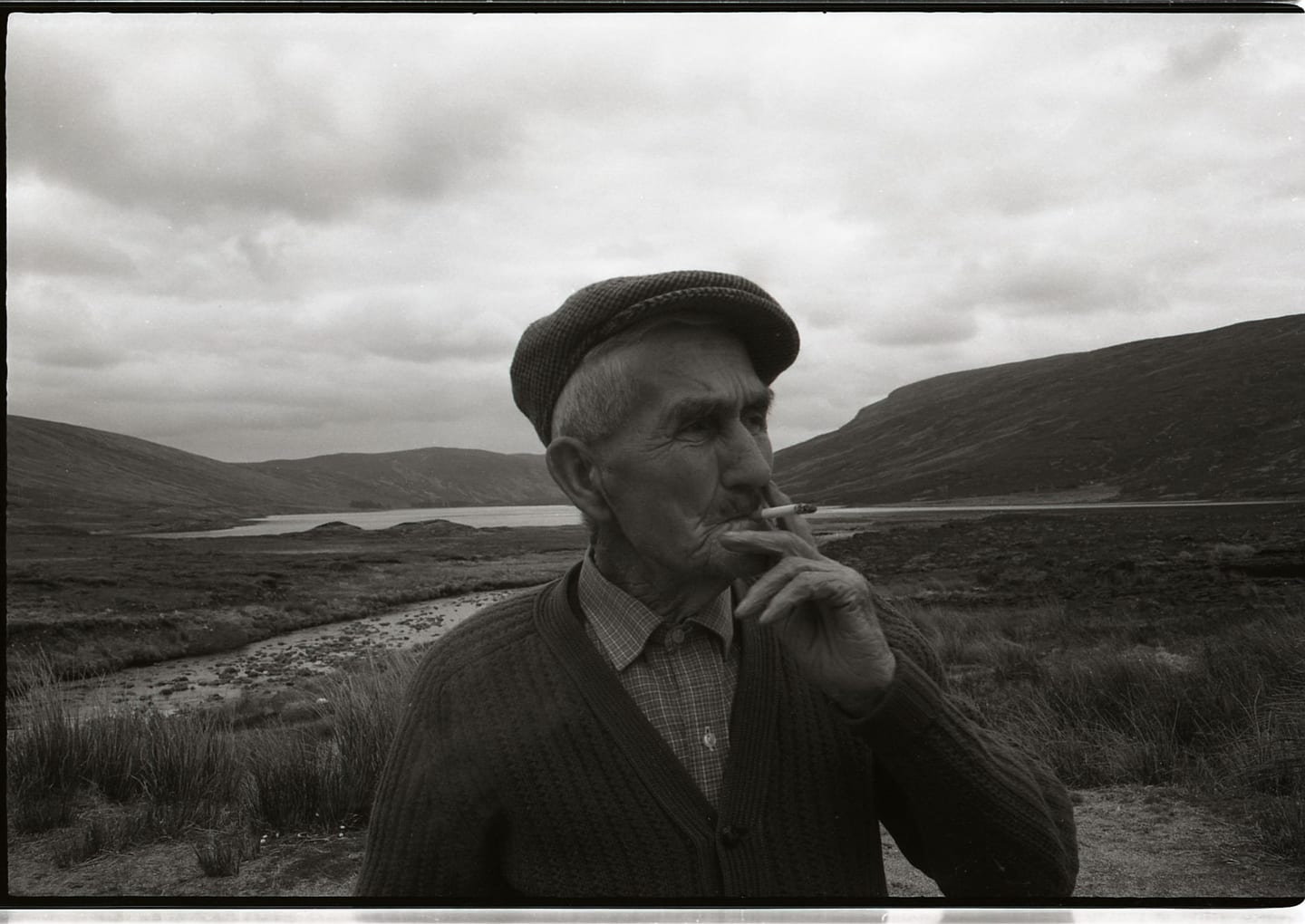
Black and white, 1975
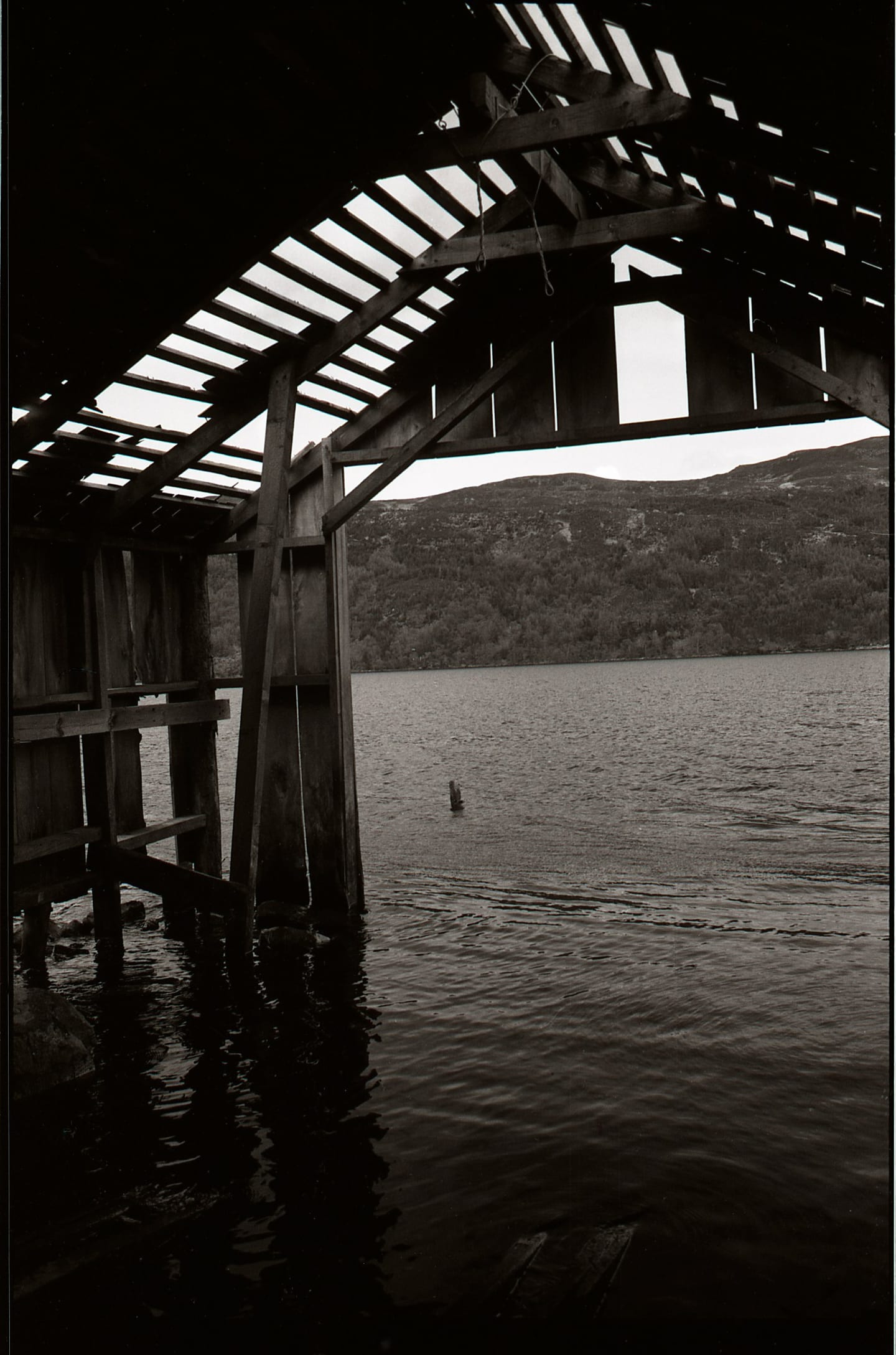
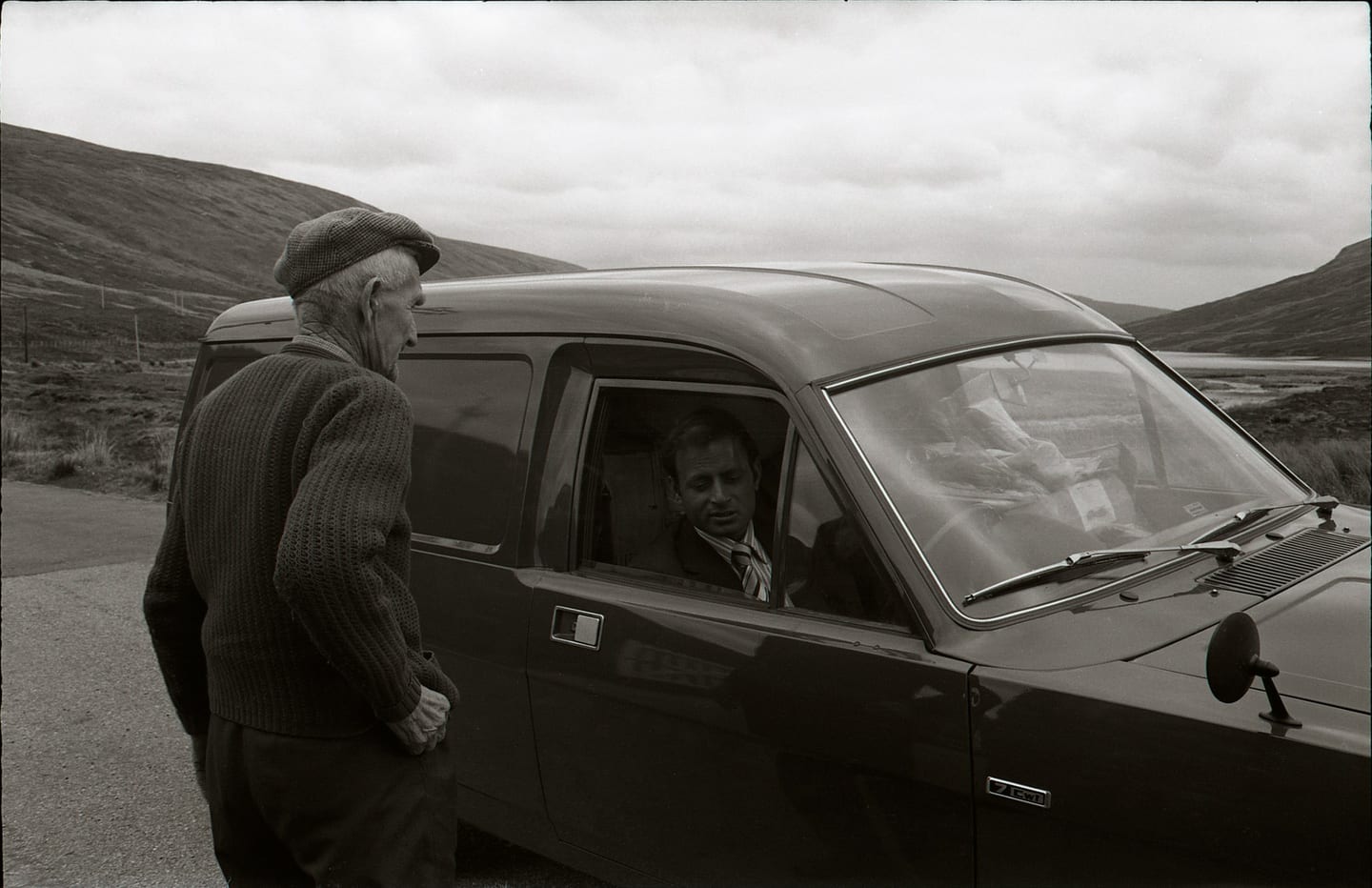
Another landscape group contains 560 black-and-white negatives and contact-sheet images associated with rustic buildings and off-grid living in 1975. These photographs introduce people, habitation and material life into a collection otherwise dominated by land and sky.
Black and white changes the descriptive order of a landscape. Colour no longer separates heather, stone, water and cloud. Texture, tonal weight and geometry become more pronounced. Contact sheets also preserve sequence, showing how the photographer approached, adjusted and selected rather than presenting only the final frame.
From Islay to London and back again
Harper left Scotland for London to study photography, later spending two years at the Condé Nast studios and establishing a career in fashion, beauty, advertising and portraiture. His Scottish work stands apart from the controlled construction of the studio, but the disciplines are related.
The same eye that organised jewellery or perfume within a frame found balance in a ridgeline, a dark stretch of water or a building isolated against open ground. Landscape offered fewer means of control, but no less need for judgement.
Cultural and professional value
The Scottish collection may support publishing, regional history, landscape research, exhibitions, environmental storytelling and documentary projects. Its value lies both in recognised scenery and in the less spectacular details through which a place retains its period and character.
Image availability and digitisation requirements can be discussed with the archive. Researchers seeking Islay, Glasgow, Highland, church, coastal or rural material should describe their subject and intended use in detail.
Explore landscape photography Explore places and travel Read Robert Harper's biography Enquire about the Scotland collection