
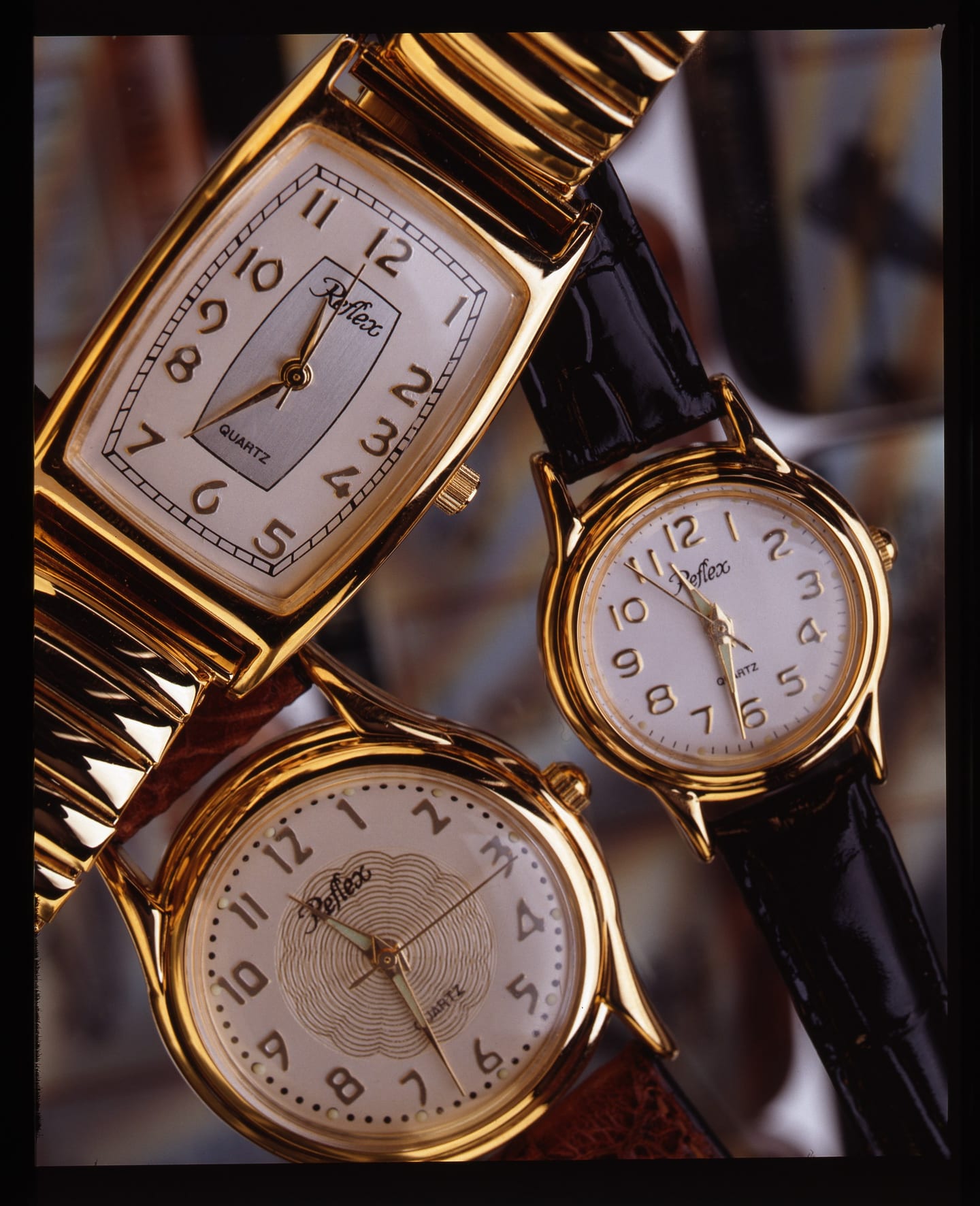
A data buyer's first questions are dull ones: how many, who owns them, what is in them, and can you prove it. An archive that can answer in writing is most of the way to a conversation.
An archive is ready to be discussed as licensed training data when its owner can answer four questions in writing: how many images there are, who owns them, what they show, and what the files are. The answers do not need to be flattering. They need to be accurate, dated and consistent with each other, because the person reading them will have to repeat them to a legal team.
This article is general information, not legal advice. Checked on 18 November 2026.
Why do AI buyers want paperwork before pictures?
Because they now have paperwork of their own to produce. Under Article 53 of the EU AI Act, providers of general-purpose models must publish a summary of training content on the Commission's template. Those obligations have applied since 2 August 2025, and the Commission's enforcement powers since 2 August 2026. The template asks about categories of source, including private datasets obtained from third parties. In California, AB 2013 has required developers to post dataset summaries since 1 January 2026.
What is decided is that these disclosure duties exist. What is pending is how hard they will be enforced, and the larger copyright questions in the courts, which are followed in the AI copyright cases tracker. A supplier cannot settle those. A supplier can make its own corner of a developer's summary easy to write, and that is what the checklist below is for. The buyer's side of the same exchange is described in what AI developers look for in a licensed image dataset.
How do you prepare an image dataset for licensing?
Seven steps, in the order a buyer's questions usually arrive.
Step 1: count what you have, and separate digital from film
Start with an inventory at folder or box level: what each unit holds, in what format, and roughly how many frames. Then draw three lines through it.
- Unique images versus frames. Brackets, variants and duplicates inflate a count. Say which number you are quoting.
- Digital now versus still on film. Only the first can be delivered next month.
- Counted versus estimated. Mark any figure that has not been checked against the physical material.
Publishing the inventory, even in rough form, is a strong signal of seriousness. The Robert Harper Photograph Library's 503-folder inventory is searchable and downloadable as a CSV, with the caveat that the counts, which add up exactly to the published totals of 95,487 unique photographs and 177,143 frames, have not been checked frame by frame against the physical material. The reasoning behind the numbers is set out in the inventory by numbers.
Step 2: establish chain of title
A licence is only as good as the licensor's right to grant it. Assemble the documents that show who owns the copyright in the photographs, and look for anything that has already granted rights away.
- Who made the photographs, and in what capacity. For UK work, commissioned photographs made before 1 August 1989 follow older ownership rules, covered in the guide to commissioned photograph copyright.
- Any agency, syndication or stock contributor agreements, past or present. An arbitration reported on 11 March 2026 read a 2018 stock contributor agreement as covering AI training. The contributor was reported to be asking a court to set the award aside, so the matter may not be final, but the lesson is to read old contracts before describing rights as unencumbered.
- Any exclusive licences still running.
Then write one plain sentence stating who the rights holder is. If that sentence needs qualifying, qualify it.
Step 3: carry out a rights review
Copyright in the photograph is one layer. What the photograph shows is another, and a copyright licence does not deal with it. Sort the archive into categories and decide how each will be handled:
| Category | Why it needs attention | Usual handling |
|---|---|---|
| Identifiable living people | Personal data; likeness | Review case by case; often excluded or licensed separately |
| Children and sensitive contexts | Heightened data protection concern | Exclude by default |
| Branded products and logos | Trade marks, designs | Flag; buyer decides on use |
| Artworks and magazine pages in frame | Third-party copyright | Exclude or flag |
| Still life, landscape, unbranded objects | Fewer third-party layers | Natural first subset |
Record the decision for each category and the date it was made. The method is described in what a rights review covers, and the people question has its own article on personal data, likeness and image datasets. Do not describe any subset as free of third-party rights. Describe what was checked.
Step 4: describe the files honestly
A technical buyer wants to know, per subset: file formats, pixel dimensions, bit depth, colour space, whether files are camera originals or derivatives, and how scans were made. If you hold raw files or film originals, say so, since they allow re-rendering to a buyer's specification, a point developed in why raw files and film originals matter. If scanning has not happened, say that too, and say what format the originals are.
Step 5: put captions and metadata in order
Text attached to images is half of what a multimodal developer is buying. For each subset, state which fields exist, how they were written and how complete they are. A caption from the photographer's own sleeve note is a different thing from a machine guess, and the buyer should be able to tell them apart. The article on captioning images for machine learning covers what makes the text useful.
Embed the basics in the files themselves: creator, copyright notice and a licensing URL with the copyright metadata tool, captions and keywords with the captions and keywords tool. Decide deliberately about location data. Where coordinates would reveal a private address, the location remover strips GPS and leaves the rest.
Step 6: fix identity with hashes and a manifest
Give every delivered file a stable identifier and a cryptographic hash, and list them in a manifest: identifier, filename, hash, dimensions, subset, rights category. The hash lets both sides prove later exactly which files were licensed, and a perceptual hash helps find near-duplicates before the buyer does. The image hash and fingerprint tool produces both for individual files; at scale the same is done with a script. The audit side of this is covered in image provenance for AI.
Step 7: write a dataset card and prepare a sample
The dataset card gathers steps 1 to 6 into a few pages: what the collection is, who made it, who owns it, what is included and excluded, what the files are, known gaps and limits, and how to ask for access. The format descends from "Datasheets for Datasets", first posted in March 2018, and a guide to adapting it is in how to write a dataset card for a photographic archive. Archive.London's own dataset card is public.
Alongside it, prepare a small, representative sample for evaluation under a confidentiality agreement, with the same metadata and manifest structure the full delivery would have. A sample chosen only from the best frames misleads both sides.
The checklist in one place
- Folder-level inventory, with unique images, frames, digital and analogue counted separately.
- One-sentence statement of the rights holder, with supporting documents.
- Old agency and contributor agreements read for AI or data clauses.
- Rights categories defined, decisions recorded and dated.
- File formats, dimensions, bit depth and origin described per subset.
- Caption and metadata fields listed, with source and completeness.
- Rights metadata embedded; location data reviewed.
- Identifier and hash for every file; manifest built.
- Dataset card written, dated and versioned.
- Evaluation sample prepared, representative of the whole.
- Public copies carry rights signals: robots.txt rules and embedded reservation.
- A named contact and a clear statement of how licences are agreed.
Where the Robert Harper archive stands on this list
The archive can answer the first questions now. By inventory count it holds 95,487 unique photographs, 42,803 of them digital and 52,684 analogue, across 503 folders, with studio still life such as jewellery among its 24 principal categories. More than half of the archive is still on film and has yet to be scanned, and a frame-by-frame check of the counts against the physical material, fuller captioning and rights review by category are work still to be done. It is owned by 825 Ventures Ltd, the owner and rights holder, and licences are negotiated directly with the single rights holder, subject to rights review. Data teams and brokers who want the card, the inventory and a sample can begin at the AI training data licensing page.
Frequently asked questions
What do AI companies need before licensing an image archive?
At minimum: a reliable count, proof of who owns the copyright, a statement of what categories of image are included and excluded after rights review, technical details of the files, the state of the captions and metadata, and a sample they can test. Most of this fits in a dataset card of a few pages, supported by a file-level manifest.
Do I need to digitise everything before approaching a buyer?
No, but you must be exact about what is digital now and what is still on film. A buyer can evaluate existing files, and scanning can form part of an agreement. What damages a conversation is a headline number that turns out to include material nobody can deliver. Separate the two counts from the start.
How many images do I need to license a dataset for AI training?
There is no fixed threshold. Reported bulk deals have involved hundreds of millions of files, which no single archive can match. Smaller, coherent collections are assessed for fine-tuning, domain-specific work and evaluation, where provenance and consistent description count for more than volume. State your number honestly and let the buyer judge the fit.
Is a dataset card legally required?
Not for the archive. The legal duties to describe training data fall on model developers, under the EU AI Act and California's AB 2013 among others. A dataset card is the supplier's way of handing over what the developer will need for its own compliance. This is general information, not legal advice.
Should I remove metadata before delivering images for training?
Generally not. Captions, dates, creator and rights fields are part of what the buyer is paying for. Remove only what you have a reason to withhold, such as GPS coordinates of private locations or personal notes, and record that you did so. Agree the delivered fields in the contract schedule.
Sources
- Regulation (EU) 2024/1689 (AI Act), Article 53
- European Commission: Explanatory notice and template for the public summary of training content
- European Commission: Q&A on the training content summary template
- Cooley: State AI laws, where are they now? (24 April 2026)
- Gebru et al., Datasheets for Datasets (arXiv:1803.09010)
- PetaPixel: report on the Adobe arbitration over AI training of a photo library (11 March 2026)
- Copyright, Designs and Patents Act 1988, Chapter IV (moral rights)
- Copyright, Designs and Patents Act 1988, section 29A
- IPTC: Exclude images from generative AI training with Photo Metadata Standard 2023.1
This article is general information, not legal advice. It reflects the position as we understood it on the date shown and may be out of date. Published by Archive.London. Corrections are welcome under our editorial policy.