
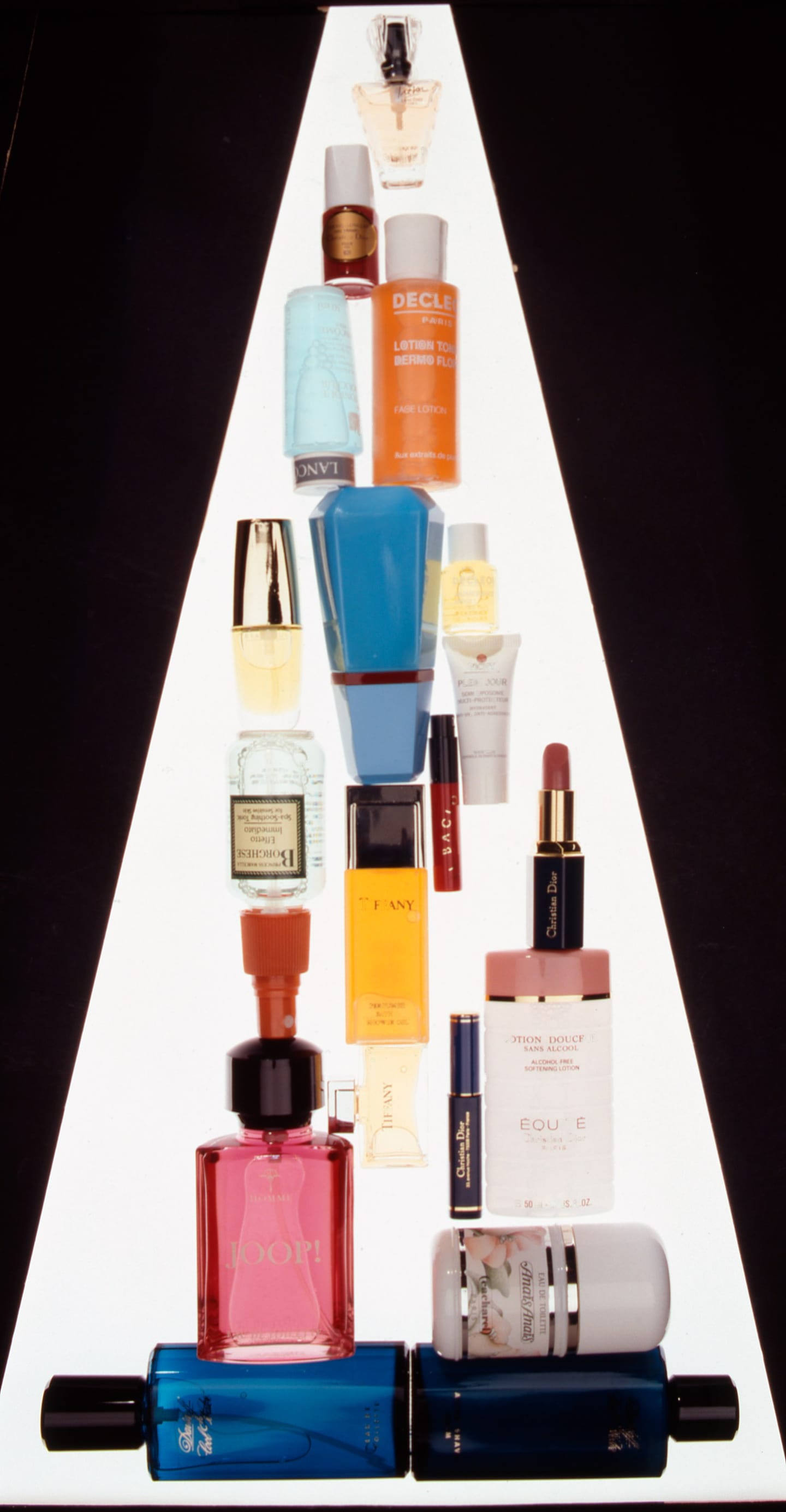
Size is the easy question. The harder ones are who owns the pictures, what the captions are worth, and who and what appears in the frame.
Since 2 August 2025, anyone placing a general-purpose AI model on the EU market has had to publish a summary of what it was trained on, and since 2 August 2026 the European Commission has been able to fine providers who do not. California's AB 2013, in force from 1 January 2026, asks developers for a comparable summary on their own websites. For the people who buy image data, that changes the first question. It used to be "how many?". It is now "where did these come from, and can you show me?"
This article sets out what data-procurement teams, ML leads and their counsel tend to ask of a licensed image dataset, and how a single-photographer archive measures up against each question. This article is general information, not legal advice. Checked on 18 November 2026.
What is a licensed image dataset?
A licensed image dataset is a body of images supplied for machine-learning use under a written agreement from someone entitled to grant it. The contrast is with scraped data, where images are collected from the open web and the legal position depends on exceptions, jurisdiction and litigation that is still running.
The large suppliers describe their offer in very similar vocabulary. Shutterstock's data-licensing page is headed "Build better AI with the right data" and cites 640M+ images and 3M+ contributors. Getty Images titles its page "Premium Visual Data for AI Model Training" and stresses annotated metadata and custom datasets. Bria, a model developer rather than a library, says every asset in its training pipeline comes from commercial agreements with more than thirty data partners, each item carrying an identifier that links it to source, creator and licence terms.
The common thread is traceability. A buyer wants to be able to answer, for any image in the set, three questions: who made it, who owns it, and what the paper says may be done with it.
Provenance and chain of title: who actually signs?
The first diligence item is nearly always chain of title. Aggregated libraries hold work from thousands or millions of contributors under standard-form agreements, and those agreements were mostly written before generative models existed. An arbitration reported by PetaPixel on 11 March 2026 shows why buyers read them closely: the founder of a stock archive argued that a 2018 contributor agreement did not cover training Adobe's Firefly on nearly 12,000 of his images, and did not succeed on any of his claims. PetaPixel reported that he was asking a California court to set the award aside. Whatever the final outcome, counsel on both sides of a data deal now ask which contract each image came in under, and what it said.
A single rights holder shortens that inquiry. There is one counterparty, one signature, and no sub-licensing chain to unpick. It does not remove the need for review, because ownership of a photograph is one thing and rights in what it depicts are another, but it makes the paper trail short enough to read. Human Native's chief executive, interviewed by RightsTech before the marketplace was bought by Cloudflare, observed that buyers care more about convenience than price. One signatory is a form of convenience.
How much do captions and metadata matter?
A great deal, for a plain technical reason. Vision-language models learn from pairs: an image and the words that go with it. A photograph with no description is a much weaker training example than one that says what the object is, what it is made of, when it was photographed and how.
Buyers therefore ask what description exists and at what level. Collection-level text ("fragrance bottles, studio, colour transparency") is useful for selection. Item-level captions, keywords, dates and technical fields are what make a set ready to use. They will also ask whether rights information travels inside the files. You can see what a file already carries by dropping it into the EXIF and metadata viewer, which reads IPTC and XMP fields locally in the browser.
An honest supplier says exactly which level exists today. Where item-level description is still being written, that is a cost the buyer will price in, or a job the two parties can share.
Volume, resolution and format
Scale still matters, but it depends on the job. Pretraining is done at hundreds of millions to billions of images. Fine-tuning, domain adaptation and evaluation are done with far less, and there the questions shift to consistency and quality: how large the files are, whether they are camera originals or scans, what colour space and bit depth they are in, and whether duplicates and near-duplicates have been identified. Our companion piece on where a 95,000-image archive fits between fine-tuning and foundation training goes through the numbers.
Deliverability is the practical test. An image that exists only as a transparency in a box is not yet data. Buyers will ask what proportion is digital now, what the scanning plan is, and whether they can influence the order in which material is digitised.
People, brands and trade marks in the frame
The fourth group of questions concerns what the photographs show. A copyright licence from the owner of a photograph does not, by itself, deal with:
- identifiable living people, whose images are personal data under UK and EU data-protection law;
- trade marks, logos and product designs visible on packaging and goods;
- third-party copyright works in the frame, such as artworks or printed magazine pages;
- the photographer's moral rights.
Buyers differ in appetite. Some want portraits and branded goods excluded entirely; others want them flagged so they can decide. Either way they expect the supplier to have looked. What that examination involves is covered in what a rights review covers before images are licensed for AI.
A buyer's checklist
| Question | What a good answer looks like |
|---|---|
| Who owns the images and who signs? | A named legal entity, stated as owner and rights holder |
| How were they made? | Named creator or creators, period, commissioning context |
| How many, in what form? | Counts split by digital and analogue, with any caveats on the counting |
| What description exists? | Stated level: collection, item, keyword; what is planned |
| What is excluded? | Categories removed or flagged after review, with reasons |
| What does the licence permit? | Defined uses, term, exclusivity, retention and deletion |
| Can we test before we commit? | A dataset card, and a sample set under NDA |
| What is not claimed? | A plain statement of limits: no blanket warranties about third-party rights |
The last row matters more than it looks. A document that states its own limits is easier for a legal team to rely on than one that promises everything. The research community's model for this is the datasheet proposed by Timnit Gebru and colleagues in 2018; how to write a dataset card for a photographic archive applies it to film and print.
How the Robert Harper Photograph Library answers these questions
The library is the work of one photographer across roughly thirty-five years, owned by 825 Ventures Ltd, the owner and rights holder. By the archive's inventory it holds 95,487 unique photographs: 42,803 digital and 52,684 analogue, the analogue mostly medium-format colour transparencies. Those counts have not yet been independently reconciled, and the figures on the archive facts page carry the same caveat.
Against the checklist, the position is this. There is one signatory. Description exists today at collection level, across 330 described collections in 24 categories; item-level keywording is part of the digitisation programme. The analogue half is not yet scanned, so it is a pipeline and not a deliverable. The subject range leans towards controlled studio work, with depth in jewellery, fragrance, watches, footwear, food and drink. At this size the collection suits fine-tuning, evaluation and specialist domains; it is not a pretraining corpus and is not offered as one.
No clearance claim is made for any image. Licences are negotiated directly with the single rights holder, subject to rights review, and portraits, branded products and magazine pages can be excluded from a licensed set.
If you are assessing image data for a model and want to see the documentation first, you can request the dataset card and a sample set.
Frequently asked questions
What is a licensed image dataset?
It is a collection of images supplied for machine-learning use under a written licence from a party entitled to grant it, as opposed to images collected by scraping. A useful one comes with documentation: who made the images, who owns them, what the licence permits, what was excluded and why. The licence covers the licensor's own rights; it does not automatically settle third-party rights in what the pictures show.
What do AI companies check before licensing images?
Typically five things: chain of title and who signs; what the licence permits (training, fine-tuning, evaluation, display); the quality of captions and metadata; technical delivery, meaning resolution, file format and volume; and exposure from identifiable people, brands, trade marks and third-party artwork in the frame. Most ask for a dataset card and a sample before any commercial discussion.
Is a small image archive useful for AI training?
Not for pretraining a foundation model, which is done at hundreds of millions to billions of images. Collections in the tens of thousands are used for fine-tuning, domain adaptation, evaluation sets and specialist subject areas, where coherence, description and clean provenance count for more than raw volume. Whether a given archive suits a given task is something to test on a sample.
Does a licence from the copyright owner clear everything in the image?
No. A copyright licence deals with the licensor's rights in the photograph. It does not by itself deal with data protection for identifiable living people, trade marks and designs on products, artwork or page layouts shown in the frame, or the photographer's moral rights. Those are examined in a rights review, and sensitive categories can be excluded from the licensed set.
Sources
- Regulation (EU) 2024/1689 (AI Act), Article 53
- European Commission: explanatory notice and template for the public summary of training content (24 July 2025)
- Cooley: State AI laws, where are they now (24 April 2026)
- Shutterstock: data licensing
- Getty Images: data licensing
- Bria: licensed training catalogue
- RightsTech: building a scale model for AI data (Human Native)
- PetaPixel: he tried to stop Adobe from training its AI on his photo library (11 March 2026)
- Gebru et al., Datasheets for Datasets (arXiv, 2018)
This article is general information, not legal advice. It reflects the position as we understood it on the date shown and may be out of date. Published by Archive.London. Corrections are welcome under our editorial policy.