
LAION-5B holds 5.85 billion image-text pairs. The Robert Harper Photograph Library holds 95,487 photographs. They are not competing for the same job.
LAION-5B, the open dataset described in a 2022 paper, contains 5.85 billion image-text pairs. The Robert Harper Photograph Library contains 95,487 unique photographs by its inventory count. Divide one by the other and the archive comes out at roughly one sixty-thousandth of the corpus. Anyone who suggests a collection of that size will train a foundation model is not being straight with you.
The useful question is a different one: what work in a modern image-model pipeline is done at the scale of tens of thousands of images, and what makes a collection good at it?
This article is general information, not legal advice. Checked on 18 November 2026.
How much image data does foundation training use?
Pretraining is the stage where a model learns general visual concepts, and it is done at very large scale.
| Dataset or library | Reported size | Source and date |
|---|---|---|
| LAION-5B | 5.85 billion image-text pairs | LAION paper, October 2022 |
| Shutterstock (data licensing) | 640M+ images | Shutterstock data-licensing page, read 18 November 2026 |
| CLIP training set | 400 million image-text pairs | OpenAI paper, February 2021 |
| Freepik archive | 200 million images | Reuters, 5 April 2024 |
| Amazon Berkeley Objects | 398,212 catalogue images of 147,702 products | ABO dataset page |
| Robert Harper Photograph Library | 95,487 unique photographs (42,803 digital) | Archive inventory, not yet checked frame by frame against the physical material |
At the top of that table, volume is the product. Reuters reported in April 2024 that Freepik had licensed most of its 200 million images to two large technology companies at 2 to 4 cents an image, and that Shutterstock's first deals with large technology companies were worth $25 million to $50 million each. Those are bulk transactions, priced and negotiated as such.
Paul Melcher, writing for Kaptur on 12 June 2025, drew the obvious conclusion from the per-image arithmetic: low unit values add up at scale, and archives under a million images are unlikely to see large returns from bulk licensing. That is a fair reading, and it is why a small archive should not present itself as a bulk source.
What is fine-tuning, and how much data does it need?
Fine-tuning takes a model that has already been pretrained and adapts it with a much smaller, more specific body of data. The quantity needed falls dramatically. The DreamBooth paper, posted in August 2022, showed a text-to-image model being personalised to a particular subject from, in the authors' words, "just a few images". Adapting a model to a visual style, a category of product or a period look sits between that and pretraining, typically in the hundreds to tens of thousands of examples.
At this scale the economics invert. In a billion-image corpus, one poor caption or one mislabelled picture is noise. In a ten-thousand-image set, every example pulls on the result. The qualities that matter become:
- Coherence. Images made under consistent conditions, with a consistent hand, teach a cleaner signal than a mixed bag.
- Description. Accurate captions are the supervision. A fine-tuning set is only as good as its text.
- Resolution and fidelity. Source files large enough to crop and resample without loss.
- Provenance. A short, documented chain from creator to licensor, because a fine-tuned commercial model will be asked where its data came from.
Where does a 95,000-image archive fit?
Four uses are realistic for a collection of this size. Each is a question of fit to be tested on a sample, not a promise about results.
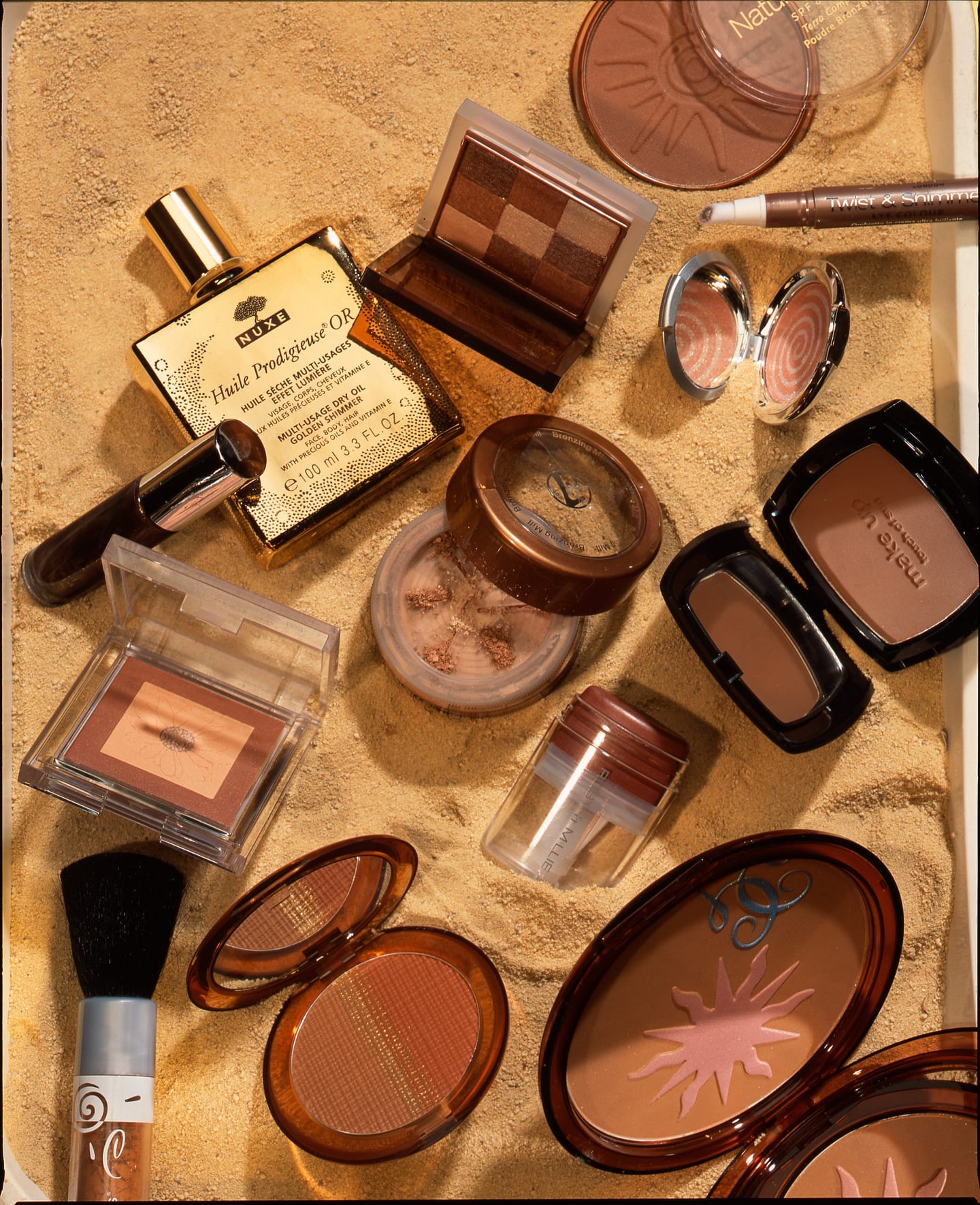
Fine-tuning and domain adaptation. A developer building for retail, luxury goods or editorial imagery wants concentrated examples of that domain. The archive's 24 categories include jewellery, fragrance, watches, designer footwear, handbags, food and drinks, photographed in the studio over decades. Why that kind of picture is useful is the subject of why product and still-life photography matters to multimodal models.
Evaluation sets. A benchmark is only meaningful if the model has not seen the answers. More than half of this archive is still on film and has yet to be scanned, and only a small selection has been published online by Archive.London, which makes newly scanned material a candidate for held-out test data. Two cautions apply. Much of the work was commissioned for magazines and advertising, so individual pictures did appear in print, and some may have reached the web by other routes. Any "unseen" property has to be checked image by image.
Specialist and period subjects. The inventory notes subjects that ordinary stock covers thinly because the objects no longer exist as current products: early mobile telephones, pagers and fax machines, microchip development, credit cards, Walkmans and hi-fi, toys, and London street scenes of the 1960s and 1970s. For a model that needs to recognise or render how things looked at a given date, dated photographs from the period are the primary evidence.
Style and medium studies. More than half the archive is film: mostly medium-format colour transparencies, with black-and-white negatives, larger-format film, 35mm slides and over 4,000 Polaroid prints. Scans from analogue originals carry the rendering of film, which researchers studying photographic style may want as a controlled, single-author sample.
What it does not suit
Honesty about the mismatches saves everyone time.
- Pretraining. The scale is wrong by three to five orders of magnitude.
- Immediate bulk delivery of the whole collection. 42,803 images are digital now. The 52,684 analogue images largely await scanning and cataloguing.
- Uses that need item-level captions today. Description currently exists at collection level, across 330 described collections; item-level keywording is part of the digitisation programme.
- Uses that need warranties about people or brands. No releases or clearances are claimed. Portraits, branded products and magazine pages are reviewed case by case and can be excluded.
What should an ML lead ask for?
Three things, in this order.
- The dataset card. A short document giving counts, formats, provenance, description level, rights position and known limits. See how to write a dataset card for a photographic archive for what it should contain.
- A sample set under NDA. Drawn from already-digital, rights-reviewed images, so that the team can run its own checks on resolution, duplication, caption usefulness and overlap with existing training data. A perceptual hash is the usual first test for overlap; the image hash and fingerprint tool shows the principle on a pair of files.
- A view of the pipeline. Because the analogue half is still to be scanned, a partner can discuss first-look arrangements: an option on particular subject areas as they are digitised, or support for scanning in return for early access to that material.
An evaluation-only licence, which permits testing but not training, is often the sensible first contract. The alternatives are compared in exclusive, non-exclusive, evaluation-only: three licence shapes for image data.
The honest size of the opportunity
The Robert Harper Photograph Library is one photographer's working output across about thirty-five years, held by 825 Ventures Ltd, the owner and rights holder. It is small, coherent, documented at collection level and half on film. That profile is wrong for pretraining and right for a narrower set of jobs where a model team needs a few thousand well-made, well-described, traceable images of a particular kind. Licences are negotiated directly with the single rights holder, subject to rights review, and no price is published because the right structure depends on the use.
If your team is weighing image data for fine-tuning or evaluation, you can ask for the dataset card and a sample set.
Frequently asked questions
How many images do you need to fine-tune an image model?
It depends on the method and the goal. Subject personalisation techniques such as DreamBooth work from a handful of images. Teaching a style, a product category or a visual domain typically uses hundreds to tens of thousands of well-described examples. What matters at this scale is consistency, accurate captions and clean rights, because every image carries more weight than it would in a billion-image corpus.
Is 95,000 images enough to train a foundation model?
No. Foundation image and vision-language models are pretrained on hundreds of millions to billions of images: CLIP used 400 million image-text pairs and LAION-5B contains 5.85 billion. A 95,000-image archive is several orders of magnitude smaller. It is better matched to fine-tuning, evaluation and specialist-domain work, and should be assessed for those uses.
What is an evaluation set and why would a developer license one?
An evaluation set is data held back from training and used to measure how a model performs. Its value depends on the model never having seen it. Images that have not been published online are less likely to have been swept into scraped training corpora, which is why developers look to unpublished or newly digitised material for held-out tests. That advantage has to be verified per image, not assumed.
Can a buyer license only part of an archive?
Yes. Licences are commonly drawn around a defined subset: particular subject categories, the already-digital portion, or batches delivered as scanning proceeds. At Archive.London any such arrangement is negotiated directly with the single rights holder and is subject to rights review, which can also remove categories such as portraits or branded products from the licensed set.
Sources
- Schuhmann et al., LAION-5B: An open large-scale dataset for training next generation image-text models (arXiv:2210.08402, 2022)
- Radford et al., Learning Transferable Visual Models From Natural Language Supervision (CLIP) (arXiv:2103.00020, 2021)
- Ruiz et al., DreamBooth: Fine Tuning Text-to-Image Diffusion Models for Subject-Driven Generation (arXiv:2208.12242, 2022)
- Amazon Berkeley Objects (ABO) dataset
- Shutterstock: data licensing
- Reuters, Inside Big Tech's underground race to buy AI training data (5 April 2024), archived copy
- Paul Melcher, Kaptur: The hidden economy behind AI data licensing takes center stage (12 June 2025)
This article is general information, not legal advice. It reflects the position as we understood it on the date shown and may be out of date. Published by Archive.London. Corrections are welcome under our editorial policy.