
Owning the copyright in a photograph is the start of the analysis, not the end. A rights review is the process of finding out what else is in the picture.
A copyright licence covers less than most people assume. It passes on rights in the photograph as a work. It does not clear data protection for the people pictured, the photographer's moral rights, or anyone else's rights in the things the photograph shows. A rights review is the work of going through a collection to find where those other interests arise, and deciding what to do about each.
This article explains what such a review examines when photographs are being considered for AI training, fine-tuning or evaluation, with particular attention to older UK material. This article is general information, not legal advice. Checked on 18 November 2026.
What is a rights review, and why do AI buyers ask for one?
Picture licensing has always involved rights checks, but they were made one image and one use at a time: this portrait, on this book cover, in this territory. A data licence reverses the proportions. Thousands of images are licensed at once, for a use that is hard to observe afterwards, and the buyer may have to describe its sources publicly.
Buyers have also seen what happens when the paperwork is assumed. PetaPixel reported on 11 March 2026 on an arbitration in which a 2018 stock contributor agreement was read as permitting AI training on nearly 12,000 images, a reading the archive owner who had signed it disputed. PetaPixel reported that he was asking a California court to vacate the award. The lesson both sides have drawn is to read the documents before the deal.
A review therefore produces a record: what was examined, what was found, and what was included, flagged or excluded. It supports the licence. It is not a warranty that nothing can go wrong.
Step one: who owns the copyright, and on what evidence?
The first layer is title. For each body of work the reviewer asks who created it, who owns the copyright now, and what shows that.
For a single-photographer archive the authorship question is simple. The ownership question can still have texture, particularly for commissioned work made in the UK before the present Copyright Act took effect. For photographs made before 1 August 1989, first ownership is governed by the law in force when the picture was made. Under the Copyright Act 1956, where someone commissioned a photograph and paid for it, that person was generally the first owner of the copyright unless the parties agreed otherwise. Since 1 August 1989 the photographer has been first owner by default, with a different rule for employees.
For an archive spanning the 1960s to the digital era, that date line runs through the middle of the material. A review asks, job by job where the records allow, whether a picture was commissioned, by whom, and on what terms. Where the terms of an original commission are known, they are part of the analysis.
Duration is the other title question. UK copyright in a photograph generally lasts for the life of the author plus 70 years, with transitional rules for older works. Age alone does not put a twentieth-century photograph in the public domain.
Step two: who and what appears in the frame?
The second layer concerns subject matter. Four categories recur.
| Category | The issue | Usual treatment |
|---|---|---|
| Identifiable living people | A photograph of an identifiable person is personal data under UK GDPR; a copyright licence does not address it | Exclude, or flag for a separate decision |
| Well-known individuals | Likeness and false-endorsement concerns in addition to data protection | Exclude from training sets; editorial licensing is a separate conversation |
| Brands, logos and product designs | Trade marks and designs belong to the brand owner, not the photographer | Flag; exclude where the mark is the subject |
| Third-party works: artworks, magazine pages, packaging artwork | Separate copyright in the work shown, and in page layouts and text | Exclude tear sheets and reproductions of artworks |
On people, the direction of travel is clear enough to guide practice even where cases are pending. The Information Commissioner's Office has pursued Clearview AI over the scraping of facial images, and in a judgment the ICO announced on 8 October 2025 the Upper Tribunal held that the ICO had jurisdiction; Clearview was given permission to appeal, the Court of Appeal hearing was reported as listed for October 2026, and no judgment could be confirmed on the date above. A photograph licensed with the owner's consent is a different situation from scraping, but the underlying point holds: faces are personal data, and that is a question separate from copyright.
On brands, the Getty Images v Stability AI judgment of 4 November 2025 is a reminder that trade marks can surface in a model's outputs. The High Court found limited trade mark infringement arising from watermarks reproduced in images generated by some early versions of Stable Diffusion. For product photography, where a label or logo may be central to the frame, reviewers look at how prominent the mark is and whether the set can do without it.
Editorial material deserves a separate mention. Getty's chief executive said on 16 March 2026 that the company does not license its editorial content for AI training at all. That is one large library's commercial policy, not a rule of law, but it shows how cautiously news and celebrity imagery is treated.
Step three: what do moral rights and metadata require?
Photographers have moral rights under the 1988 Act: to be identified as author where the right has been asserted, to object to derogatory treatment, and not to have work falsely attributed. These can be waived but not assigned, so a licence from an archive's owner does not automatically deal with them. A review notes what is known.
Metadata is where rights information lives, and it carries its own obligations. UK law makes it actionable to knowingly and without authority remove electronic rights management information, where the person knows or has reason to believe that doing so will induce, enable, facilitate or conceal an infringement. On the technical side, the IPTC Photo Metadata Standard has included a "Data Mining" property since version 2023.1, approved on 4 October 2023, with values such as "Prohibited for AI/ML training". The property is embedded in the file and is lost if metadata is stripped. A review checks what delivered files carry and what the licence says must be preserved. You can inspect any file's rights fields locally with the EXIF and metadata viewer.
What does a rights review produce?
The output is practical:
- An inclusion list. The images or categories proposed for licence.
- An exclusion list, with reasons. Typically portraits and identifiable people, magazine pages, and images where a third party's mark or work is the subject.
- A flagged list. Material that can be included if the buyer accepts a stated risk or narrows the use.
- A statement of limits. What was not examined and what cannot be known from the records.
These feed directly into two documents. The dataset card summarises the position for a buyer's first read, as described in how to write a dataset card for a photographic archive. The licence turns it into schedules and warranties; the options are compared in exclusive, non-exclusive, evaluation-only: three licence shapes for image data.
What a review cannot do
It cannot convert uncertainty into certainty. It cannot supply model releases that were never signed, establish the terms of a commission for which no paperwork survives, or predict how pending cases will be decided. The UK orphan works scheme does not fill the gap either: its licences are UK-only and applications cover at most 30 works each, which is a tool for individual items and not for a training set.
What a review can do is make the remaining uncertainty visible, so that it is excluded, priced or allocated by contract. That is why the word "cleared" is best avoided. It suggests a finished state that the process does not deliver.
How this works at Archive.London
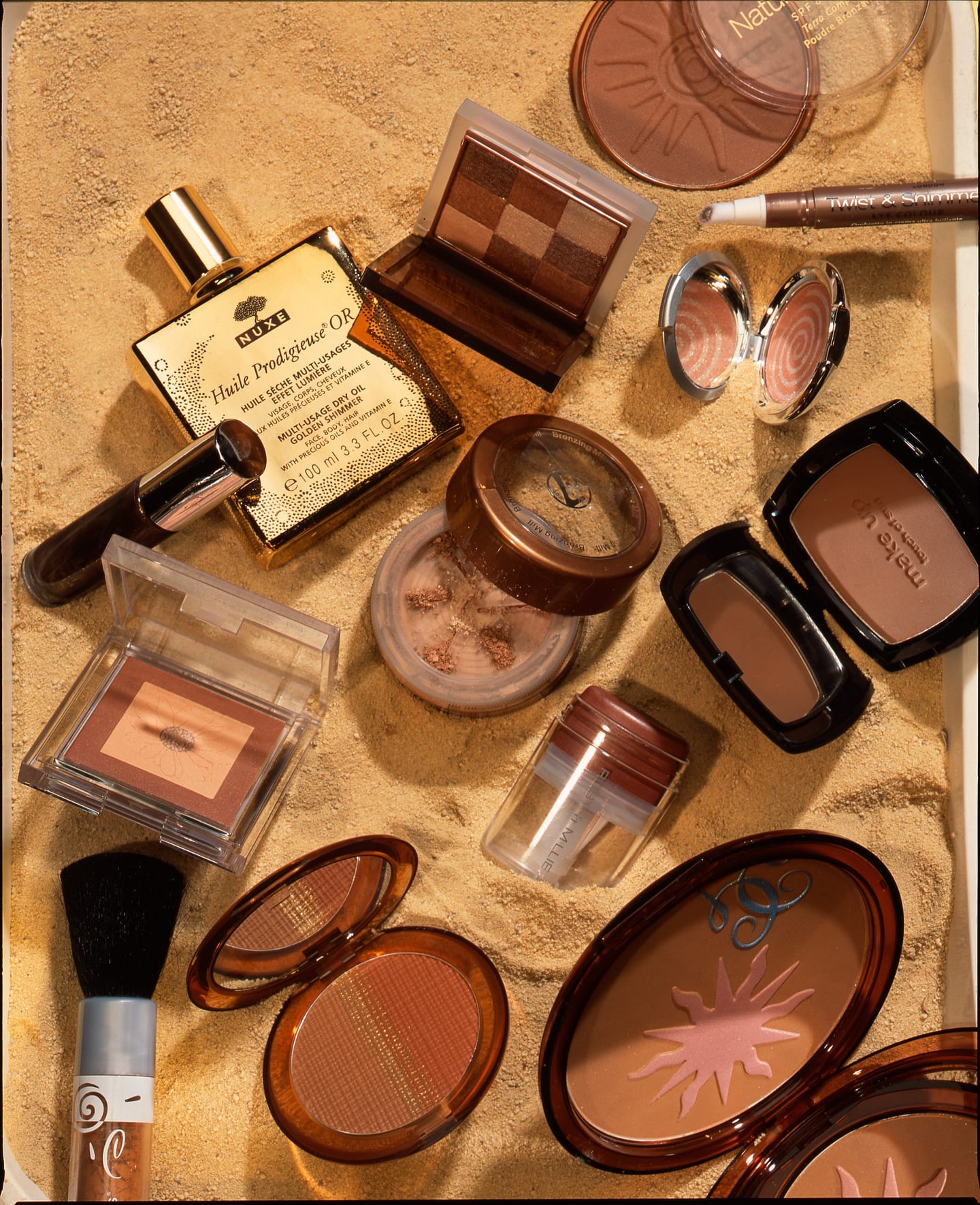
The Robert Harper Photograph Library holds 95,487 unique photographs by inventory count, the work of one photographer over about thirty-five years, owned by 825 Ventures Ltd, the owner and rights holder. Its contents show why review matters. Alongside still life and landscape, the catalogue lists portrait subjects and musicians, product photographs in which fragrance houses and other brands appear as subjects, commercial work for clients including De Beers, Harrods and Heinz, and magazine pages. Each of those raises one of the questions above.
The archive's position is plain, and the rights and stewardship page is the place to read more about it. No releases or clearances are claimed for any image, for AI training or any other use. Portraits, identifiable people, branded products and magazine pages are reviewed case by case and can be excluded from a dataset. Any brand-related licence takes account of the terms of the original commission where known. The intention is that any sample set is drawn only from already-digital images that have been through that review, and that analogue material scanned later is reviewed in the same way before it is offered. Rights review by category is work still in progress.
Buyers, agencies and counsel who want to discuss a licence, or to see how the review is documented in the dataset card, can make contact through the AI training data licensing page.
Frequently asked questions
What is a rights review for AI training data?
It is a structured examination of a set of images before licensing, covering who owns the copyright and on what evidence, whether original commissions or contracts limit use, and what third-party interests appear in the pictures: identifiable people, trade marks and designs, artworks and printed pages. The result is a record of what is included, flagged or excluded, which supports the licence but is not a guarantee.
Does owning the copyright in a photo mean it can be licensed for AI training?
Copyright ownership lets the owner license the rights it holds in the photograph. It does not settle everything. People pictured may have data-protection rights; brands may own trade marks and designs shown; artworks and magazine layouts in the frame have their own copyright; and the photographer has moral rights. A review identifies those issues so the parties can exclude material or allocate the risk.
Are photographs of people a problem for AI training datasets?
They need care. Under UK GDPR a photograph of an identifiable living person is personal data, so using it involves data-protection obligations that a copyright licence does not address. Many buyers prefer portraits and identifiable individuals to be excluded or separately flagged. Photographs of well-known people add questions about likeness and false endorsement. Specialist advice is needed for any set containing people.
Who owns the copyright in commissioned photographs taken before 1989 in the UK?
For photographs made before 1 August 1989, first ownership is decided by the law in force when they were made. Under the Copyright Act 1956, a person who commissioned a photograph and paid for it was generally the first owner of the copyright, unless agreed otherwise. From 1 August 1989 the photographer is first owner by default. The position for any specific image depends on its facts and paperwork.
Sources
- Copyright, Designs and Patents Act 1988, Schedule 1, paragraph 11 (first ownership of existing works)
- Copyright, Designs and Patents Act 1988, section 12 (duration)
- Copyright, Designs and Patents Act 1988, Part I Chapter IV (moral rights)
- Copyright, Designs and Patents Act 1988, section 296ZG (electronic rights management information)
- Information Commissioner's Office: Upper Tribunal judgment on Clearview AI Inc (October 2025)
- Getty Images v Stability AI 2025 EWHC 2863 (Ch)
- IPTC: Photo Metadata Standard 2023.1 and the Data Mining property
- GOV.UK: copyright orphan works guidance
- PetaPixel: he tried to stop Adobe from training its AI on his photo library (11 March 2026)
- Getty Images Q4 2025 earnings call transcript (16 March 2026)
This article is general information, not legal advice. It reflects the position as we understood it on the date shown and may be out of date. Published by Archive.London. Corrections are welcome under our editorial policy.