
Some do, and a handful of figures have reached the public record. Most terms have not, and the numbers that exist describe bulk stock and user uploads, not curated archives.
Yes, some AI companies pay for training images, and a small number of figures are on the public record. On 5 April 2024 Reuters reported that Shutterstock's first agreements with large technology companies were worth $25 million to $50 million each. That is the best-sourced headline number there is. Almost everything else about this market is either undisclosed or reported second hand, and what follows keeps to what has been published, by whom, and when.
This article is general information, not legal advice. Checked on 18 November 2026. It reports third-party figures only. It does not state or imply a price for any archive, including this one.
Which AI image licensing deals have been publicly reported?
| Date | Parties | What was reported | Figure | Source |
|---|---|---|---|---|
| 11 July 2023 | Shutterstock and OpenAI | Six-year agreement to supply training data | Not disclosed | Shutterstock announcement |
| 5 April 2024 | Shutterstock with Meta, Google, Amazon and Apple | Hundreds of millions of images, videos and music files | $25m to $50m each initially, per Shutterstock's CFO | Reuters |
| 5 April 2024 | Freepik and two large technology companies | Most of a 200 million image archive | 2 to 4 cents per image, per Freepik's CEO | Reuters |
| 5 April 2024 | Photobucket, in talks | 13 billion photos and videos | 5 cents to $1 per photo discussed; no signed deal reported | Reuters |
| 10 April 2024 | Adobe and third-party suppliers | Images and video bought to train Firefly | 6 to 16 cents per photo; average $2.62 per minute of video | Bloomberg, as quoted by RightsTech |
| 16 March 2026 | Getty Images with a social platform and a large AI company | Two multi-year agreements signed in 2025 | About $65m combined; about $40m recognised in Q4 2025 | Getty earnings call |
| 21 June 2026 | Getty Images and OpenAI | Multi-year display partnership for ChatGPT search | Not disclosed | Getty announcement, as reported |
Two entries need care. Getty's chief executive described one of the 2025 agreements as covering display rights for a social platform and the other as covering "use of our data and creative content" for a large AI company, and management said neither was a pure data licensing deal. On the same call he said: "We do not license out our editorial content in any way, shape, or form with respect to AI training." And the OpenAI agreement was announced as a display partnership. Reports of it note that the announcement did not describe training rights, so it should not be cited as a training deal.
How much do AI companies pay per image?
The Reuters report of 5 April 2024 remains the main source for unit prices:
- 2 to 4 cents per image: Freepik, for bulk licensing of most of its archive.
- 5 cents to $1 per photo, and more than $1 per video: rates Photobucket's chief executive said were under discussion. These were talks, not contracts.
- $1 to $2 per image, $2 to $4 per short video, $100 to $300 per hour of longer film: what Defined.ai's chief executive said companies were "generally willing to pay".
Bloomberg's report on Adobe five days later added 6 to 16 cents per photo.
Read together, the range runs across two orders of magnitude, and every figure dates from spring 2024. They describe non-exclusive supply of very large stock or user-generated libraries. None describes a curated body of professional work with one author and documented provenance, and no public source does. How the grant, the term and exclusivity move a price is covered in how AI image licensing deals are structured.
Do photographers themselves get paid?
Where payment reaches individuals, it usually arrives through a platform. Wirestock, which gathers contributor content for AI developers, told TechCrunch on 14 May 2026 that it supplies six of the largest foundation model makers, has more than 700,000 contributors and "has so far paid out $15 million" to them. Bria, which builds models on licensed images from about 20 partners, compensates owners according to their overall influence, TechCrunch reported on 13 March 2025.
The other side of the ledger is the contributor who did not expect to be included. PetaPixel reported on 11 March 2026 that a stock contributor took Adobe to arbitration over nearly 12,000 images used in training under a 2018 contributor agreement, and that the arbitrator found for Adobe on every claim but one, a negligence claim that the contributor later withdrew. By his account he had been offered a bonus of $1,173.93, which he rejected. PetaPixel reported that he was asking a California court to set the award aside, so that dispute may not be final. The practical point for any archive owner is that an old agency or stock agreement may, depending on its wording, already have granted the rights in question.
What the reported figures do not tell you
They are not a price list. Kaptur's Paul Melcher observed in June 2025 that much of this market operates under non-disclosure agreements. Published numbers are the exceptions that someone chose to mention to a reporter or an investor.
They are not all for training. Display deals, where licensed pictures appear in an AI product with credit, are a different grant from training, and Getty's agreement with OpenAI was announced as the former.
A settlement is not a licence fee. The $1.5 billion settlement in Bartz v Anthropic, given final approval on 20 July 2026, resolved claims about acquiring and copying pirated books at roughly $3,000 per work. It was shaped by statutory damages in a books case and says nothing about photographs.
Size cuts both ways. The largest reported deals involved hundreds of millions of files. A collection in the tens of thousands is assessed differently, usually for fine-tuning or evaluation, as discussed in fine-tuning versus foundation training.
What happened to the Getty and Shutterstock merger?
The two largest sellers of stock imagery agreed a merger, widely reported as worth $3.7 billion, and then abandoned it. The Competition and Markets Authority announced on 7 July 2026 that Getty had given notice terminating the agreement. The regulator's final report in May 2026 had concluded that the deal could proceed if Shutterstock's editorial business was sold to an approved buyer. On scope, the CMA's notice describes that business as global, operating under the Shutterstock Editorial, Backgrid and Splash brands. Some summaries have described the remedy as a sale of the UK editorial business only, which is not how the notice puts it. The CMA's concern was competition in supplying editorial content in the UK; the business to be sold was not limited to the UK.
The CMA's statement called Getty's decision "ultimately a commercial choice". The current list of sellers is surveyed in who sells licensed image data in 2027.
Is paying for training images legally required?
That depends on the country, and much of the answer is undecided.
Decided. In the UK the only text and data mining exception, section 29A of the Copyright, Designs and Patents Act 1988, covers non-commercial research, and the government's report of 18 March 2026 dropped its earlier opt-out proposal without legislating. In the EU, Article 4 of Directive 2019/790 permits mining of lawfully accessed works unless rights have been expressly reserved in an appropriate manner, such as machine-readable means. In Getty Images v Stability AI [2025] EWHC 2863 (Ch) the High Court did not rule on whether training infringes UK copyright, because that claim was abandoned during the trial.
Pending. Getty's appeal on secondary infringement was heard by the Court of Appeal on 11 and 12 November 2026, and no judgment could be confirmed on the date above. In the United States we found no court ruling on fair use for training an image model when we checked. Until these questions settle, companies pay for a mixture of reasons: legal caution, access to files and metadata that cannot be scraped, and the ability to tell customers and regulators where the data came from.
Statements that a named company trained on images unlawfully should be treated as allegations unless a court has found it so.
What this means for an independent archive
The public record supports three modest conclusions. Paid licensing of images for AI exists. The disclosed figures concern bulk stock and mostly date from 2024. And an archive's position rests less on a market rate than on what it can document: authorship, ownership, description and files. The practical preparation is set out in the checklist for preparing a photo archive for AI licensing, and it starts with small things, such as naming the owner inside each file with the free copyright metadata tool.
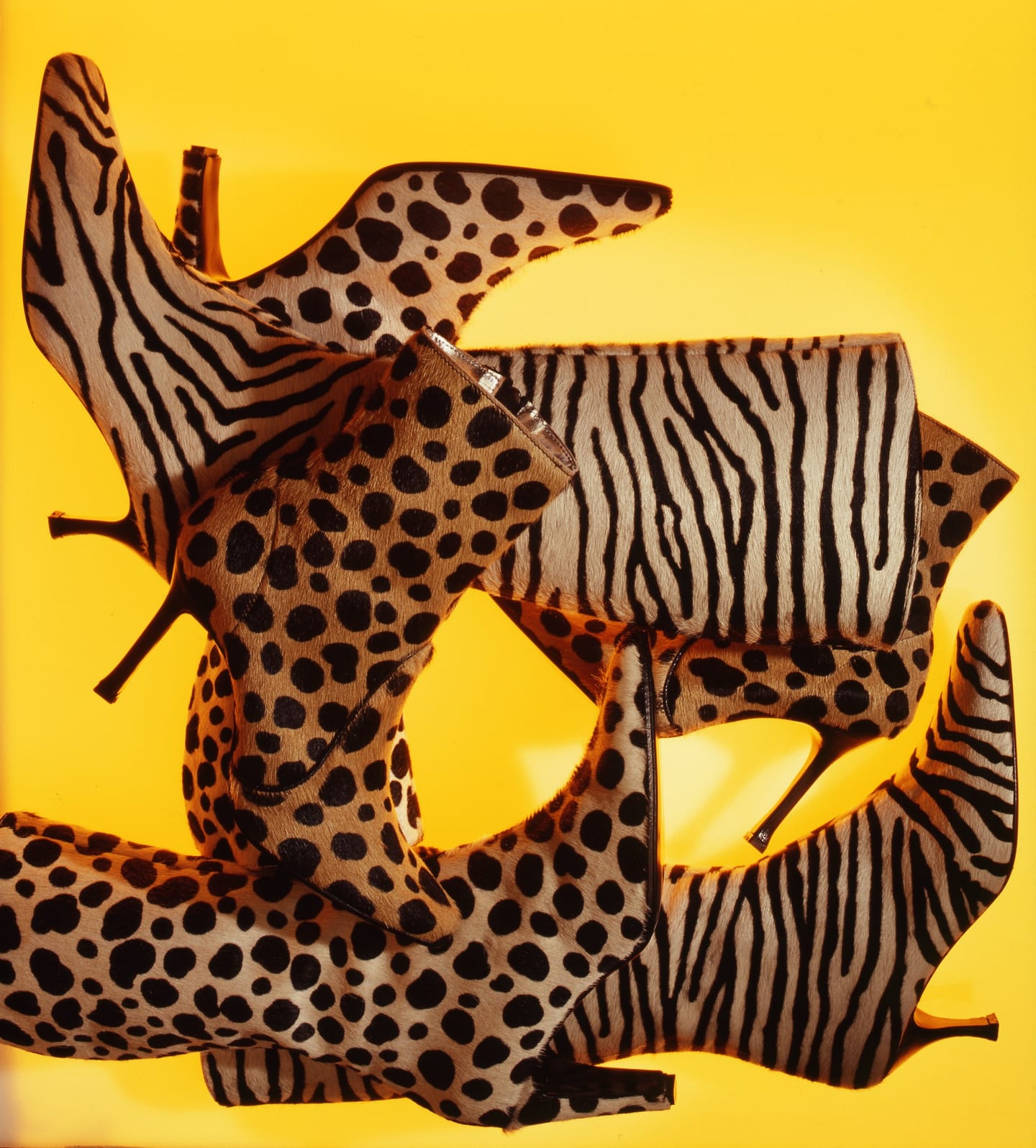
The Robert Harper Photograph Library is 95,487 unique photographs by inventory count, the work of one photographer, owned by 825 Ventures Ltd, the owner and rights holder. Its dataset card and folder-level inventory are public, and studio subjects such as fragrance and jewellery are described in the catalogue. Archive.London publishes no rate and none is implied here. Licences are negotiated directly with the single rights holder, subject to rights review, and enquiries start at the AI training data licensing page.
Frequently asked questions
Do AI companies pay for the images they train on?
Some have. Publicly reported examples include Shutterstock's agreements with OpenAI and, according to Reuters in April 2024, with Meta, Google, Amazon and Apple, and Freepik's deals with two large technology companies. Many other models were built on images collected from the web without payment, which is the subject of continuing litigation. Paid licensing exists, but it is not universal.
How much do AI companies pay per image?
Reported figures vary widely. Reuters reported on 5 April 2024 rates of 2 to 4 cents per image for Freepik's bulk archive and a general range of $1 to $2 per image cited by Defined.ai's chief executive. Bloomberg reported on 10 April 2024 that Adobe paid 6 to 16 cents per photo. All describe bulk, non-exclusive supply in 2024.
Do individual photographers get paid when their photos train AI?
Sometimes, through a platform. Wirestock said in May 2026 that it had paid out $15 million to its contributors. A stock contributor reported being offered $1,173.93 by Adobe as a bonus for an archive of nearly 12,000 images, which he rejected. Photographers whose work was scraped without a licence have generally received nothing unless a court or settlement says otherwise.
Did Getty Images license its photos to OpenAI for training?
The agreement announced on 21 June 2026 was described as a multi-year display partnership, putting licensed Getty content into ChatGPT's search and discovery features. The announcement disclosed no financial terms and did not describe training rights. Getty's chief executive said in March 2026 that the company does not license editorial content for AI training.
Is the Anthropic settlement a price guide for images?
No. The $1.5 billion settlement in Bartz v Anthropic, given final approval on 20 July 2026, resolved claims about acquiring and copying pirated books, at roughly $3,000 per work. It reflects exposure to statutory damages in a books case. It is not a licence rate and says nothing about what a photograph is worth.
Sources
- Reuters: Inside Big Tech's underground race to buy AI training data (5 April 2024, archived copy)
- Shutterstock: Expands partnership with OpenAI, signs new six-year agreement (11 July 2023)
- RightsTech: AI companies get the picture (15 April 2024, citing Bloomberg, 10 April 2024)
- Getty Images Q4 2025 earnings call transcript (16 March 2026)
- The Next Web: Getty Images soars after striking a deal with the kind of company it sued (22 June 2026)
- PPC Land: Getty Images signs display deal with OpenAI
- Competition and Markets Authority: Getty abandons Shutterstock merger plans (7 July 2026)
- Kaptur: The hidden economy behind AI data licensing takes center stage (12 June 2025)
- TechCrunch: Wirestock raises $23M to supply multi-modal data to AI labs (14 May 2026)
- TechCrunch: Bria lands new funding for AI models trained on licensed data (13 March 2025)
- PetaPixel: report on the Adobe arbitration over AI training of a photo library (11 March 2026)
- Authors Guild: Court grants final approval of Anthropic copyright settlement (20 July 2026)
- Copyright, Designs and Patents Act 1988, section 29A
- Getty Images v Stability AI 2025 EWHC 2863 (Ch)
- Reed Smith: UK copyright and AI report, the opt-out is dead
- Directive (EU) 2019/790 on copyright in the Digital Single Market
- Burges Salmon: Getty Images v Stability AI, Court of Appeal hearing (12 November 2026)
This article is general information, not legal advice. It reflects the position as we understood it on the date shown and may be out of date. Published by Archive.London. Corrections are welcome under our editorial policy.