
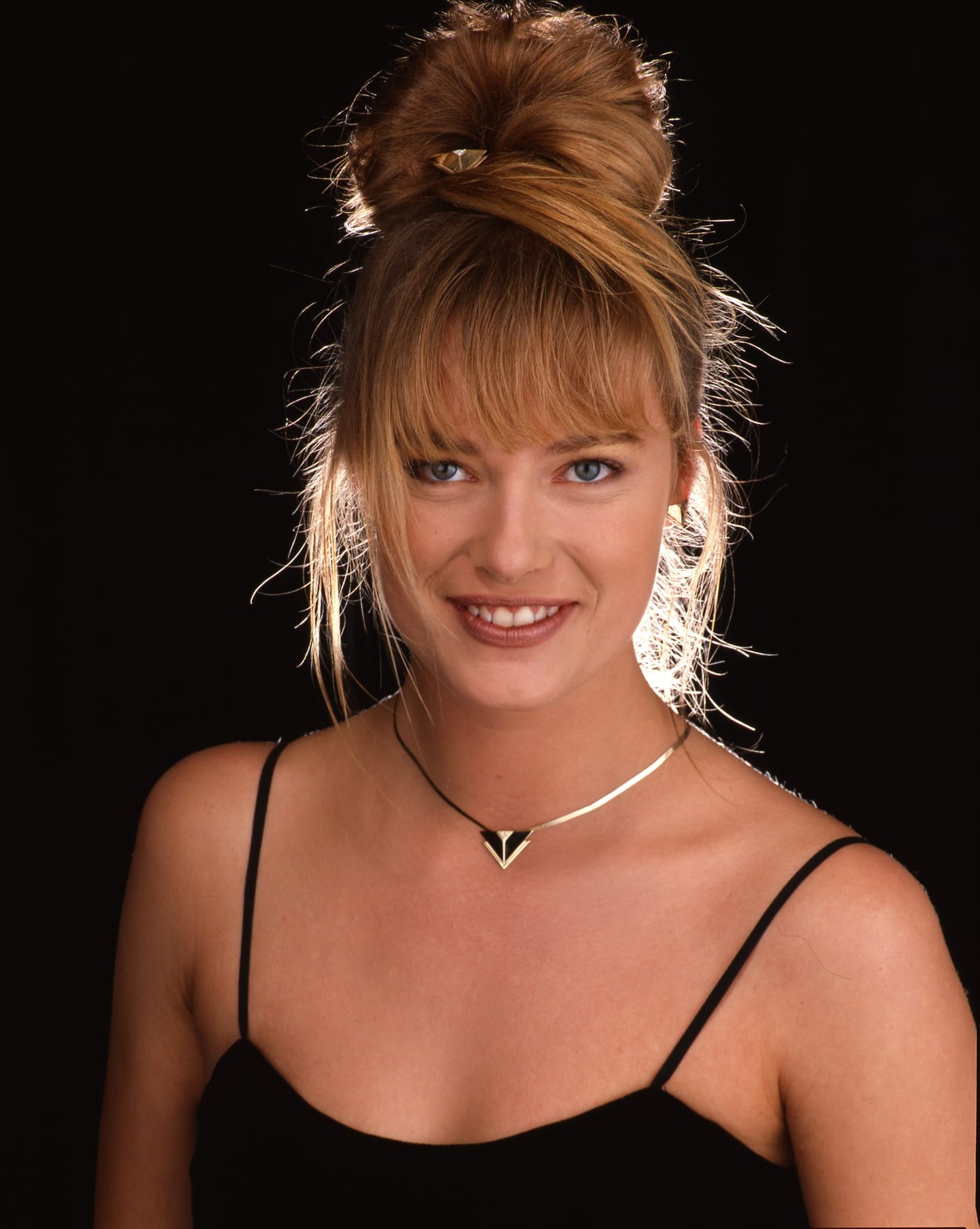
A Polaroid cannot be editioned, reprinted or put back the way it was. That makes it the purest collectable in photography and the most awkward one to own.
A Polaroid is the only photograph that comes with its own scarcity built in, and the only one you spend a little of each time you look.
Yes, Polaroids are collectable, and the evidence is on the public record. Over two days in June 2010, Sotheby's in New York sold 420 lots from the Polaroid Corporation's own collection for $12,467,622. A nine-part self-portrait by Chuck Close made $290,500. An Andy Warhol self-portrait with his eyes closed made $254,500.
The useful answer is more complicated, and it is our angle here. The same sale shows that "a Polaroid" is at least three different things in the market: an artwork made on instant film by a known artist, a working proof from a studio, and a snapshot. They share a chemistry and almost nothing else. And all three share one property that no other photograph has. There is exactly one of each, and it is slowly being used up by the light it takes to see it.
This article is general information, not financial or legal advice. Checked on 18 November 2026.
What did the 2010 Polaroid Collection sale actually show?
The collection began in the 1940s, when Polaroid's founder Edwin Land started giving film and cameras to photographers, Ansel Adams first among them, and keeping some of the results. By the 1960s this had become the Artists Support Program: access to materials, including the room-sized 20 x 24 inch camera, in exchange for prints. After the company's second bankruptcy in 2008, a United States bankruptcy court ordered part of it sold. Some of the artists objected that they had given work on the understanding it would stay together.
Collector Daily's report of the sale gives the numbers:
| Measure | Result |
|---|---|
| Sale dates | 21 and 22 June 2010, Sotheby's New York |
| Lots offered | 473 |
| Lots sold | 420 (about 89 per cent) |
| Total including premium | $12,467,622 |
| Pre-sale high estimate | $10,661,200 |
| Top lot | Ansel Adams, Clearing Winter Storm, mural print: $722,500 |
| Chuck Close, 9 Part Self-Portrait | $290,500 |
| Andy Warhol, Self-Portrait (Eyes Closed) | $254,500 |
| Lucas Samaras, Ultra-Large (Hands) | $194,500 |
| William Wegman, Avalanche | $30,000 |
Two readings follow. First, the three highest prices in a sale called the Polaroid Collection were for Adams's mural-sized prints, which are conventional darkroom prints that happened to belong to Polaroid. The brand on the catalogue cover was not what the top bidders were buying.
Second, where instant materials did command large sums, the names were Close, Warhol and Samaras: artists with markets of their own, for whom Polaroid film was a chosen medium. The premium attached to the artist and the work. The uniqueness of the object supported the price; it did not create it.
In 2011 the European part of the collection, about 4,400 prints, was acquired by the WestLicht museum in Vienna with the Impossible Project for a reported $705,000 or so. Set beside the New York total, that is a reminder of how wide the range is even among Polaroids selected by Polaroid.
Why can a Polaroid not be editioned?
Because the print is the film. In peel-apart materials the image forms by dyes migrating from a negative sheet to a receiving sheet during a timed minute or so, after which the two are pulled apart and the negative is normally discarded. In integral film, the kind that ejects from the camera with a white border, the whole reaction happens inside a sealed unit. The Image Permanence Institute's identification notes describe exactly those features: adhesive residue along the borders of peel-apart prints, and the white plastic frame with its reagent pod on integral ones.
Either way there is no reusable negative. A second print of a Polaroid can only be a photograph of a photograph. For the market this is tidy: no edition to verify, no later printing to distinguish from an early one, none of the dating problems described in how to tell if a photograph is authentic. For the owner it is less comfortable, because whatever happens to the object happens to the only copy.
How does the market treat artist Polaroids and studio test shots?
Differently, and for good reasons.
| Artist's Polaroid | Studio test shot | |
|---|---|---|
| Made as | The finished work | A proof before the real exposure |
| Typical film | Large format, 20 x 24, or SX-70 used deliberately | Peel-apart pack or sheet film on a camera back |
| Marks | Signature, title, date | Exposure notes, job name, crop lines, fingerprints |
| Usual home | Gallery, museum, auction | Photographer's files, then archives |
| Read as | Art | Evidence of process |
| Interest depends on | The artist's standing | Who shot it, of what, and whether the final picture survives |
A test shot is closer to a preparatory drawing than to a print. It was pulled to check lighting and composition, studied for a minute and then filed or binned. Our article on Polaroid proofing before digital explains the routine, and the fashion and advertising context is in collecting fashion photography.
Museums and collectors have come to value such things for the same reason they value contact sheets: they show decisions. That is a different kind of value from a signed work and should not be confused with it. We would be wary of anyone who quotes artist prices as a guide to working proofs, and we do not put a figure on either.
Do Polaroids fade, and how fast?
They fade. How fast depends on the film type, the processing on the day and above all the light since.
A colour instant print is a dye image, and the conservation position on dyes and paper is not ambiguous. The Library of Congress tells framers that UV-filtering glazing removes the most harmful part of light but that all light is damaging, not only ultraviolet. The Conservation Center for Art and Historic Artifacts places photographs in its most sensitive class for exhibition: a maximum of 50 lux, for three months in every five years, with ultraviolet ideally below 10 microwatts per lumen.
Apply that to a Polaroid on a mantelpiece. A room lit for reading is several times 50 lux, every day, all year. The museum's five-year allowance is spent in weeks. With a C-type print the collector at least knows that, in principle, the negative could be printed again. With a Polaroid the fading is the object changing, permanently.
Light is not the only risk. Integral prints are layered plastic packets and dislike being flexed. Peel-apart prints can carry residues of the processing reagent. Both scratch. Icon, the Institute of Conservation, advises a stable relative humidity of 30 to 40 per cent for photographic materials and warns against swings between damp and dry, which crack and distort layered objects.
How should you keep and show a Polaroid?
The rules are short because the options are few.
- Keep the original in the dark, flat, in an enclosure that has passed the Photographic Activity Test, in a cool room with steady humidity.
- Display a reproduction. The Library of Congress recommends framing a well-made copy and storing the original. For a unique print this is not a compromise; it is the only sustainable choice.
- Scan it once, properly, including the borders and the back, where the writing is. Our guide to digitising Polaroid prints covers capture, and the scan resolution calculator shows what a small print yields at a given setting.
- If the original has to hang, treat it as a loan to yourself: low light, away from windows, for a season, behind UV-filtering glazing with a mount that keeps the surface off the glass. The detail is in framing, glazing and light.
- Never trim, peel or laminate. Everything about the object, including the border and the manufacturer's printing on the back, is part of its evidence.
What do 4,005 studio Polaroids amount to?
The Robert Harper Photograph Library records 4,005 unique colour Polaroid prints, which its inventory describes as covering a multitude of subjects, among them household objects, ornaments, fashion and decor. They are studio working prints: in the terms of the table above, the right-hand column.
What we can say about them is limited to what is recorded. One drinks folder, a Cinzano shoot, is listed as holding 10 x 8 inch transparencies together with 19 Polaroids, alongside 5 x 4 inch and 6 x 7 centimetre film from the same job, so in at least one case proofs and finished film survive side by side. Whether the prints carry notes, how many can be matched to final transparencies and what condition they are in will only be known when they are described one by one. Our earlier piece on what the 4,000 test shots show sets out the detail.
For a collector this is a useful reference point for scale: one commercial studio, over a career, kept about four thousand of the proofs it could have thrown away. The Polaroid collection page describes the group; curators, researchers and conservators with an interest in instant materials can ask to see more through professional access.
Frequently asked questions
Are Polaroids worth collecting?
They can be. A Polaroid is a unique object with no negative, and works by established artists using Polaroid materials have sold for six-figure sums: a Chuck Close self-portrait made $290,500 at Sotheby's in June 2010. Most Polaroids are not in that category. Authorship, subject, condition and documentation decide which is which.
Do Polaroids fade?
Yes. Colour instant prints are dye images, and dye fades with light. The Library of Congress puts it bluntly for paper-based objects in general: all light is damaging, not only ultraviolet. Because a Polaroid cannot be reprinted, fading is permanent. Keep originals in the dark and display a good reproduction.
Are studio test Polaroids valuable?
As a rule they are valued as documents more than as artworks. A test shot records lighting, composition and decisions on a set, often with handwritten notes. Its interest rises sharply when the photographer, the sitter or the shoot is significant and when it can be linked to the final published picture.
How should I store Polaroid photographs?
Flat, cool, dry and dark, in enclosures that have passed the Photographic Activity Test, without rubber bands, paper clips or adhesive. Icon, the Institute of Conservation, recommends a stable relative humidity of 30 to 40 per cent for photographic materials generally. Do not cut, peel or flex integral prints; the layers are sealed for a reason.
What is the difference between peel-apart and integral Polaroids?
Peel-apart film, used with professional camera backs, produced a print that was separated from its negative sheet after a timed interval. Integral film, introduced with the SX-70 camera, develops inside a sealed white-bordered unit that includes the chemistry pod. Studio test shots are overwhelmingly peel-apart; most snapshot Polaroids are integral.
Sources
- Collector Daily: Auction results, Photographs from the Polaroid Collection, Sotheby's New York, 21 and 22 June 2010
- Wikipedia: Polaroid Collection (history, 2010 sale and 2011 WestLicht acquisition)
- Image Permanence Institute: Identification of 20th century photographic processes (webinar slides)
- [Northeast Document Conservation Center: Preservation Leaflet 5.2.2, colour photographic processes (2020)](https://www.nedcc.org/assets/media/documents/Preservation Leaflets/5_2_2_PhotosColor_2020.pdf)
- Conservation Center for Art and Historic Artifacts: Light Exposure for Artifacts on Exhibition (2020)
- Library of Congress: Will UV-filtering acrylic or glass protect my framed paper item?
- Icon, the Institute of Conservation: Caring for photographic materials
Published by Archive.London. Corrections are welcome under our editorial policy.