
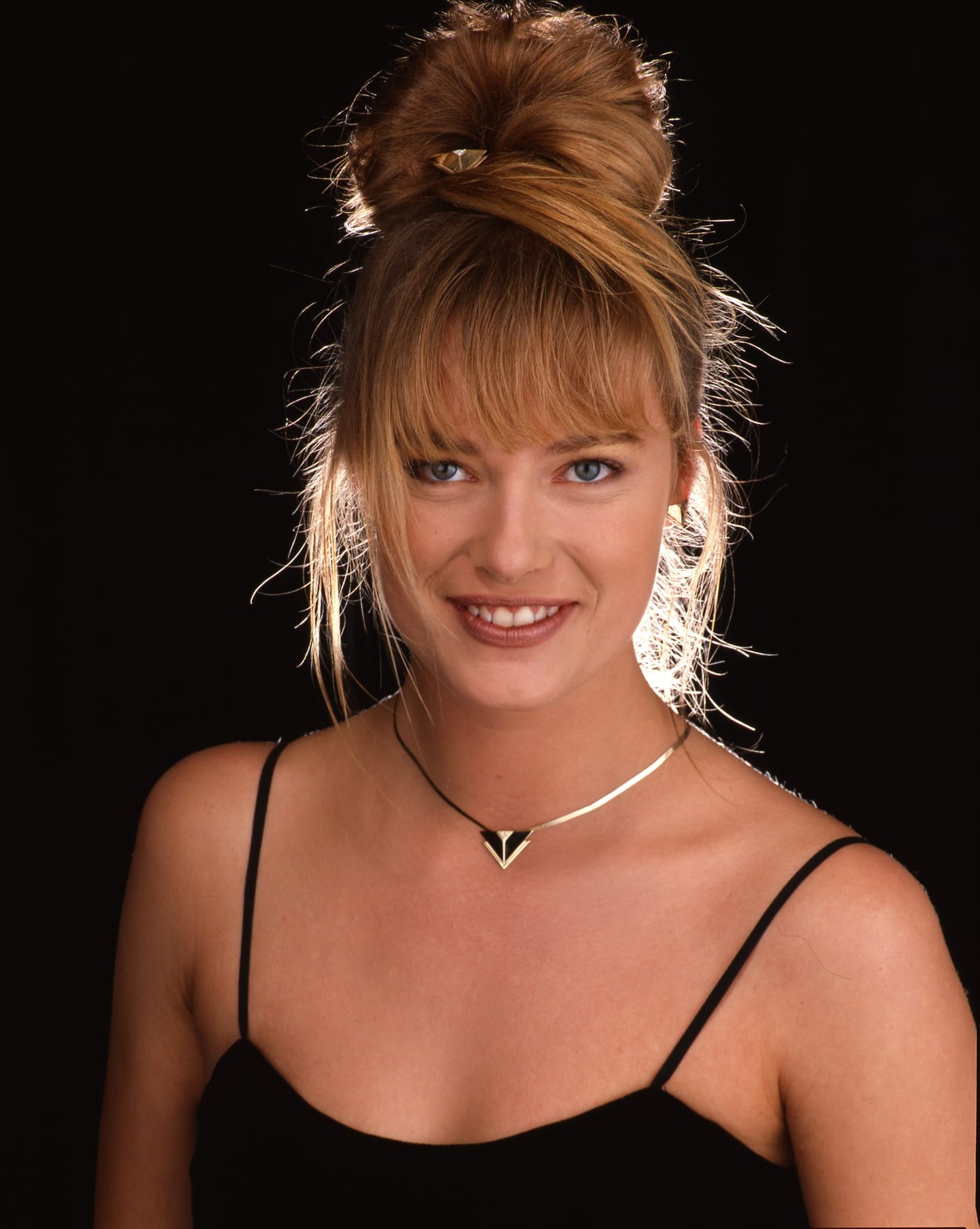
Before a transparency was exposed, a Polaroid was pulled, peeled and studied. The Robert Harper Photograph Library holds 4,005 of these one-off prints, and they have yet to be described one by one.
The Robert Harper Photograph Library holds 4,005 unique colour Polaroid prints. The catalogue presents them as working prints, made for one reason: to see a photograph a minute before it was taken. In a film studio the Polaroid was the only preview there was, and when the real picture had been exposed the proof had done its job.
That these prints were kept at all is the interesting fact. A Polaroid test shot was a working tool, often binned at the end of the day. The Polaroid collection preserves several thousand of them from one photographer's studio.
What is a Polaroid test shot?
It is an instant proof, made through the taking camera, under the lighting set for the final picture.
Professional medium-format and large-format cameras were built in sections. The film sat in a detachable back or holder, and manufacturers offered an alternative back that accepted Polaroid film. The photographer composed and lit the picture, fitted the Polaroid back, made an exposure, pulled the film through its rollers and waited. With peel-apart film, the print was separated from its backing after a timed interval of about a minute.
What came out was not the finished photograph. Polaroid material had its own colour, contrast and sensitivity, and experienced photographers learned to read across from the proof to the transparency film they were about to use. But it showed, at once, the things that could not otherwise be known until the laboratory returned the film:
- whether every flash head had fired, and in balance;
- where the shadows and highlights really fell;
- whether a reflection of a light, a stand or the camera had appeared in glass or metal;
- how the composition sat within the frame and, for magazines, the page;
- whether the art director and client agreed.
How Polaroid proofing worked in a film studio
Edwin Land introduced the Polaroid process in 1947 and the first film went on sale the following year. Peel-apart pack film, the kind most studios used with interchangeable backs, arrived in 1963. An instant film in the 8×10 inch format followed in 1973.
For most of the film era the Polaroid was part of the routine of a commercial sitting. Robert Harper spent two years at the Condé Nast studios assisting David Bailey, Helmut Newton and Lester Bookbinder, and pulling and timing the proof was typically an assistant's job, as described in our article on what a Condé Nast studios assistant did. The record does not describe Harper's own routine, so that is a statement about the trade, not about him.
The practice ended with the materials. Polaroid announced in February 2008 that it would stop making instant film. Fujifilm's compatible pack film, FP-100C, was discontinued in 2016. By then a digital camera tethered to a screen had taken over the job. Routine proofing on peel-apart film is over, which fixes these prints firmly in the film era of the studio.
What do the 4,005 Polaroids show?
The catalogue lists the subjects: fashion, furniture, jewellery, watches, cosmetics, food, drink, perfume, still life and people. That is very nearly the range of the whole archive, which describes 330 collections across 24 principal categories.
It follows from the career. Harper was a regular contributor to Elle and The Telegraph Magazine for more than fifteen years, with work in Vogue, Tatler, Cosmopolitan, Esquire, The Face, Wallpaper and Harpers & Queen, and his clients included De Beers, Harrods, Selfridges, Boots, Heinz, Diageo, the BBC, CBS Records and Montblanc. A Polaroid was pulled whatever was on the table.
One catalogue entry gives a glimpse of how proofs and finals relate. The drinks inventory identifies a dedicated Cinzano shoot "preserved across transparencies and Polaroids in several film formats". Where a proof and its finished transparency both survive, the two can be laid side by side and the adjustments between them read off. How often that is possible across the collection is not yet known.
Why are working Polaroids worth keeping?
There are four reasons, in ascending order of interest.
They are unique. A Polaroid has no negative in ordinary use. Each print is the only one.
They record decisions. A finished transparency shows where a photographer ended up. A run of Polaroids from the same set-up can show how the picture got there: a light moved, a prop removed, a crop tightened. For objects that fight the camera, such as the stones described in photographing De Beers diamonds, those steps are the craft.
They record people who are otherwise invisible. The proof was the object that the photographer, the stylist, the art director and the client all looked at together. It was the point of agreement.
They often carry writing. Studio Polaroids in general were scribbled on, with exposure notes, dates or job names on the border or the back. Whether Harper's prints carry such notes has not been recorded in the catalogue, and it is one of the first things frame-level cataloguing would establish.
| Polaroid proof | Final transparency | |
|---|---|---|
| Purpose | Check before exposing film | The picture delivered to the client or magazine |
| Number made | One original per exposure | Several frames, often bracketed |
| Seen by | Everyone on the set | Photographer, editor, printer |
| Usually kept | Rarely | Yes |
| In this archive | 4,005 recorded | Most of the 52,684 analogue photographs |
Can a Polaroid be matched to its final photograph?
In principle, yes, and this is where the collection could repay real work.
The analogue holdings are mostly medium-format colour transparencies, with black-and-white negatives, contact sheets, larger-format film and 35mm slides. If a Polaroid and a transparency show the same set-up, they belong to the same job. Linking them needs both to be scanned and described, and it needs someone, or some software, to compare them.
Anyone planning similar work on their own collection can estimate file sizes with the film scan resolution calculator, and the contact sheet maker will lay a set of scanned proofs out in rows for comparison.
What has not been done yet
The Polaroids are counted, and their subjects are listed in outline. They have not been individually described. The catalogue does not yet say which prints belong to which shoot, which carry annotations, what film types are present or what condition the prints are in. The figure of 4,005 comes from the archive's inventory and is not yet checked frame by frame against the physical material.
That is the position of the wider analogue holdings too. The archive records 52,684 unique analogue photographs, and that material largely awaits scanning and cataloguing. More than half of the archive is still on film and has yet to be scanned, and only a small selection has been published online by Archive.London.
Polaroids are a particular case because they are fragile. The surfaces mark easily, and the dyes react to light and heat. Any scanning programme has to be planned around handling them as little as possible, capturing fronts and backs in one pass.
An invitation to digitisation specialists
Scanning bureaux, conservators and cataloguing teams with experience of instant prints are the people this collection needs next, and the brief is set out on the digitisation partners page.
Frequently asked questions
What is a Polaroid test shot?
A Polaroid test shot is an instant print made on a studio camera fitted with a Polaroid back, immediately before the real exposure on conventional film. It let the photographer, art director and client see lighting, exposure, composition and reflections within a minute or two. Once approved, the back was swapped for film and the picture was taken.
Why did photographers use Polaroids before digital cameras?
Film gave no immediate feedback. Transparency film in particular had little tolerance for exposure error, and results came back from the laboratory hours later. A Polaroid proof showed in about a minute whether a light was misplaced, a flash had failed to fire or a reflection had crept in, which saved film, time and reshoots.
How many Polaroids are in the Robert Harper archive?
The catalogue records 4,005 unique colour Polaroid prints, and the archive describes its holding as more than 4,000 individual Polaroids. The figure comes from the archive's own inventory and has not yet been independently reconciled. Subjects recorded include fashion, jewellery, watches, cosmetics, food, drink, perfume, furniture and people.
Are studio Polaroids unique?
Yes. A Polaroid print is made directly in the camera and has no reusable negative in normal practice, so each one is a single original. Two Polaroids from the same set-up differ in exposure, timing and handling. That makes a collection of working Polaroids closer to a set of drawings than a set of prints.
How should old Polaroids be digitised?
Polaroid prints are reflective originals, usually scanned on a flatbed or photographed on a copy stand with even, polarised light. Borders and backs should be captured as well as the image, because notes are often written there. Handling should be minimal: surfaces scratch easily and the dyes are sensitive to light and heat.
Sources
Published by Archive.London. Corrections are welcome under our editorial policy.