
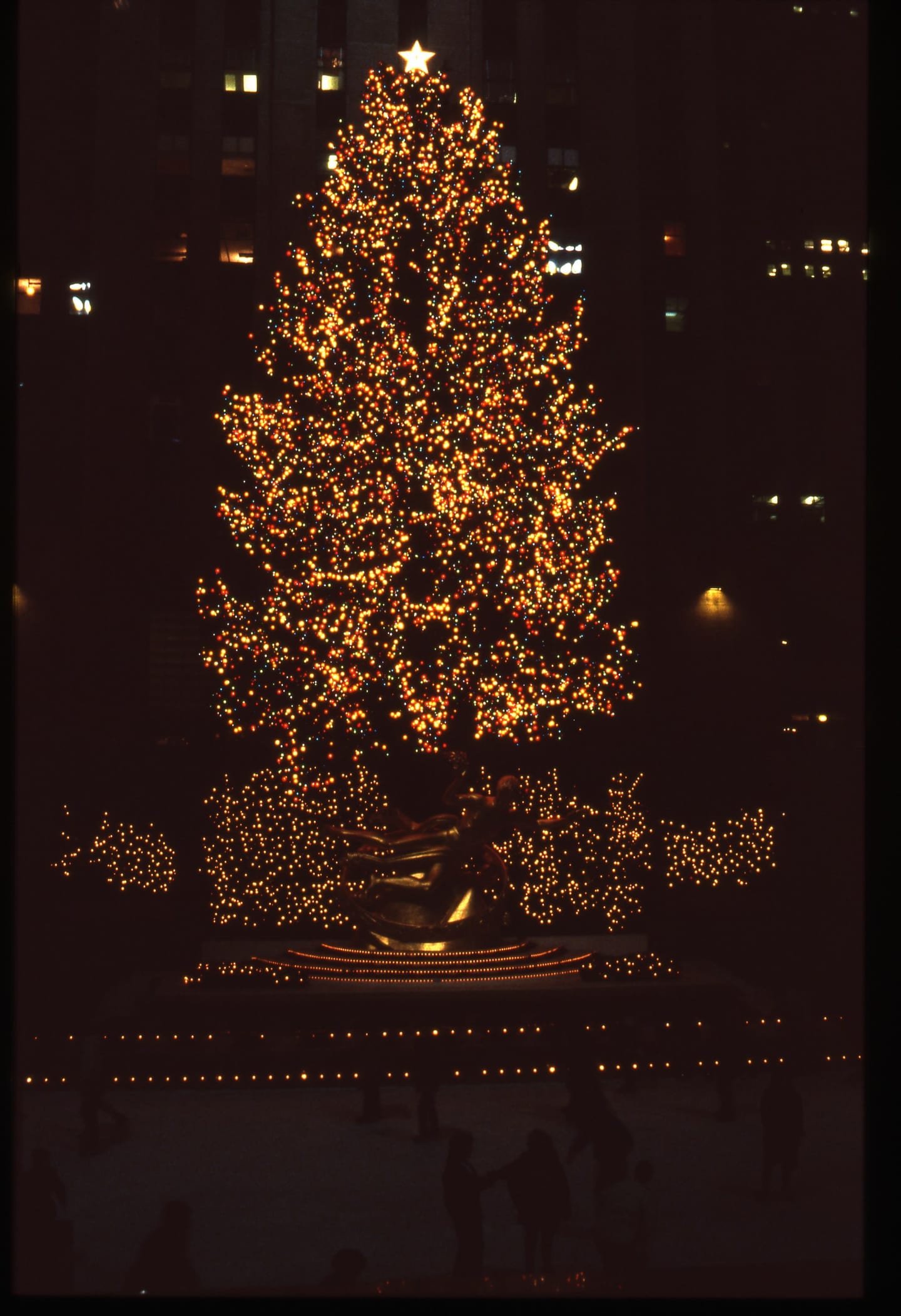
A studio transparency was made for a printing press, not a frame. When one reaches a gallery, the thing on the wall is new, and the label owes the visitor two dates instead of one.
A print from a transparency is a translation, and like any translation it should carry the translator's name and the year it was made.
A colour transparency shot for a magazine has no vintage print. It never needed one. The film went from the photographer's lightbox to the repro house, was separated into four printing plates, and met its public as ink on coated paper. So when such a picture is hung in a gallery forty years later, the object on the wall is not an old photograph that has survived. It is a new one. Our angle is that this is neither a scandal nor a technicality: a print from a transparency is a translation, and the test of an honest exhibition is whether the label admits who translated it and when.
This article is general information, not financial or legal advice. Checked on 18 November 2026.
What is an exhibition print?
The trade's own glossaries define prints mostly by date. The Photographers' Gallery in London gives three steps: a vintage print is "a print made at the same time that the negative was made"; a later, modern or lifetime print is one produced some time after the photograph was taken, during the photographer's lifetime; a posthumous or estate print is made after the photographer's death from the original negative. It adds that estate prints are usually authenticated by a family member.
An exhibition print is defined differently, by purpose. Paris Photo's glossary lists "Collector's Print / Exhibition Print" together, as original prints made with a view to selling or exhibiting them. In museum practice the phrase has narrowed. It tends to mean a print produced for display, often for one show, which may sit outside any numbered edition and may never be offered for sale. Related terms such as exhibition copy and facsimile are used when a new print stands in for an original too fragile or too light-sensitive to hang.
The dating scheme and the purpose scheme overlap awkwardly, and that is where confusion starts. An exhibition print made in 2026 from a 1986 exposure is a later print if the photographer approves it and a posthumous one if not. Either way it is a 2026 object.
| Term | Defined by | Made when | What a visitor is looking at |
|---|---|---|---|
| Vintage print | Date | At or close to the time of exposure | A period object in period materials |
| Later or modern print | Date | Afterwards, in the photographer's lifetime | The photographer's second thoughts, or a new market |
| Posthumous or estate print | Date and authority | After death, authorised by the estate | The estate's reading of the negative or transparency |
| Exhibition print | Purpose | For a show, at any date | A display object; ask whether it is editioned |
| Exhibition copy or facsimile | Purpose | For a show, replacing an original | A stand-in; the original is elsewhere |
Why does a colour transparency have no vintage print?
Because of what it was for. A negative is an intermediate: it means nothing until printed, so photographers who worked in negative made prints as a matter of course. A transparency is a finished positive. Held to the light it is the picture, complete, in colours fixed by the film stock and the exposure. For editorial and advertising work from the 1960s to the 1990s it was also the deliverable. The art director chose a frame on the lightbox, the transparency went to the printer, and the photographer's part was over. Our explainer on what a transparency is sets out the mechanics.
The period objects that survive from that workflow are therefore not prints. They are the transparencies themselves, the Polaroid test shots made before the film was exposed, and the printed page. Somerset House made this visible in Guy Bourdin: Image Maker, which ran from 27 November 2014 to 15 March 2015. By the institution's own description the show held more than 100 colour exhibition prints alongside unique Polaroid test shots, double-page spread layouts, and contact sheets and transparencies marked for composition. The prints carried the images; the working material carried the history.
The Robert Harper Photograph Library is an archive of this type. By its inventory the principal analogue format is 6 x 7 colour transparency film, there are 134,340 analogue frames across 503 folders, and 4,005 Polaroid prints survive beside them. Magazine pages and editorial material are held too. What the archive does not hold, in the main, is a drawer of period colour prints, and nobody should expect one from a studio's analogue holdings.
How is a print made from a transparency?
There have been three broad routes, and the choice shapes the result.
Direct positive printing. Silver dye-bleach papers, sold as Cibachrome and later Ilfochrome, printed straight from a transparency with high saturation and a glossy, almost lacquered surface. The materials were discontinued in the early 2010s.
Dye transfer and internegatives. Dye transfer built a print from three separately dyed matrices and gave the printer unusual control over each colour; Kodak stopped making the materials in the 1990s. The cheaper route was to copy the transparency on to negative film and print that on ordinary chromogenic paper, at some cost in contrast and sharpness.
Scan and print. Today the transparency is digitised and the file is output as a pigment inkjet print or exposed on to chromogenic paper by laser or LED. The Photographers' Gallery describes an inkjet print as one made from a digital file using fine droplets of ink, and notes that pigment inks are considered more stable.
The scan sets the ceiling. At 4,000 pixels per inch a 6 x 7 cm frame yields about 8,819 x 11,024 pixels, as worked through in our guide to scanning medium-format transparencies. At 300 pixels per inch on paper that supports a print of roughly 75 x 93 cm without interpolation, and the print size calculator will run the sum for any other scan.
Every one of these routes involves judgement. A transparency has a density range no paper can match, so the printer decides which shadows to open and which highlights to let go. Dyes shift with age, so someone decides whether to print the film as it is now or as it probably was; our piece on why colour slides fade explains the chemistry. The original reference for the colour was a sheet of film on a lightbox and a magazine page, and the new print resembles neither exactly.
Is a new print from an old transparency still authentic?
It is an authentic print of its own year. The question is what it claims to be.
American law has had one clear look at this. William Eggleston's early colour work was printed by dye transfer in limited editions. Decades later, larger digital pigment prints of some of the same images were made and sold at auction in 2012, and a collector of the dye transfers, Jonathan Sobel, sued. On 28 March 2013 Judge Deborah Batts of the Southern District of New York dismissed the claims. As the Center for Art Law summarises the ruling, the court found the later prints "markedly different" from the earlier ones in size, medium and date, and held that numbering a limited edition was not a promise never to make another edition in a different form. That is one US decision on its own facts, not a general rule, but its logic is the one museums use: a new process and a new date make a new object.
Estates of photographers who worked in colour film face the same choice. The Saul Leiter Foundation says Leiter left tens of thousands of colour slides, that it has begun to catalogue them with the scholar Elena Skarke, and that its online exhibition of discoveries from the slide archive presents them for viewing only, not for sale. Showing a slide on a screen as a slide is one honest answer. Printing it and saying so is another.
What would be dishonest is ambiguity: a wall of large, fresh prints dated only "1978", inviting the visitor to assume that is what 1978 looked like.
How do museums label an exhibition print?
Practice varies between institutions, but the careful ones give the visitor enough to reconstruct the object's history. We would expect a label for a new print from a transparency to answer five questions:
- When was the photograph taken? The exposure date, or a range if the catalogue cannot yet be more precise.
- When was this print made? A year, stated as "printed 2026" or similar.
- By what process? Pigment inkjet print, chromogenic print, and so on.
- From what? "From the original 6 x 7 cm colour transparency", which tells the visitor where the authority lies.
- On whose authority? The photographer, the estate or the rights holder, and whether the print belongs to an edition or is an exhibition print outside one.
The strongest exhibitions go further and show the source. A transparency in a lightbox vitrine beside the print, a Polaroid test, the magazine spread: these let visitors compare the translation with the text. Bourdin's marked-up transparencies at Somerset House did that work. Display of original film has its own conservation limits, since dyes fade with light, which is why a facsimile transparency is sometimes used in the vitrine too, and labelled as such.
What does this mean for an archive of transparencies?
Three practical things. First, every exhibition begins with digitisation of the frames chosen, so exhibition planning and scanning standards are the same conversation. Second, print decisions need an author: a named printer or curator working to a documented brief, with the transparency and any tearsheet as reference. Third, edition and exhibition are separate questions. A show can be made from exhibition prints without any decision about selling prints at all, and the costs of doing so are mostly production and framing.
Archive.London's position is straightforward. The Robert Harper Photograph Library is owned by 825 Ventures Ltd, the owner and rights holder, and more than half of the archive is still on film and has yet to be scanned. Any print made from it would be a new print and would be described as one. Museums, galleries and curators who would like to examine the film and discuss how a selection could be printed and labelled can apply for professional access; venues and fairs that show work of this kind are listed in the photography directory.
Frequently asked questions
What is an exhibition print?
An exhibition print is a print made for display. Paris Photo's glossary pairs it with the collector's print as an original print made with a view to selling or exhibiting. In museum use the phrase often signals a print produced for a particular show, sometimes from a scan of the film, and not necessarily part of a numbered edition or available for sale.
Is an exhibition print the same as a vintage print?
No. The Photographers' Gallery defines a vintage print as one made at the same time as the negative, and a later or modern print as one made some time afterwards in the photographer's lifetime. An exhibition print is defined by purpose, not date, and when it is made decades after the exposure it is a later or posthumous print by any dating scheme.
Why do colour transparencies have no vintage prints?
Because a transparency made for a magazine or advertisement was the finished camera original. It was sent to be scanned or separated for the printing press, and the public saw ink on a page. No photographic print was needed in that workflow, so in most studio archives the film and the tearsheet are the only period objects.
How should a museum label a new print from an old transparency?
With both dates and the process. A clear label gives the year the photograph was taken, the year the print was made, the print process, the source, such as an original 6 x 7 cm colour transparency, and who authorised the print. Words such as exhibition print or printed later tell the visitor that the object is recent even though the image is not.
Is an exhibition print worth anything?
This article does not give valuations. In general, markets distinguish sharply between prints by date, authorship and edition, and an exhibition print outside any edition is usually treated as display material. In Sobel v Eggleston the court accepted that a later edition in a different size and medium was a different work from the first.
Sources
- The Photographers' Gallery Print Sales: A glossary of terms
- Paris Photo: Glossary, Tirage
- Somerset House: Guy Bourdin: Image Maker
- Center for Art Law: In Sobel v. Eggleston 'Limited Edition' is no limit to subsequent editions
- Saul Leiter Foundation: New online Leiter exhibition focuses on color slides
Published by Archive.London. Corrections are welcome under our editorial policy.