
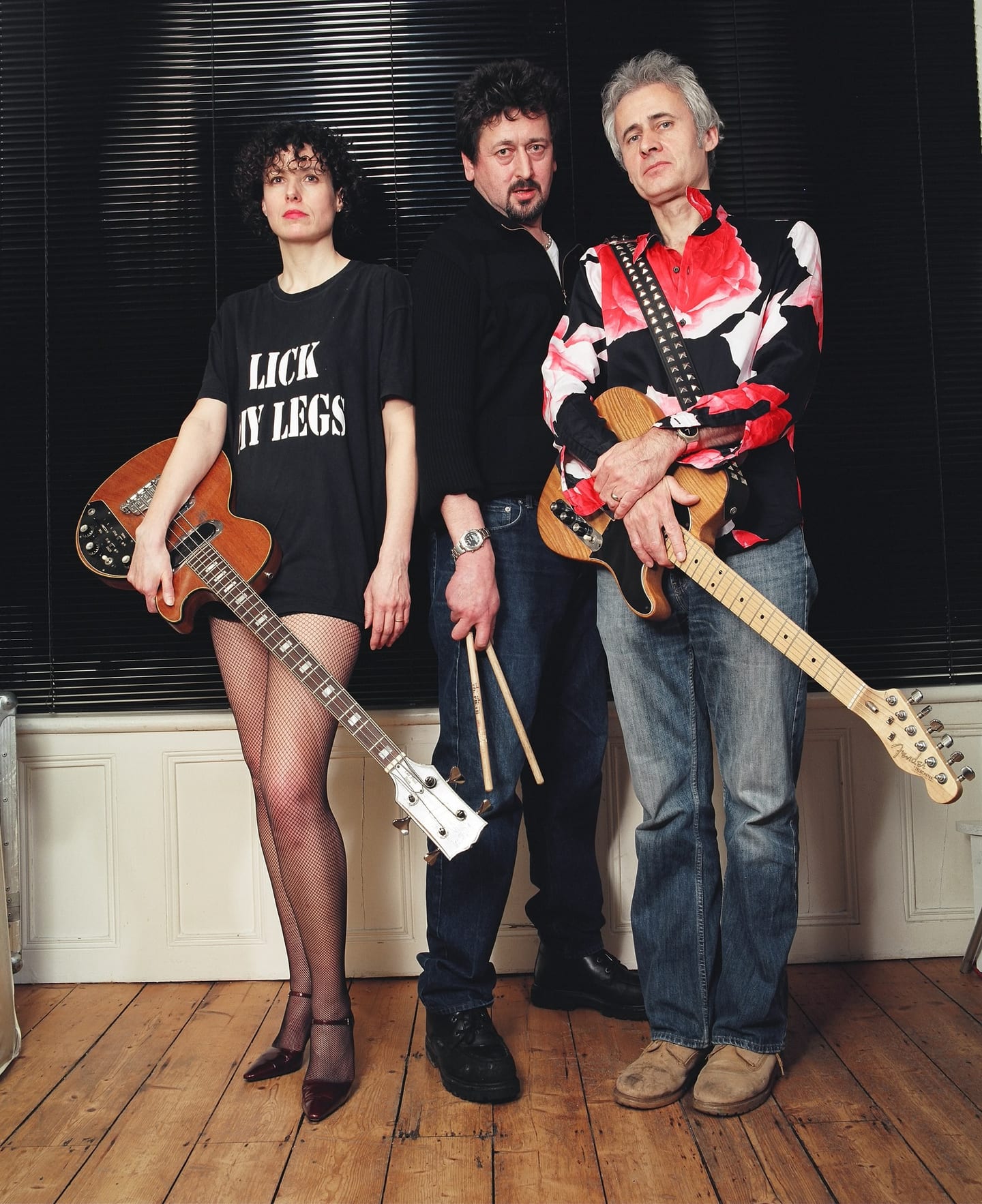
A still of a musician on stage can carry three separate sets of rights. Producers who separate them at the start avoid most of the trouble at delivery.
A photograph of a musician on stage can involve three separate sets of rights: copyright in the photograph, the interests of the person shown, and rights in anything else visible, from a poster on the wall to a logo on a drum skin. Licensing music photographs for a documentary means dealing with the first directly and making a considered judgment about the other two.
This article is general information, not legal advice. Checked on 18 November 2026. It describes common practice in archive clearance and the position stated in Archive.London's published terms. It does not predict how any exception or claim would be decided.
What rights are in a music photograph?
| Layer | Who holds it | What a producer usually does |
|---|---|---|
| Copyright in the photograph | The photographer or a successor rights holder | Obtains a written licence for the stated media, territory and term |
| The person shown | The artist, or in some circumstances their estate or companies | Assesses the context of use; takes advice for publicity, merchandise or anything implying endorsement |
| Artworks, logos and designs in frame | Their various owners | Assesses prominence and context; licenses or avoids where necessary |
| The music | Publishers, record companies, performers | Licensed entirely separately from any photograph |
The UK Intellectual Property Office's guidance on photographs is the starting point for the first row: permission is generally needed unless copyright has expired or a permitted act applies, and it has to come from all the copyright owners.
On the second row, English law has no free-standing image right. The Court of Appeal confirmed that in Fenty v Arcadia [2015] EWCA Civ 3, while upholding a passing off claim over a T-shirt bearing Rihanna's image. The case concerned merchandise, not documentary, and turned on its facts. Its relevance for producers is narrower: the further a still moves from the film itself towards posters, key art and products, the more the artist's position needs thought.
Can a documentary rely on fair dealing instead of a licence?
Producers ask this more than any other question, and the honest answer is that it is not a safe planning assumption.
Section 30 of the Copyright, Designs and Patents Act 1988 contains the relevant exceptions. Fair dealing for criticism or review requires that the work has been made available to the public, that the dealing is fair, and that there is sufficient acknowledgement. Fair dealing for reporting current events covers works "other than a photograph", so photographs are outside it altogether. A quotation exception also exists, with its own conditions.
Whether a particular use of a particular still falls within an exception is a question of fact and degree for a lawyer who has seen the cut. In practice, broadcasters, distributors and errors and omissions insurers commonly want to see a licence for each archive still, and an unlicensed image can become an obstacle at delivery whatever the legal argument.
What will the archive need to know?
The usage details for film and television differ from print. Have these ready:
- Production. Working title, production company, commissioning broadcaster or platform, expected running time.
- Media. Linear television, video on demand, theatrical, festivals, home video, educational, in-flight. "All media" is a real term with a real cost; ask for what your distribution plan needs.
- Territory and term. One country for five years is a different licence from worldwide in perpetuity.
- Number of stills and how they are used. Full screen, part of a montage, background on a set.
- Publicity. Whether stills will appear in trailers, in-context clips, press packs, posters or thumbnails. State this separately.
- Alteration. Rostrum moves are ordinary. Colourisation, parallax animation, compositing and AI-based extension are not.
- Dates. Offline edit, picture lock, delivery.
Under the Archive.London image licensing terms, a licence exists only when a written Licence Confirmation has been issued and accepted, covers only the media, territory and term stated in it, and requires written permission for composites, animation, synthetic derivatives or any use of generative AI to extend or reinterpret an image. Preview files are for evaluation: the terms say they must not be used in final production, so ask before putting an unlicensed preview into a rough cut that will be screened beyond the immediate team.
A structured request speeds all of this up. Our guide to writing a picture research brief includes a template.
Does it matter whether the film is editorial or promotional?
Yes. A documentary about a musician is a standard editorial context. The poster for that documentary, a tie-in book cover or a soundtrack sleeve sits closer to promotion or product. Archive.London's terms state that editorial licences do not authorise commercial endorsement, that no model, publicity, trade mark or other third-party release is provided unless the Licence Confirmation expressly confirms one, and that the licensee is responsible for deciding which permissions its use requires. The fuller distinction is set out in editorial versus commercial use explained.
Watch the background as well as the subject. Album sleeves, stage backdrops, posters and T-shirts are artworks or marks in their own right. A photograph licence does not include them.
What does the Robert Harper Photograph Library record?
Robert Harper's connection with music photography is early and documented: he sold his first photograph, of The Who in concert, at fourteen, and CBS Records was later among his commercial clients. The archive's musicians and bands collection records 1,434 unique shots across nineteen principal folders. Named groups in the inventory include:
| Collection | Unique shots |
|---|---|
| David Bowie | 151 |
| David Gray | 162 |
| The Zombies and Colin Blunstone | 159 |
| Eric Clapton at the Royal Albert Hall, 1993 | 98 |
| Jethro Tull, November 1974 | 37 |
| Art Blakey Big Band, Edinburgh, 1987 | 30 |
| Santana | 22 |
| Paul McCartney and Wings | 20 |
| Laurie Anderson | 19 |
| Van Morrison | 15 |
The music subjects also include Everything But The Girl, and opera and classical performers. Counts come from the archive's inventory and have not yet been independently reconciled.
It is as important to say what the inventory does not yet establish. For the Bowie material, the archive states that the inventory confirms the subject and the count, and that the occasion, date, clothing, location and surrounding figures of individual frames remain subjects for research using captions, contact sheets and other records. For the Clapton slides, the inventory gives artist, venue, year and quantity, on five sheets of slides; the precise concert date and any commission remain to be researched. Named subjects are catalogue descriptions. They do not imply that any artist commissioned, approved or endorses the archive, and no release from any artist is claimed.
For a documentary team, the implication is practical. More than half of the archive is still on film and has yet to be scanned, and only a small selection has been published online by Archive.London, so much of this material is not in general circulation online, although commissioned work often appeared in magazines at the time. It also means lead time: frames may need to be located, scanned and researched before they can be dated with the confidence a factual programme requires. Where black-and-white negatives survive with contact sheets, the sequence around a frame can help establish what happened and when; our guide on how to read a contact sheet explains what to look for.
A clearance sequence that works
- Research early. Approach archives at development or early edit, not in the last fortnight.
- Brief with usage. Media, territory, term, publicity.
- Select from evaluation material. Keep a log of image references against timecodes.
- Ask what the archive knows about each frame. Date, place, occasion, and how certain each is.
- Assess third-party elements. People, artworks, logos. Take advice on anything prominent or promotional.
- Obtain written licences. One Licence Confirmation per agreed use; file it with the delivery paperwork.
- Credit as required. Archive.London's standard credit is "Photograph by Robert Harper. Robert Harper Photograph Library, Archive.London."
- Check the final cut against the licence. Extra images, new territories or a festival-to-streaming change are new uses.
Talking to the archive about a production
The Robert Harper Photograph Library is owned by 825 Ventures Ltd, the owner and rights holder, so a production deals with one counterparty for the photographic copyright; licences are negotiated directly, subject to rights review. Producers and archive researchers can describe a project and its timetable through professional access.
Frequently asked questions
Do I need permission to use a concert photograph in a documentary?
Generally yes. You need a licence from whoever owns the copyright in the photograph, unless copyright has expired or a statutory exception clearly applies. Depending on how the image is used, you may also need to consider the people shown and any artwork or branding in the frame. Insurers, broadcasters and distributors commonly ask to see the paperwork.
Can I rely on fair dealing to use photographs in a documentary?
It is uncertain ground. UK law has a fair dealing exception for criticism or review, which requires the use to be fair and acknowledged, and one for reporting current events, which expressly excludes photographs. Whether an exception applies depends on the facts of each use. Take legal advice before relying on one; this article cannot tell you the answer.
What will an archive ask before quoting for a documentary?
The production title and company, the commissioning broadcaster or platform, the media (television, streaming, theatrical, festivals, educational), territories, licence period, the number of images, and whether stills will appear in trailers, posters or other publicity. It will also ask about any alteration, such as animation, colourisation or compositing.
Does a photo licence let me use the artist's music?
No. A photograph licence covers the photograph. Music in a film involves separate rights in the composition and in the sound recording, licensed from publishers, record companies or their collecting societies. Clearing a still of a performance gives you no rights in the performance that was being photographed.
Does Archive.London hold photographs of David Bowie and The Who?
The archive's inventory records 151 unique shots catalogued as David Bowie. Robert Harper sold his first photograph, of The Who in concert, at fourteen, and The Who are listed among the archive's music subjects. Dates, occasions and other details of individual frames remain to be researched as the material is catalogued and digitised.
Sources
- Copyright, Designs and Patents Act 1988, section 30 (criticism, review, quotation and news reporting)
- Intellectual Property Office, Copyright notice: digital images, photographs and the internet
- Fenty & Ors v Arcadia Group Brands Ltd & Anor 2015 EWCA Civ 3 (The National Archives)
- Gowling WLG, Court of Appeal confirms no English celebrity image right (22 January 2015)
- Archive.London Image Licensing Terms (last updated 19 September 2026)
Published by Archive.London. Corrections are welcome under our editorial policy.