
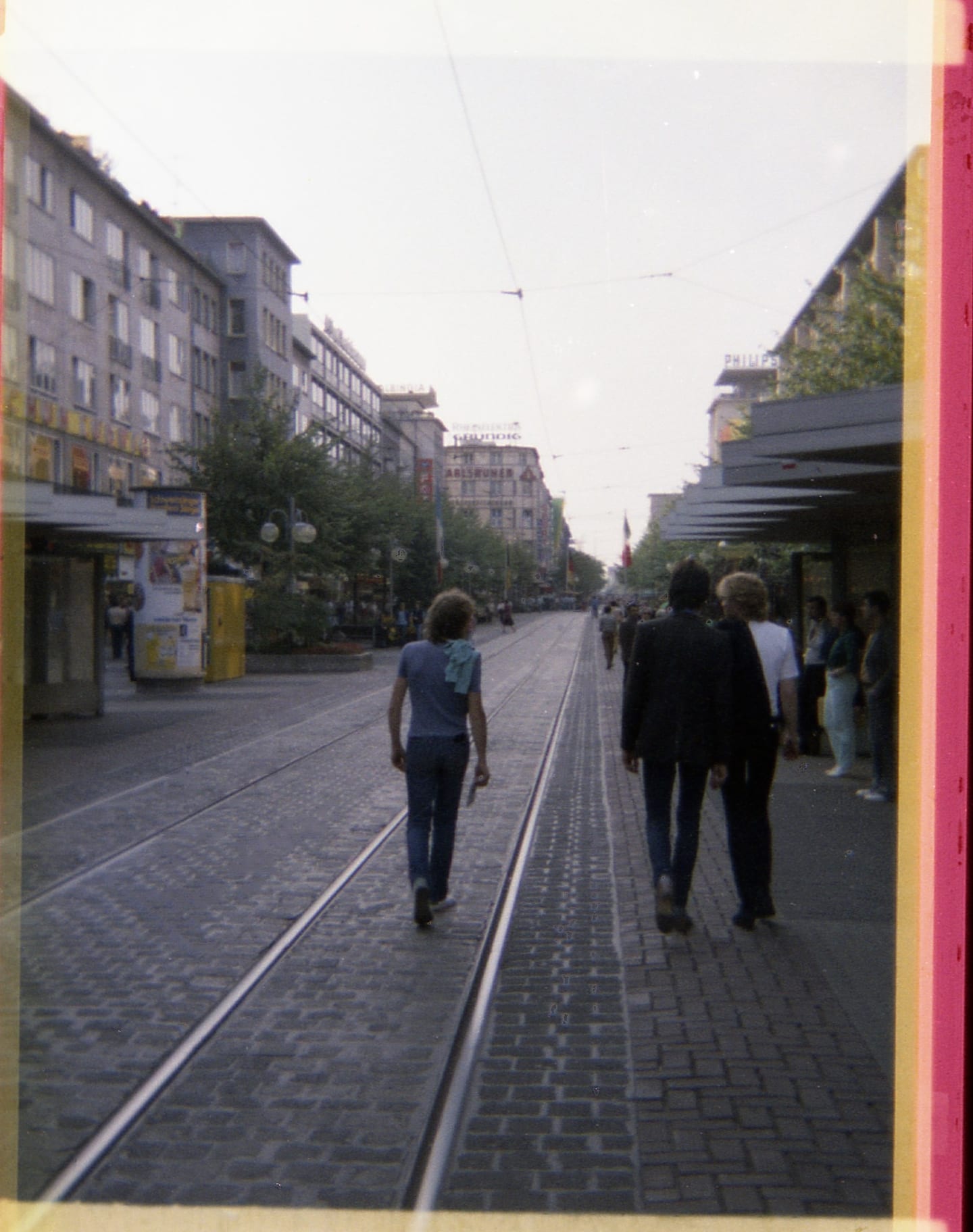
Seventy years after the photographer's death is the headline rule. For anything taken before August 1989 it is the start of the enquiry, not the end, and an old photograph is not automatically free to use.
Copyright in a UK photograph lasts for the life of the photographer plus 70 years, counted from the end of the calendar year in which the photographer died. A picture by someone who died in March 1990 stays in copyright until midnight on 31 December 2060. That is the rule in section 12 of the Copyright, Designs and Patents Act 1988, and for photographs taken since 1 August 1989 it is usually all you need.
For anything older, three earlier sets of rules still leave their mark.
This article is general information, not legal advice. Checked on 18 November 2026.
What is the basic rule today?
Section 12 sets the term for literary, dramatic, musical and artistic works, and photographs are artistic works.
| Situation | Term |
|---|---|
| Known photographer | Life plus 70 years, to the end of the calendar year |
| Photographs with joint authors | 70 years from the death of the last surviving author |
| Unknown photographer | 70 years from the end of the year the photograph was made, or, if made available to the public in that time, 70 years from the end of the year it was first made available |
| Crown copyright | Separate, different terms |
The duration belongs to the work, not the owner. If copyright has been assigned to a company, a magazine or an archive, the term is still measured by the author's life.
One complication applies to older pictures. For photographs taken before 1 August 1989, the earlier Acts treated the owner of the film or negative as the author, who was not necessarily the person behind the camera, and Schedule 1 to the 1988 Act preserves the old rules on authorship for most purposes. How that interacts with a term measured by a life is a point for specialist advice, and the worked examples below assume the photographer was the author.
Why are older photographs different?
Because photographs were treated as a special case for most of the twentieth century. Earlier Acts measured the term from the photograph, not the photographer.
Copyright Act 1911. Copyright in a photograph lasted 50 years from the making of the original negative.
Copyright Act 1956, in force from 1 June 1957. For photographs taken on or after that date, copyright lasted 50 years from the end of the year in which the photograph was first published. An unpublished photograph therefore had no fixed expiry. Photographs taken before 1 June 1957 kept a term of 50 years from the end of the year in which they were taken.
Copyright, Designs and Patents Act 1988, in force from 1 August 1989. New photographs were brought into line with other artistic works: life of the author plus, at that time, 50 years. Existing photographs kept their old terms under the transitional rules in Schedule 1. Unpublished photographs taken on or after 1 June 1957, which had no end date under the 1956 Act, were given one: 50 years from the end of 1989, which is 31 December 2039.
The 1995 Duration Regulations, in force from 1 January 1996. These implemented a European directive and changed the picture again, in three ways described next.
What did the 1995 regulations change?
First, they lengthened the standard term from life plus 50 to life plus 70 years.
Second, they applied the new term to existing works that were still in copyright. A photograph taken in 1960 and published the same year was due to fall out of copyright at the end of 2010 under the 1956 Act. Because it was still protected on 31 December 1995, it moved to the new term, measured by the photographer's life.
Third, they brought some expired copyrights back. Regulation 16 applies the new term to works whose UK copyright had expired but which were protected in another European Economic Area state on 1 July 1995. This is revived copyright. A photograph taken in 1940 had run out of UK protection at the end of 1990; if it was still protected elsewhere in the EEA on the reference date, and its author had died less than 70 years earlier, UK copyright returned on 1 January 1996.
The regulations also contain a floor. Under regulation 15, where the old rules would give a longer term than the new ones, the longer term continues. That is why the Intellectual Property Office's notice on duration gives 31 December 2039 as the end date for unpublished photographs taken between 1 June 1957 and 1 August 1989: on our reading of regulation 15, that date survives as a minimum even where life plus 70 would end sooner.
Worked examples
These illustrate how the rules interact. They assume a known photographer who was also the author in law, a photograph that qualified for UK protection, and no Crown copyright. They are illustrations, not a ruling on any actual picture.
| Photograph | Photographer died | Likely position |
|---|---|---|
| Taken and published in 1995 | 2010 | In copyright until 31 December 2080 |
| Taken and published in 1972 | 2001 | In copyright until 31 December 2071 |
| Taken in 1975, never published | 1985 | Life plus 70 gives 31 December 2055, later than the 2039 floor, so 2055 applies |
| Taken in 1962, never published | 1965 | Life plus 70 gives 2035; the floor keeps it protected until 31 December 2039 |
| Taken in 1935 | 1970 | Expired at the end of 1985 under the 50-year rule; if revived in 1996, protected until 31 December 2040 |
| Taken in 1935 | 1940 | Expired at the end of 1985; any revived term ended on 31 December 2010, so out of copyright |
The fifth row is the one that catches people out. Whether a given photograph was in fact revived depends on its status abroad on 1 July 1995, which is a question of foreign law.
Is any photograph from the 1960s or 1970s out of copyright?
For a known photographer, it is very hard to see how. A photograph taken on or after 1 June 1957 was still protected at the end of 1995, so it moved to the life-plus-70 term. Its author cannot have died before taking it, so the earliest conceivable expiry for a picture taken in 1960 is the end of 2030, and in practice far later.
Commercial and editorial photography from the 1960s, 1970s and 1980s that qualified for UK protection is, as a class, generally in copyright in the UK, and will be for decades.
Who owns that copyright is a separate question from how long it lasts, and for work commissioned before 1 August 1989 the answer may be the commissioner. We cover that in our article on who owns the copyright in a commissioned photograph.
What is special about revived copyright?
Revival could have turned lawful activity into infringement overnight, so the 1995 regulations include protections.
- Anything done before 1 January 1996 is not an infringement of revived copyright.
- Acts done under arrangements made before 1 January 1995, at a time when the work was out of copyright, are protected.
- Copies made before 1 July 1995 may continue to be issued to the public.
- Use is permitted where the owner cannot be found by reasonable inquiry.
- Under regulation 24, anyone may use a revived work on paying a reasonable royalty, set by the Copyright Tribunal if not agreed, provided they give reasonable notice first.
The revived copyright belongs to whoever owned the copyright immediately before it expired, or, if that owner had died or ceased to exist, to the author or the author's personal representatives.
What if the copyright owner cannot be found?
A photograph with no credit and no traceable owner is an orphan work. It is still in copyright if the term has not run.
The Intellectual Property Office has operated an orphan works licensing scheme since 29 October 2014. After a diligent search, an applicant can obtain a licence that is non-exclusive, limited to the UK and lasts up to seven years, and it can cover commercial use. Applications cover between one and 30 works, with an application fee from £20 to £80 according to the guidance, which was last updated on 1 December 2025.
The scheme works picture by picture. It was not designed to license a large collection in one step and it grants nothing outside the UK. Its guidance does not mention AI training.
Other rights that can outlast copyright
Even where copyright in an image has expired, other rights may still apply.
- Database right. A collection assembled with substantial investment can be protected for 15 years against extraction of a substantial part, under the Copyright and Rights in Databases Regulations 1997.
- Moral rights. These last as long as the copyright, except the right against false attribution, which lasts 20 years after death.
- Rights in what is shown. People, trade marks and artworks in the frame have their own protections.
How to date-check a photograph
- When was it taken? Before 1 June 1957, between then and 31 July 1989, or after.
- Who took it, and when did they die? If unknown, record the searches made.
- Was it published, and when? Publication mattered under the 1956 Act.
- Was it Crown copyright or made abroad? Different rules apply.
- Who owns it now? Trace commissions, assignments and estates.
- Write it down. A rights note kept with the image saves repeating the work. Our free EXIF and metadata viewer shows the creator, date and copyright fields a file already carries.
What this means for the Robert Harper archive
The Robert Harper Photograph Library holds material from the 1960s and 1970s to the digital era: 95,487 unique photographs on the inventory's count, of which 52,684 are analogue. On the rules above, work of that period by a known photographer is in copyright, and that includes early pictures such as the 1970s street scenes in the Chelsea Arts Club and New Bond Street collection.
The archive is owned by 825 Ventures Ltd, the owner and rights holder, and more than half of the archive is still on film and has yet to be scanned, and only a small selection has been published online by Archive.London. Use of any image is by licence, negotiated directly and subject to rights review, on the basis described in our image licensing terms. Researchers and publishers who want to enquire about a subject or period can start at professional access.
Frequently asked questions
How long does copyright last on a photograph in the UK?
For a photograph by a known photographer, copyright lasts for the photographer's life plus 70 years, running to 31 December of the seventieth year after death. If the photographer is unknown, it lasts 70 years from the end of the year the photograph was made, or 70 years from when it was first made available to the public.
Are old photographs automatically in the public domain in the UK?
No. There is no single cut-off year. A photograph taken in 1930 by someone who died in 1980 fell out of UK copyright at the end of 1980 but, if its copyright was revived in 1996, is protected until the end of 2050. Some photographs whose copyright had expired were revived on 1 January 1996, and some unpublished photographs are protected until at least the end of 2039. Each picture has to be assessed on its own facts.
Is a photograph taken in the 1960s or 1970s still in copyright?
Almost certainly, if it qualified for UK protection and the photographer is known. Any photographer working in the 1960s died, at the earliest, in the 1960s, and life plus 70 years from then runs into the 2030s or later. For a photographer still living or recently deceased, protection runs most of the way through this century.
What is revived copyright?
It is copyright that had expired under earlier law and came back into force on 1 January 1996 because the work was still protected in another European Economic Area state on 1 July 1995. Special rules protect people who had already begun using such works, and revived works can be used on payment of a reasonable royalty after giving notice.
Can I use a photograph if I cannot find the copyright owner?
Not without risk. The Intellectual Property Office runs an orphan works licensing scheme for works whose owners cannot be found after a diligent search. Licences are non-exclusive, cover the UK only and last up to seven years. Each application covers between one and 30 works, so the scheme suits individual pictures, not large collections.
Sources
- Copyright, Designs and Patents Act 1988, section 12 (duration of copyright)
- Copyright, Designs and Patents Act 1988, Schedule 1 (transitional provisions)
- The Duration of Copyright and Rights in Performances Regulations 1995 (SI 1995/3297)
- Intellectual Property Office: Copyright notice, duration of copyright (term)
- Intellectual Property Office: Copyright, orphan works (GOV.UK guidance)
- The Copyright and Rights in Databases Regulations 1997 (SI 1997/3032)
- Intellectual Property Office: Ownership of copyright works (GOV.UK)
This article is general information, not legal advice. It reflects the position as we understood it on the date shown and may be out of date. Published by Archive.London. Corrections are welcome under our editorial policy.