
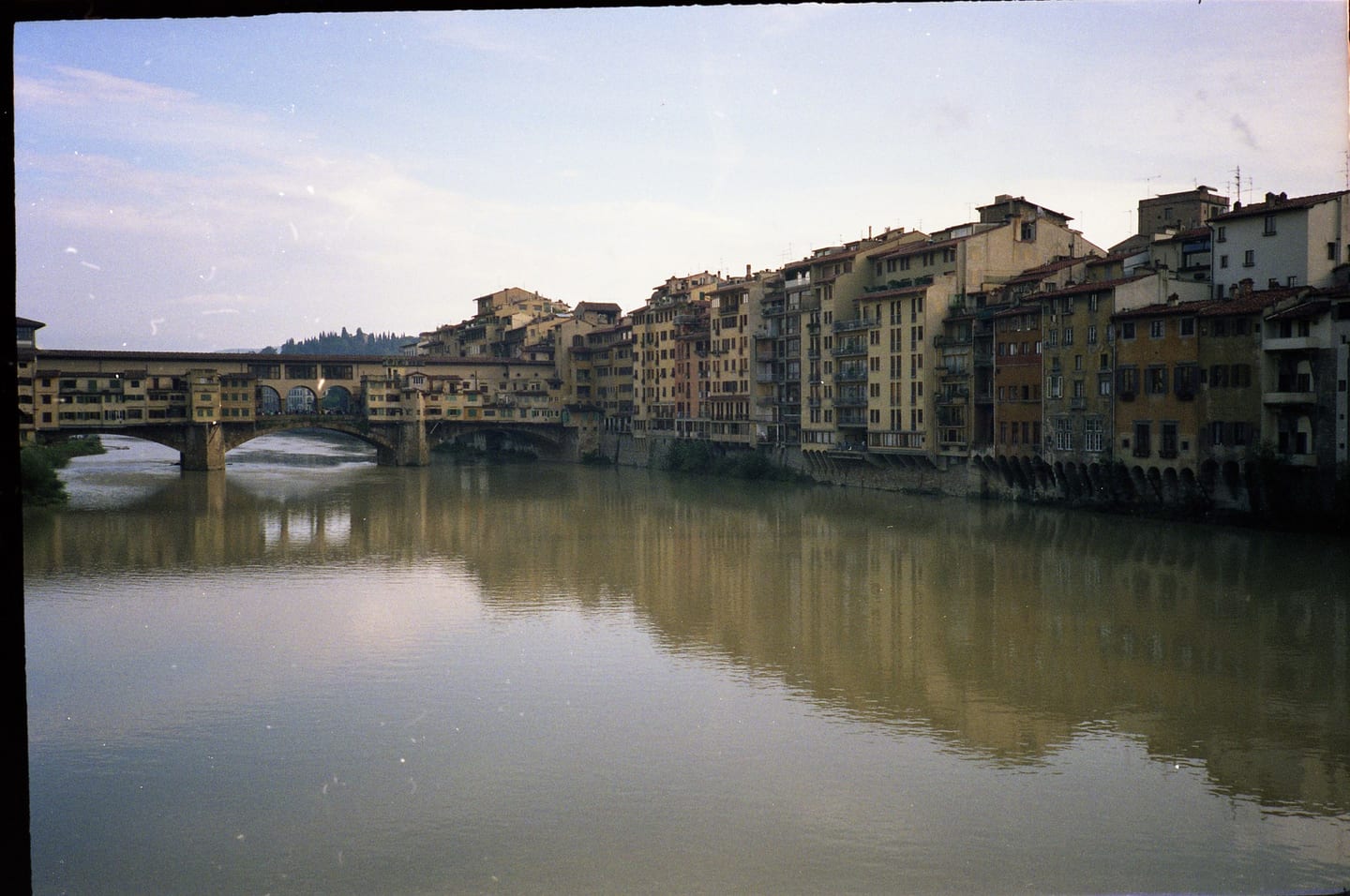
The best evidence for what a film photograph shows is usually within a few centimetres of it, in pencil. A good caption says what that evidence supports and stops there.
The most reliable information about a photograph made on film is usually written within a few centimetres of it: on the sleeve, on the slide mount, or across the contact sheet in grease pencil. It was put there by someone who knew, at the time. A cataloguer's first job is to capture that writing exactly, and the second is to write a caption that claims no more than it supports.
This is a method for doing both. It applies to any film archive, and it is written with collections like the analogue holdings of the Robert Harper Photograph Library in mind, where negatives, transparencies and contact sheets largely await cataloguing.
What is a contact sheet, and what can it tell a cataloguer?
A contact sheet is made by laying strips of negatives directly on photographic paper and exposing them, giving a positive print of every frame at the size of the film. It was the working overview of a shoot before screens existed.
For cataloguing, it offers four kinds of evidence.
- Sequence. Frames appear in the order they were exposed, so a set-up, a change of outfit or a move of location can be followed across the roll.
- Frame numbers. The numbers printed along the film edge by the manufacturer identify each frame. A reference such as "roll 4, frame 9" is unambiguous in a way a description never is.
- Selection marks. Rings, boxes, crosses and crop lines show which frames the photographer or picture editor preferred. Conventions are personal, so learn one photographer's habits before reading meaning into a mark.
- Notes. A job name, a date, a client or a sitter's name may be written on the front or back.
Roll length is a quiet check on completeness. A roll of 120 film gives 10 frames at 6×7, 12 at 6×6, and 15 or 16 at 6×4.5; a standard 35mm roll gives up to 36. A sleeve holding seven 6×7 frames is telling you that three are somewhere else.
Colour transparencies were generally judged on a lightbox, not contact printed, so for them the evidence sits on mounts, sleeves and job bags. Mounts from some processing laboratories carry a stamped month and year, which records when the film was processed and so gives a latest possible date for the exposure.
What counts as evidence, and in what order?
Not all sources deserve equal trust. A working order of precedence:
| Rank | Source | Typical value | Caution |
|---|---|---|---|
| 1 | Photographer's own notes on sleeve, mount, contact sheet or job sheet | Names, job, date | Sleeves get reused; check the note fits the film |
| 2 | Laboratory stamps and processing dates | A latest possible date | Processing can follow exposure by weeks or longer |
| 3 | Evidence inside the frame | Signage, products, posters, vehicles | Gives an earliest date, seldom an exact one |
| 4 | Dated publication of the image | Use, credit, sometimes sitter and date | Publication date is not shooting date |
| 5 | Later labels by other hands | Leads to follow up | May repeat an earlier mistake |
| 6 | The cataloguer's inference | A hypothesis | Must be labelled as such |
The fourth row matters for an archive that holds magazine pages and editorial material alongside its film, as the Robert Harper archive does. A printed page with a credit and an issue date can anchor a whole sleeve of related frames.
Transcribe first, interpret second
Keep two separate fields for every annotated object.
Transcription. Exactly what is written, with original spelling, abbreviations and line breaks. Use [illegible] where a word cannot be read and [?] after a doubtful reading. Note where the writing is (sleeve front, mount, sheet verso) and, if apparent, whether it is in more than one hand.
Caption. The cataloguer's description, written from the transcription and other evidence.
The separation protects the archive. If an interpretation later proves wrong, the original wording is still there to be read again. It also deals cleanly with older notes that use language no longer acceptable: the transcription preserves the record, and the caption describes the picture in current terms.
Scan or photograph the sleeve, mount and contact sheet as records in their own right and link them to the frames by identifier. A contact sheet is also an object worth showing. For born-digital sets, the free contact sheet maker lays out files with filenames and frame numbers in the same spirit.
How to write the caption
A dependable pattern is two sentences. The first states what the picture shows: who or what, doing what, where, when. The second gives context: the commission, the publication, the series.
Three conventions carry most of the honesty.
- Square brackets for anything supplied by the cataloguer and not found on the object.
- "Circa" for estimated dates, with the narrowest range the evidence allows: "circa 1976", "1970s", "between 1982 and 1985".
- "Unidentified" in place of a guess. "Unidentified woman in evening dress" is a complete and useful description.
An invented example shows the form:
Unidentified model wearing a tweed coat, photographed in a studio, [London], circa 1980. Sleeve annotated "coats - frame 7 used".
Everything in it is either visible, transcribed or flagged. Compare the catalogue title of an existing collection, Eric Clapton, Royal Albert Hall, 1993, where subject, venue and year are all carried in the title itself.
Avoid adjectives of praise, speculation about mood or motive, and any name that rests only on resemblance. Putting the wrong name on a portrait is the most damaging error a caption can make, and automated tools are no help here, as the article on what AI tagging gets right and wrong explains.
Caption the roll before the frame
Frame-by-frame captioning of a large archive is slow, and most of the information is shared. Work in three levels.
- Collection or job. What the body of work is, its date range, its subject, its formats.
- Roll, sleeve or sheet. The set-up or occasion, the count of frames, the transcribed notes.
- Frame. Only what distinguishes this frame: the pose, the variant, the selected mark.
Frames inherit the levels above. This is quicker, and it is also more accurate, because the roll is the unit to which most annotations actually refer. Keywords can be inherited the same way, as set out in the guide to keywording with controlled vocabularies.
Where each piece goes in the file
The catalogue database holds everything. The delivered file should carry a subset, in the right IPTC fields:
| Information | IPTC property |
|---|---|
| The caption | Description (dc:description) |
| Who wrote the caption | Description Writer (photoshop:CaptionWriter) |
| When the photograph was taken | Date Created (photoshop:DateCreated) |
| Named people | Person Shown in the Image |
| Place depicted | Location Shown in the Image |
| Archive reference for the film | Artwork or Object: Source Inventory Number |
| Format of the original | Artwork or Object: Physical Description |
| Estimated date of the original | Artwork or Object: Circa Date Created |
The fuller list is in IPTC fields every archive should fill. After export, open a file in the EXIF and metadata viewer to confirm that the caption and dates arrived intact.
Common mistakes
- Recording the scan date as the date of the photograph.
- Trusting a sleeve over its contents. Sleeves and boxes are reused. Check that the film format and frame count match the note.
- Flipped scans. A transparency scanned from the wrong side reads backwards, and lettering in the frame is the usual giveaway. The flip image tool corrects a file, but fix the master too.
- Silently tidying. Correcting a misspelt name in the transcription removes evidence of what was written. Correct it in the caption and leave the transcription alone.
- Captioning from memory of a similar picture. Each record should cite its own basis.
The Robert Harper archive's boxes
By the archive's inventory count, 52,684 of its photographs are analogue: mostly medium-format colour transparencies, with black-and-white negatives, contact sheets, larger-format film, 35mm slides and more than 4,000 Polaroid prints. Most of that material has yet to be scanned or captioned, so what its sleeves and sheets record is still to be read. Cataloguers, archivists and vendors who would like to help read it can find the brief on the digitisation partners page.
Frequently asked questions
How do you write a caption for an archive photograph?
State what is visible and evidenced: who, what, where and when, in that order of confidence, in one plain sentence. Add a second sentence for context such as the commission or publication if records support it. Say where the information came from, mark estimates with 'circa', and leave out anything that is only a guess.
What do the marks on a contact sheet mean?
Conventions vary by photographer, but boxes or rings in grease pencil usually mark frames chosen for printing, lines show intended crops, and crosses mark rejects. Numbers along the film edge are frame numbers exposed by the manufacturer. Handwritten notes may give a job, a date or a name. Record marks as found before interpreting them.
How do you date a photograph when there is no date on it?
Work outwards from the object. Check the sleeve, mount and any job sheet first, then lab stamps, then evidence inside the frame such as signage or products, then dated publications in which the picture appeared. If the result is a range, record it as a range or as 'circa', and note the basis for the estimate.
Should the scan date go in the IPTC Date Created field?
No. Date Created is for when the photograph was taken. If only the year or decade is known, record it to that precision in the catalogue and use the 'circa' convention in the caption. The scan date belongs in the technical record of the digitisation, which the scanner usually writes into Exif automatically.
What should you do with an old caption that is wrong or uses outdated language?
Keep it. Transcribe the original wording exactly in a separate field as part of the object's history, and write a new caption in current language alongside it. Deleting the original destroys evidence; publishing it unexamined repeats its errors. The two-field approach preserves the record and corrects the description.
Published by Archive.London. Corrections are welcome under our editorial policy.