
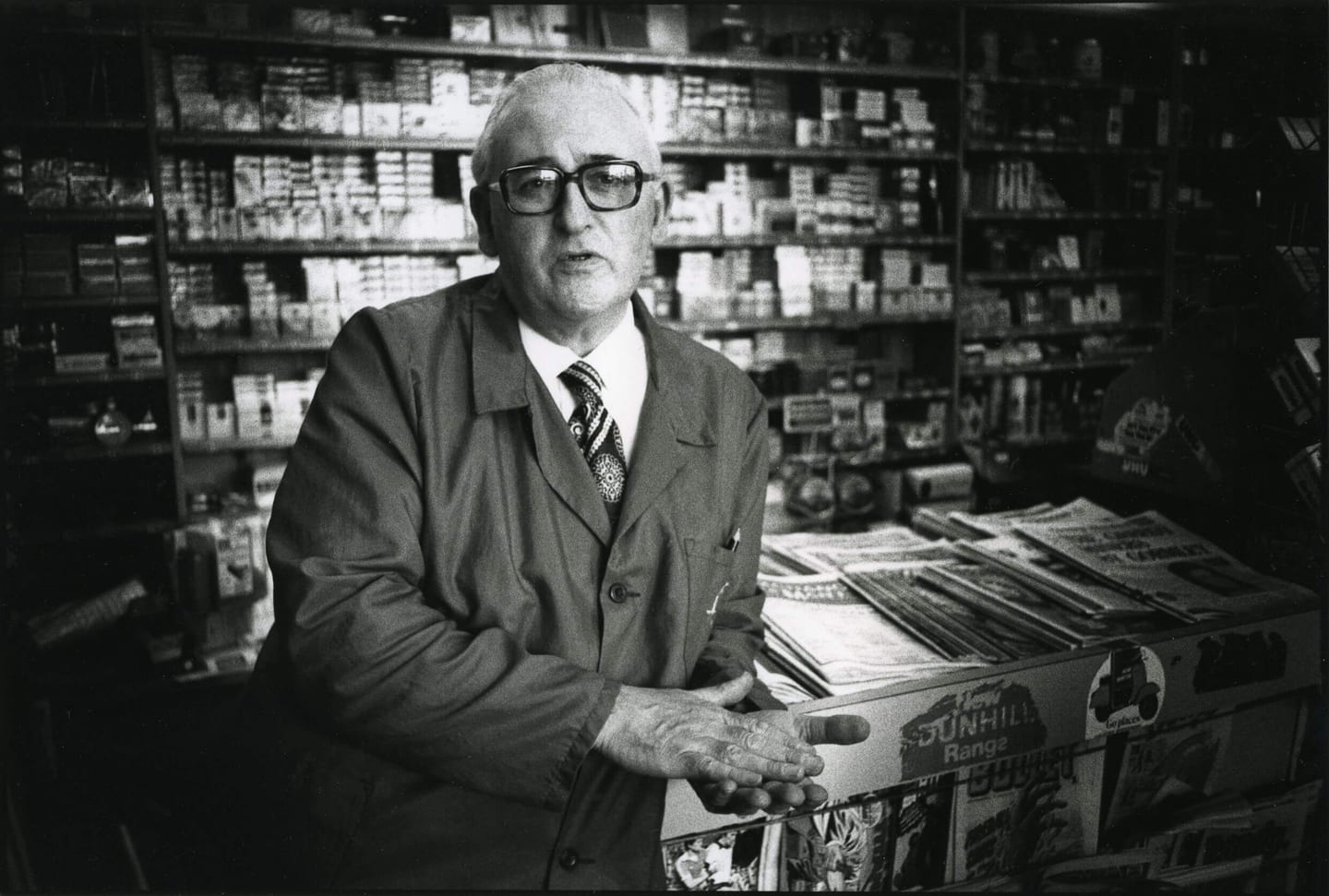
A photograph with no name on the back is still in copyright for as long as the law says. The UK has a licensing scheme for exactly this problem, and its limits matter as much as its existence.
A photograph does not fall out of copyright because nobody knows who took it. If the work is still within its term of protection, reproducing it needs permission, and an unsigned print in a box offers nobody to ask. Works in that position are called orphan works. Since 29 October 2014 the UK has had a statutory answer: a licensing scheme run by the Intellectual Property Office (IPO), under which the state grants the permission that the missing owner cannot.
This article is general information, not legal advice. Checked on 18 November 2026 against the IPO's published guidance, which is listed under Sources with the dates shown on each page. Read the current guidance and take advice before relying on the scheme.
What is an orphan work?
The IPO's definition is short: orphan works are creative works or performances that are subject to copyright where one or more of the right holders is either unknown or cannot be found. Its examples are a diary, a photograph, a film and a piece of music.
Two conditions are packed into that sentence. The work must still be in copyright; if protection has expired, no licence is needed. And the owner must be untraceable after a real attempt to find them. Working out whether an old photograph is still protected is a job in itself, because the UK rules depend on when the picture was made and when its author died, as the guide to copyright duration in UK photographs sets out.
Photographs are especially prone to orphaning: prints are separated from their paperwork, and digital copies can lose their embedded credit. The IPO's diligent search guidance says that a digitised work should contain metadata that could identify its creator, and that where it is missing an applicant will need to take particular care.
How does the UK orphan works licensing scheme work?
The process described in the IPO's guidance runs in this order.
- Check whether you need a licence at all. The guidance says to check first whether the work is still in copyright and whether a copyright exception covers the intended use.
- Carry out a diligent search for every right holder, following the IPO's published guidance, and complete the relevant checklist.
- Apply online. The checklists are combined into one PDF and uploaded. For a photograph or other still visual image, an image of the work must be uploaded as well.
- Pay the application fee, by credit or debit card. It is non-refundable.
- The IPO assesses the application. It checks that an adequate diligent search was made, and aims to contact applicants within 10 working days, though complex or large applications may take longer.
- If the application succeeds, pay the licence fee and receive the licence.
The IPO may refuse a licence if it finds that a proper diligent search was not made, that the proposed treatment or adaptation of the work is derogatory, or that issuing a licence would not be in the public interest. A refusal can be reconsidered on request and then appealed, ultimately to the Copyright Tribunal.
A licensee has to do three things when using the work: provide the IPO's contact details, include the orphan works application number, and credit the right holder if the name is known.
What does a diligent search for a photograph involve?
There is no fixed procedure. The IPO's guidance puts the burden on the applicant to show that the search was diligent, in a report that includes a narrative of how it was conducted and the sources checked. The IPO decides whether it is satisfactory.
For still visual art, which includes photographs, the guidance and its checklist point to these sources among others:
- The object itself. Credits, captions, studio and agency stamps, and any watermark.
- Embedded metadata in a digital file. The EXIF and metadata viewer shows creator, copyright and credit fields where they survive.
- Reverse image search. The guidance names PicScout and TinEye as examples of web-based applications.
- Picture libraries. The British Association of Picture Libraries and Agencies (BAPLA) is named, with its orphan works request form.
- Collecting societies. The Design and Artists Copyright Society (DACS), the Picture Industry Collective Society for Effective Licensing (PICSEL) and the Artists' Collecting Society.
- Registries. The PLUS Registry, and the IPO's own orphan works register, which the guidance says should be checked for every search.
Where a photograph appears inside a book or periodical, the guidance treats the sources for that publication as the starting point. Where some right holders are found and others are not, the work is a partial orphan, and a separate search is needed for each right holder whose rights are relevant to the use.
The IPO's guidance refers applicants to example diligent searches in its guidance collection. If a licence is granted, the evidence of the search should be kept for a minimum of eight years.
How much does it cost and what does the licence allow?
| Term | What the IPO guidance and the 2014 Regulations say |
|---|---|
| Territory | Use in the UK only |
| Exclusivity | Non-exclusive |
| Type of use | Commercial or non-commercial |
| Duration | Up to 7 years; the guidance says it will be able to be renewed |
| Application fee | £20 for 1 work; £24 for 2; £30 for 5; £40 for 10; £60 for 20; £80 for 30 |
| Licence fee, non-commercial | £0.10 plus VAT per work (page published 2 August 2016) |
| Licence fee, commercial | Based on prices for using a similar non-orphan work in the same way; some uses are price on application |
| What happens to licence fees | A right holder who comes forward can claim the fee; under regulation 13 of the 2014 Regulations, fees unclaimed more than eight years after the grant may be applied to the scheme's costs |
The line between the two kinds of licence is drawn firmly. The IPO states that commercial use covers any use that makes money from the work, and that a charge counts whether it is intended to make a profit or only to cover costs. Its examples of non-commercial use include education, personal use and preservation.
The published fee table runs from one work to 30. The scheme deals with identified items, each with its own search, and not with collections in bulk.
What happens if the right holder comes forward?
The scheme is designed around the possibility. The IPO keeps an orphan works register that lists applications, granted licences and refused applications. According to the IPO's guidance, a right holder can contact the IPO to stop an application where no licence has yet been issued, or to claim the licence fee already paid. Once a right holder has been identified, no further licences will be issued for that work.
What are the limits of the scheme?
It stops at the border. The licence applies only for use in the UK. A website readable worldwide, or a book distributed abroad, is only partly covered.
The EU route has closed for UK institutions. A separate EU exception once allowed cultural heritage institutions to digitise orphan works and make them available online. The IPO's guidance states that this exception was repealed from UK law and no longer applies to UK-based institutions, which may face infringement claims for making orphan works available online in the UK or the European Economic Area, including works placed online before 1 January 2021. It suggests considering the UK scheme, limiting online access to UK users, or relying on a copyright exception where one applies.
It licenses copyright and nothing else. People shown in a photograph, and brands or artworks within it, raise separate questions that an orphan works licence does not answer.
It says nothing specific about machine learning. The IPO's orphan works guidance, as checked on 18 November 2026, does not mention the training of artificial intelligence models. This article draws no conclusion from that.
How do archives avoid creating orphans?
Prevention is cheap.
- Embed the credit. Creator, copyright notice, credit line and a contact address belong inside every file that leaves an archive. The tool to add copyright metadata writes those fields into JPEGs without recompressing them.
- Keep paperwork with pictures. Job sheets, stamps on mounts and sleeve notes are the evidence of authorship, and transcribing them is part of cataloguing an archive.
- Record provenance. The questions buyers ask about provenance are the same ones that keep a photograph attached to its author.
The opposite case: an archive with a named author and owner
The Robert Harper Photograph Library is the reverse of an orphan collection in one important respect. It is the work of one named photographer, and it is owned by 825 Ventures Ltd, the owner and rights holder, with a public contact address and a statement of rights and stewardship. Its inventory of 503 folders, covering 95,487 unique photographs by the inventory's own count, is published at /archive-inventory/, so there is somewhere to trace a photograph to. More than half of the archive is still on film and has yet to be scanned.
A single rights holder does not settle every question. Magazine pages, identifiable people and branded products within the pictures can carry third-party rights, which is why licences are negotiated directly with the rights holder and are subject to rights review. Picture researchers, publishers and agencies who want to license a photograph from the archive, or to check whether an uncredited Robert Harper image belongs to it, can make contact through the page for picture agencies and researchers.
Frequently asked questions
What is an orphan work?
The Intellectual Property Office defines orphan works as creative works or performances that are subject to copyright where one or more of the right holders is either unknown or cannot be found. A photograph is one of its own examples. The work is still protected by copyright; the difficulty is that there is nobody to ask for permission.
Can I use a photograph if I cannot find the photographer?
Not simply because the search failed. Unless the copyright has expired or an exception applies, using it without permission risks infringement. In the UK you can apply to the Intellectual Property Office for an orphan works licence after a diligent search. The licence covers use in the UK only. This is general information, not legal advice.
How much does an orphan works licence cost?
There are two charges. The non-refundable application fee is £20 for one work, rising to £80 for 30 works. The licence fee is paid only if the application succeeds: the IPO's published figure for non-commercial use is £0.10 plus VAT per work, and commercial fees are based on prices for using a similar non-orphan work in the same way.
How long does an orphan works licence last, and where is it valid?
An orphan works licence can last up to 7 years and, according to the Intellectual Property Office, will be able to be renewed. It applies only for use in the UK and is non-exclusive, so others can be licensed to use the same work. It gives no permission for use in other countries, which limits its usefulness for anything published online to a worldwide audience.
What happens if the copyright owner turns up later?
A right holder can contact the Intellectual Property Office to stop an application before a licence is issued, or to claim the licence fee already paid for a licensed use. The IPO's guidance says that once a right holder is identified no further licences will be issued. Under regulation 13 of the 2014 Regulations, fees still unclaimed more than eight years after a licence was granted may be applied to the scheme's costs, and a right holder who appears later may be paid a reasonable amount.
Sources
- Intellectual Property Office: Copyright: orphan works (guidance; page shows last update 1 December 2025)
- Intellectual Property Office: Orphan works: commercial and non-commercial licences (published 2 August 2016)
- Intellectual Property Office: Orphan works diligent search guidance for applicants (first published 17 September 2014; last updated 26 November 2021)
- Intellectual Property Office: Orphan works diligent search guidance (HTML)
- Intellectual Property Office: Orphan works and cultural heritage institutions (published 30 January 2020)
- Copyright and Rights in Performances (Licensing of Orphan Works) Regulations 2014 (SI 2014/2863), regulation 13 (unclaimed licence fees), as made
Published by Archive.London. Corrections are welcome under our editorial policy.