
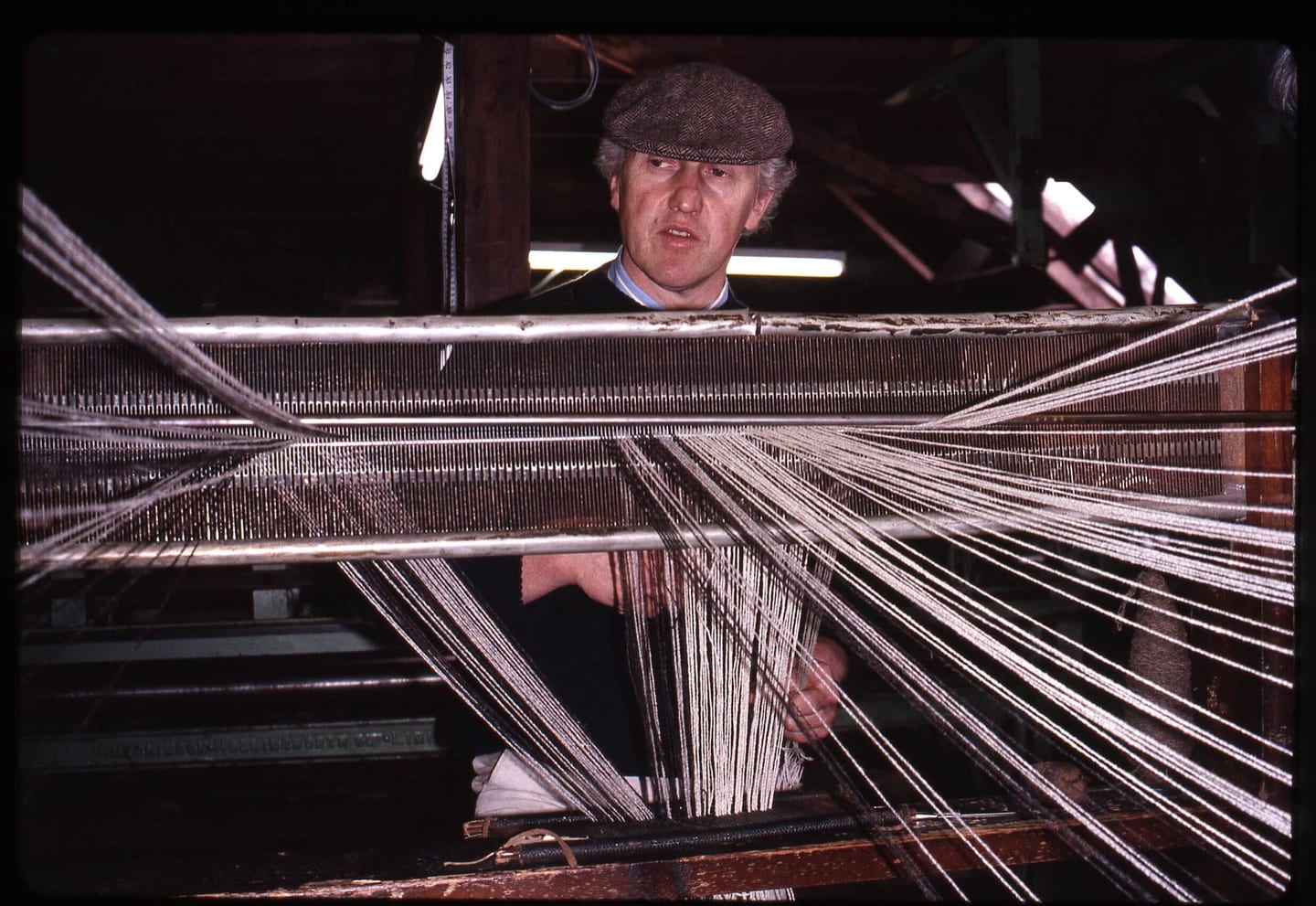
The room begins with cloth
Before furniture is placed or pictures are hung, fabric establishes the mood. It softens architecture, absorbs light and introduces pattern at human scale. Robert Harper’s domestic textile photographs attend to weave, drape, colour and surface with the same exactness he brought to fashion.
The collection contains 80 unique photographic shots across 392 total frames and variants. The original inventory describes domestic fabrics, a broad but culturally rich category that connects interiors to manufacturing, retail, craft and the cyclical movement of colour and pattern.
Robert Harper between fashion and design
Robert Harper was born in Scotland and grew up between Glasgow and Islay. He received his first camera at seven and sold a photograph taken at a concert by The Who when he was fourteen. After moving to London to study photography, he spent two formative years at Condé Nast, directly assisting David Bailey, Helmut Newton and Lester Bookbinder.
The apprenticeship gave Harper practical experience of three distinct photographic sensibilities: Bailey’s directness, Newton’s dramatic fashion language and Bookbinder’s polished commercial control. Harper subsequently established his own studio and built a career of approximately thirty five years across fashion, beauty, portraiture, still life, travel and design.
For more than fifteen years he contributed regularly to Elle and The Telegraph Magazine. His wider editorial work included Vogue, Tatler, Cosmopolitan, Esquire, The Face, Wallpaper and Harpers & Queen. Those titles placed fashion and interiors within a shared world of taste, social aspiration and modern living. The connection is especially relevant to Wallpaper, but it also runs through the complete lifestyle imagination of Vogue, Tatler and Harper’s long magazine career.
Confirmed commercial clients across his broader work included De Beers, Boots, Heinz, Diageo, Harrods, Selfridges, the BBC, CBS Records and Montblanc. Harrods and Selfridges connect his practice to department stores where fashion, textiles and the home were presented together. Individual fabrics remain unattributed unless labels or records establish their origin.
Pattern as cultural evidence
Domestic fabric can date a room as clearly as furniture. Scale, fibre, colour and motif reveal changing attitudes to comfort and display. A bold repeat may speak of graphic confidence, while a quiet natural weave suggests restraint. Fabric samples also preserve unrealised possibilities, the choices through which interiors were imagined before they were completed.
The photographs can support textile research, interiors publishing, set decoration and histories of retail or domestic taste. Their related frames preserve subtle changes in fold, light and crop, valuable when texture is the subject.
Archive.London presents this material as authored heritage photography. It belongs to a career formed within Condé Nast and sustained across major editorial titles, not to an anonymous surface library.
Archive provenance
- Original category: Household, Fabrics
- Unique shots: 80
- Total frames and variants: 392
- Recorded subject: domestic fabrics
- Wider archive: 95,487 unique Robert Harper images