
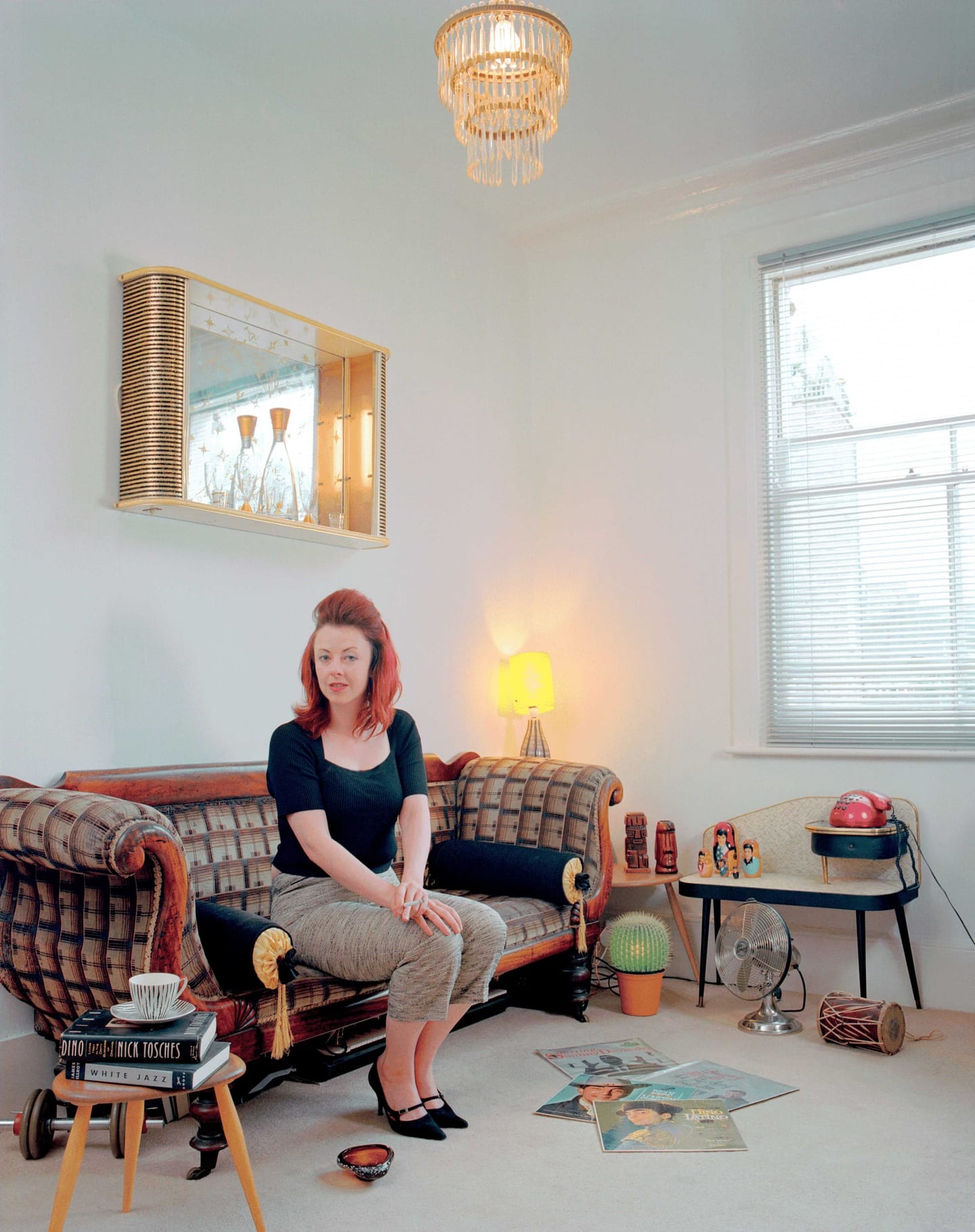
A room is never quite as private as it pretends. Chairs announce taste, lighting flatters ambition, and the objects gathered on a table tell stories their owners may not have intended.
The core interiors and household holdings at Archive.London contain 1,868 unique photographs across 9,065 frames. This core total combines 1,819 household-object photographs with 49 dedicated room and interior studies. Related kitchen, bathroom, bedroom and garden categories are catalogued separately and are not included in that figure.
The room and the object
Robert Harper photographed complete interiors in homes, restaurants and shops, but he was equally interested in the individual pieces from which a room acquires character. Chairs, sofas, tables, lamps, mirrors, rugs, wallpaper, glass, storage, textiles and decorative objects appear in close, attentive studies.
His instinct was editorial rather than purely architectural. The image is concerned with mood, proportion and the seduction of detail. A lamp may become a small illuminated sculpture. A chair can be given the bearing of a portrait sitter. Glass bottles and vases gather reflection, while fabric introduces softness and movement.
Harper's assignments included interiors and retail locations associated in the inventory with Jean Muir, Max Mara, Andrew Martin, Marco Pierre White and other London settings. These references identify subjects and locations; they do not establish a direct commission in every case.
Taste through the decades
Domestic design is wonderfully indiscreet about its period. Magazine racks, CD storage, light switches, telephone tables and early technology place an interior in time as clearly as fashion places a body.
The archive records both aspiration and ordinary usefulness. Designer seating appears beside laundry baskets, door handles, vacuum cleaners and boot scrapers. That breadth is part of its charm. The history of an interior is not written only by statement furniture, but by all the smaller objects required to live in it.
Harper's magazine experience, including more than fifteen years as a regular contributor to Elle and The Telegraph Magazine, gave him a refined understanding of how readers encounter interiors. A photograph must offer information, but it should also invite the eye to wander.
Design as social biography
Seen collectively, these photographs become a portrait of British taste, retail and domestic aspiration. They record how objects were styled for magazines, how shops presented themselves and how materials moved in and out of fashion.
The collection may be valuable to design historians, publishers, set decorators, documentary producers, retailers, museums and researchers studying material culture.