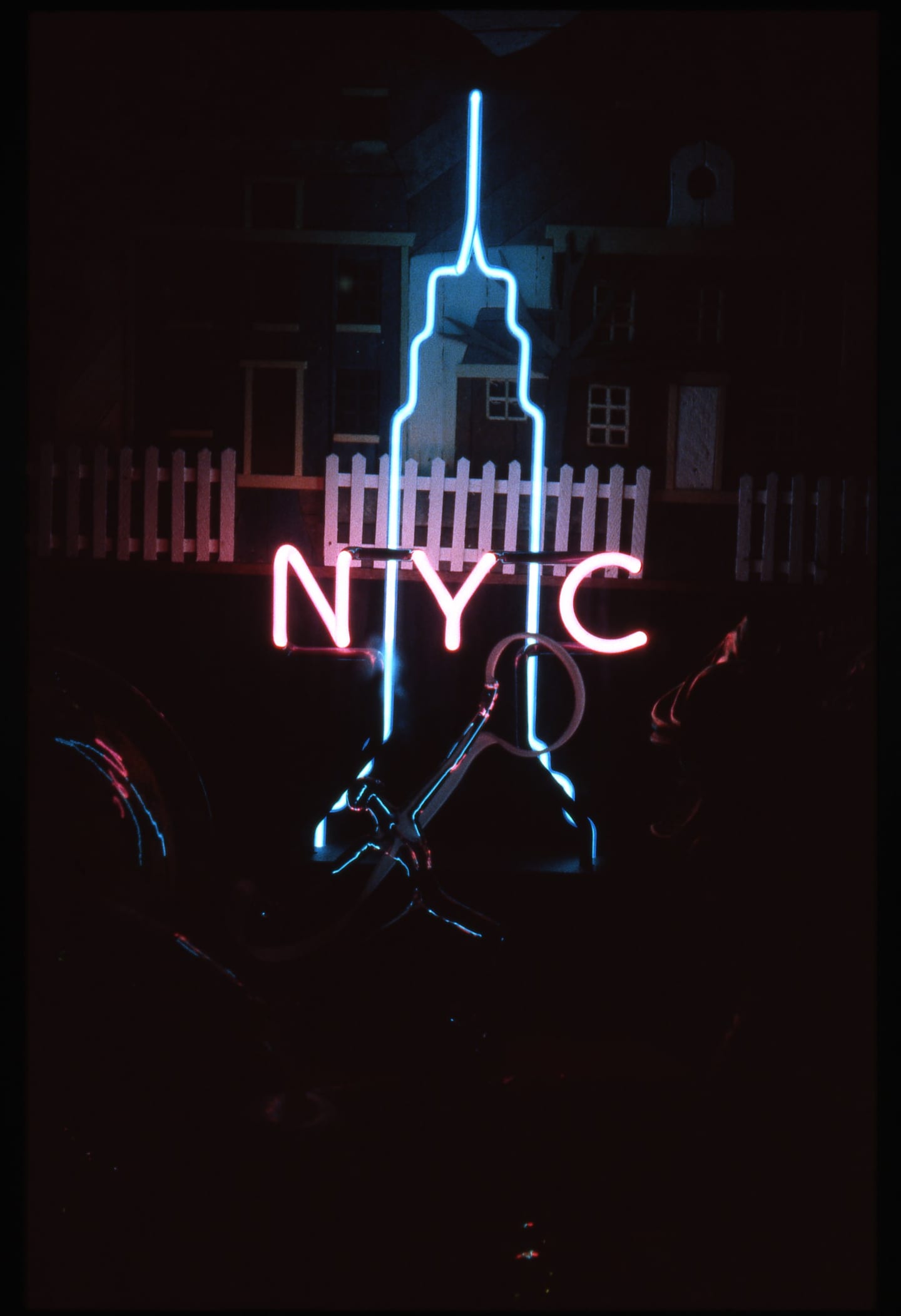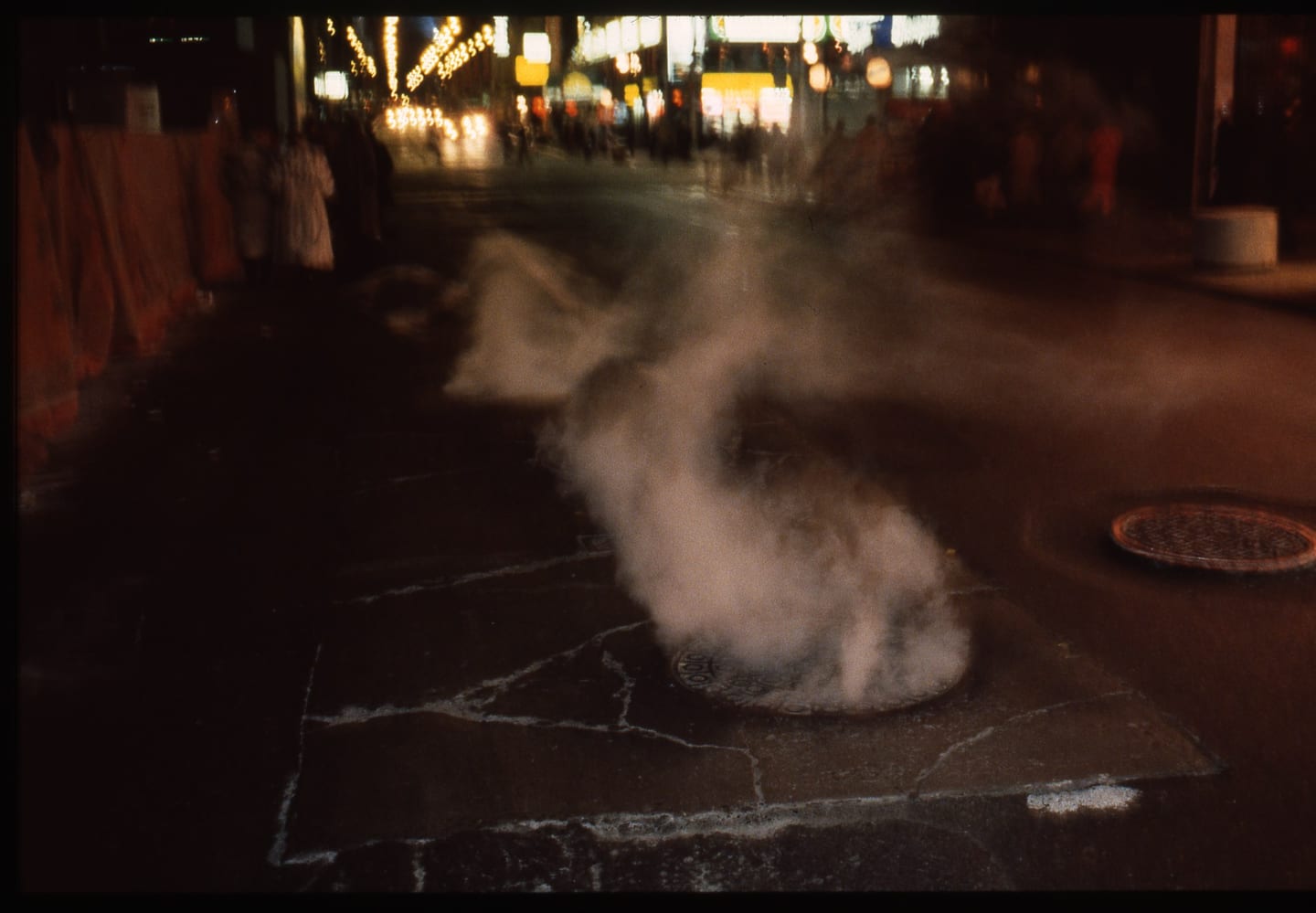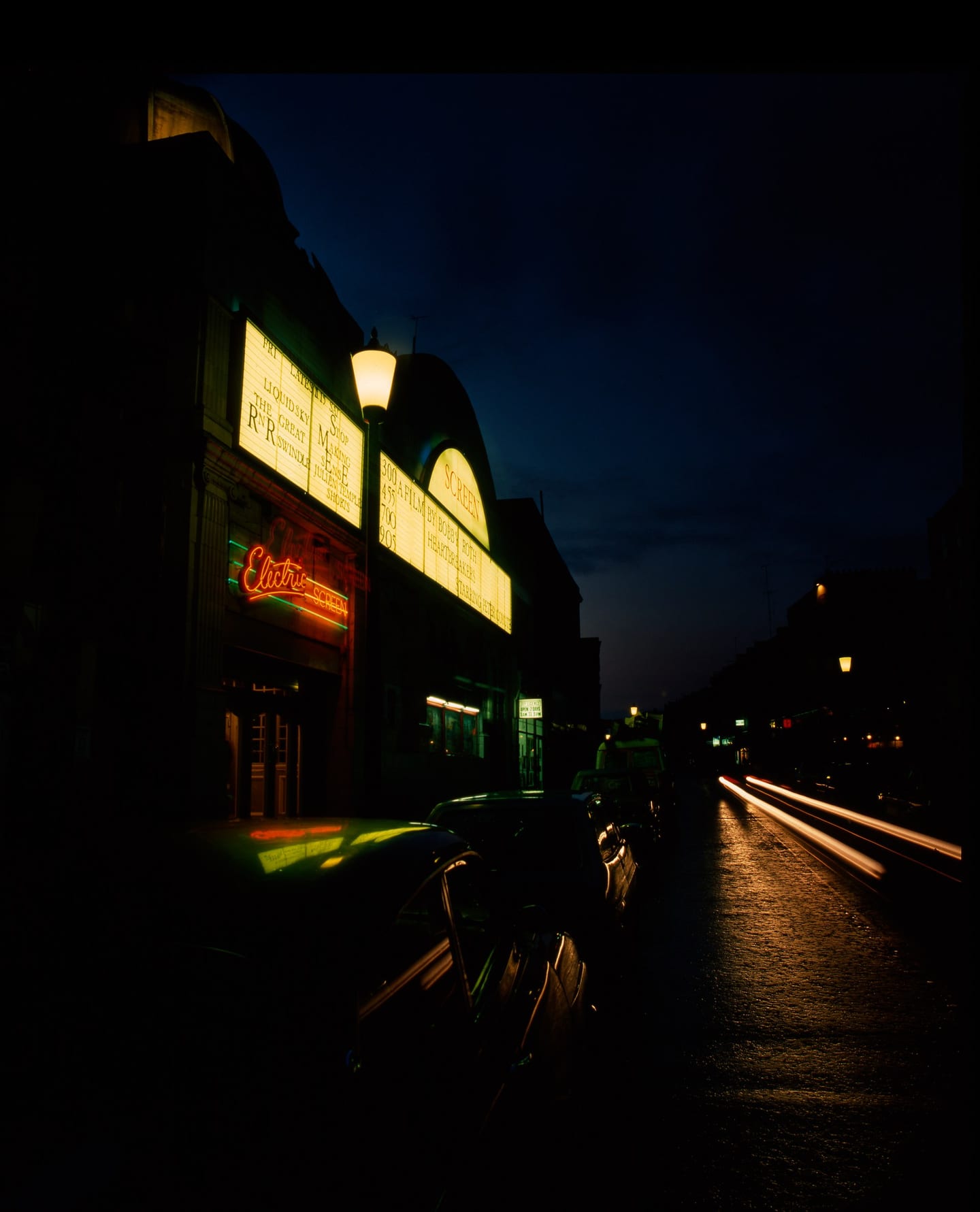
Night removes the unnecessary. Buildings become outlines, streets surrender to pools of light and fireworks draw with admirable confidence before disappearing entirely.
Robert Harper's fireworks and night collection contains 199 unique photographs across 210 frames. These counts distinguish the unique photographs from the total recorded frames; they do not, by themselves, establish how the images were sequenced.
Light without the studio
Harper was a master of controlled illumination, but night photography asks the photographer to work with what the world provides. Street lamps, windows, headlights, stage lights and fireworks each impose their own colour and intensity.
Longer exposures may turn moving light into line. Fireworks require anticipation, because the most elegant composition lasts only a moment and cannot be repeated to instruction.
The collection connects to London streets, landscapes, motor racing and performance. Each supplies a different night: urban, natural, mechanical or theatrical.
Robert Harper and the decisive instant
Born in Scotland and raised in Glasgow and on Islay, Harper acquired a camera at seven. At fourteen he sold a concert photograph of The Who, an early lesson in low light, live performance and the importance of timing.
He later moved to London, studied photography and spent two years at the Condé Nast studios assisting David Bailey, Helmut Newton and Lester Bookbinder. After establishing his own studio, Harper became a regular contributor to Elle and The Telegraph Magazine for more than fifteen years.
His work also appeared in the visual worlds of Vogue, Tatler, Cosmopolitan, Esquire, The Face, Wallpaper and Harpers & Queen. Commercial clients included De Beers, Harrods, Selfridges, Boots, Heinz, Diageo, the BBC, CBS Records and Montblanc.
Those commissions relied on preparation. Night scenes restore uncertainty. Harper's technical confidence allowed him to respond quickly while maintaining the composure associated with his editorial work.
Atmosphere and historical value
Night photographs preserve illumination as much as place. Signs, street lighting, vehicles and architecture can date a scene with great precision once locations are identified.