
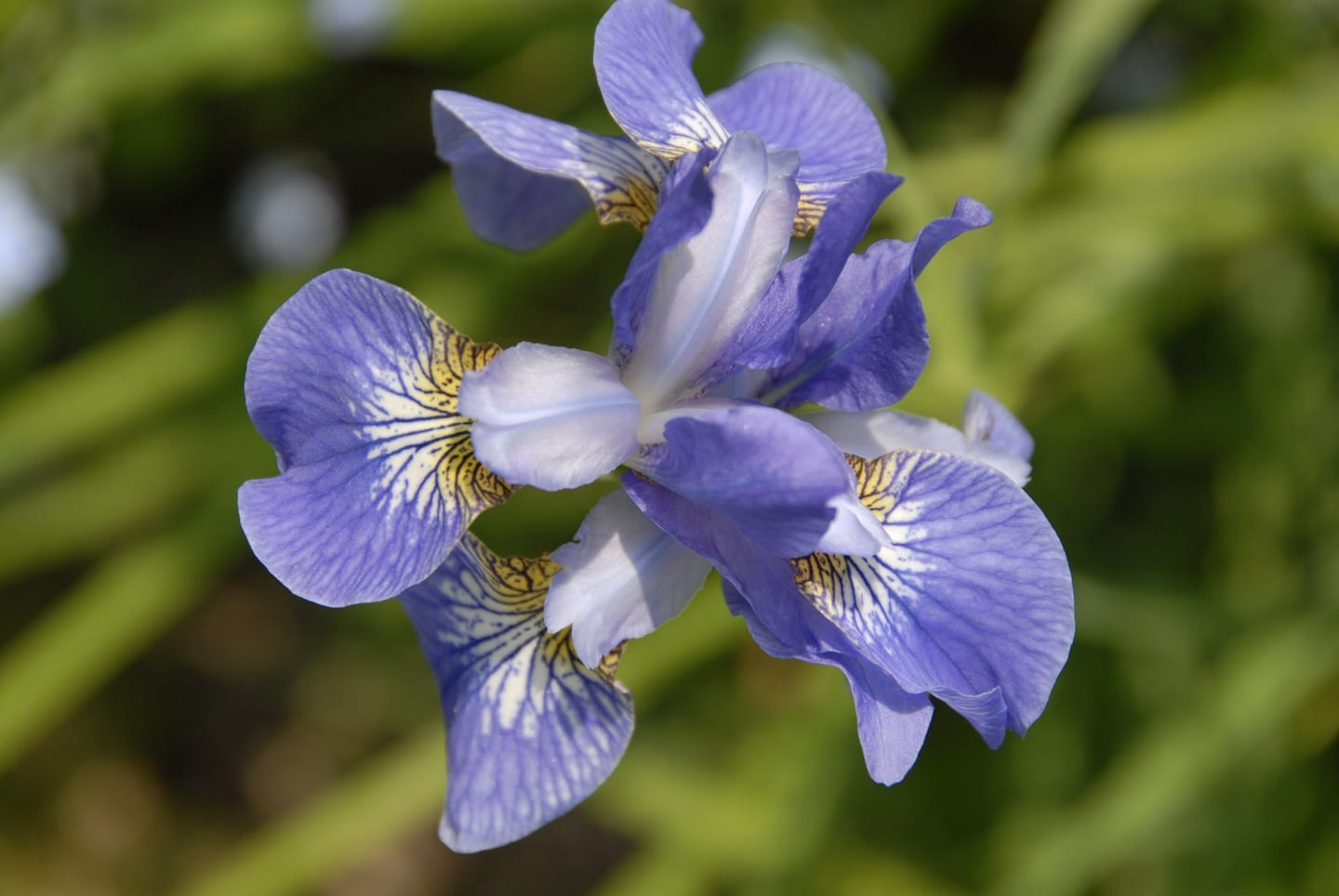
A private audience with flowers
Some flowers arrive with ceremony. Others are most eloquent when photographed alone, without bouquet ribbon or decorative setting. This group of Robert Harper images brings individual blooms and small gatherings into close view. Colour, silhouette, petal and stem become the subject, handled with the assurance of a photographer accustomed to making the smallest object command a magazine page.
The collection holds 60 unique photographic shots across 179 total frames and variants. Catalogued in the original inventory as general flowers, it includes individual specimens and groups. Its apparent simplicity is its strength. Freed from a single occasion, the pictures can speak to horticulture, beauty, fashion, colour, symbolism and the enduring exchange between natural form and design.
From Islay light to the London studio
Robert Harper was born in Scotland and grew up between Glasgow and Islay. The movement between city and island gave his early life an unusual visual range, from architecture and popular culture to shorelines, open skies and botanical detail. He was given his first camera at seven. By fourteen, he had sold a photograph made at a concert by The Who, beginning a professional story rooted in curiosity and initiative.
After moving to London to study photography, Harper learned within the exacting world of editorial production. His apprenticeship included two years at Condé Nast, assisting David Bailey, Helmut Newton and Lester Bookbinder. Working near figures of that calibre meant learning how an image acquires authority: through preparation, lighting, editing and the confidence to remove everything that does not serve the subject.
Harper established his own studio and pursued a career lasting approximately thirty five years. He worked regularly for Elle and The Telegraph Magazine for more than fifteen years. His wider publishing record encompassed Vogue, Tatler, Cosmopolitan, Esquire, The Face, Wallpaper and Harpers & Queen. Confirmed commercial clients included De Beers, Boots, Heinz, Diageo, Harrods, Selfridges, the BBC, CBS Records and Montblanc.
This breadth is visible in the botanical work. A bloom might be treated with the polish associated with beauty advertising, the graphic clarity of a fashion accessory or the intimacy of a portrait. Harper’s archive crosses those boundaries repeatedly. It shows a practitioner interested not only in prestigious names, but in the visual potential of the world placed before his lens.
Nature in the editorial imagination
Flowers carry a remarkable burden of meaning. Roses can imply romance or ceremony. White blooms suggest innocence, mourning or modern restraint depending on their context. Botanical forms guide textile pattern, jewellery design, fragrance packaging and seasonal fashion. Magazine art directors have long used flowers to introduce colour, sensuality and the passage of time.
The photographs are therefore more than decoration. They are source material for cultural histories of taste and for contemporary creative work requiring authentic authorship. Designers may study proportion and palette. Editors may pair them with writing on gardens, scent, gifting or domestic life. Curators may place them within Harper’s larger dialogue between nature and meticulously constructed still life.
Unlike generic stock, every image belongs to a coherent career and an identifiable physical archive. The survival of related frames preserves choice, process and the subtle evolution of composition. Archive.London’s role is to make that heritage legible while respecting what is known and avoiding invented identifications.
Archive provenance
- Original inventory category: Garden & Botanical, Flowers: General
- Unique shots: 60
- Total frames and variants: 179
- Subjects recorded: individual flowers and groups of flowers
- Wider archive scale: 95,487 unique images and 177,143 total frames